For general questions, please send us a message and we’ll get right back to you. You can also call us directly to speak with a member of our service team or insurance expert.
You got the promotion. You landed the big client. Your manager praised your presentation in front of the whole team.
And yet, somewhere in the back of your mind, a voice whispers: “They’re going to find out I don’t actually know what I’m doing.”
If this sounds familiar, you’re not alone — and you’re not broken. What you’re experiencing has a name: imposter syndrome at work. It’s one of the most common, most misunderstood experiences among high-achieving professionals, and it affects everyone from fresh graduates to seasoned CEOs.
In this article, we’ll break down what imposter syndrome really is, why it shows up specifically in the workplace, and — most importantly — what you can actually do about it.
What Is Imposter Syndrome?
Imposter syndrome is the persistent feeling that your achievements are due to luck, timing, or deception rather than your actual skill or effort — despite clear evidence that you’re competent. People dealing with imposter syndrome at work often feel like a “fraud” who is one mistake away from being “found out.”
imposter-syndrome-at-work
It’s not a formal diagnosis, but a well-documented psychological pattern that affects an estimated 70% of people at some point in their careers, according to research published in the International Journal of Behavioral Science.
Why Does Imposter Syndrome at Work Feel So Intense?
The workplace is often where imposter syndrome hits hardest, because it’s a space defined by constant evaluation, comparison, and visibility. A few common triggers include:
1. Starting a New Job or Role
New responsibilities mean unfamiliar territory — and unfamiliar territory makes the “I don’t belong here” feeling louder.
2. Being the Only One in the Room
Whether it’s being the youngest, the newest, the only woman, or the only person from your background in a leadership meeting, standing out can amplify self-doubt.
3. High-Achieving or Perfectionist Tendencies
Ironically, the more capable and driven someone is, the more likely they are to hold themselves to impossible standards — and feel like they’re falling short.
4. Rapid Career Growth
A fast promotion can feel exciting on the outside, but internally trigger the thought: “I haven’t earned this yet.”
5. Comparison Culture
Constant exposure to others’ LinkedIn wins, polished presentations, and confident colleagues can make your own behind-the-scenes struggles feel abnormal — when in reality, everyone has them.
Common Signs of Imposter Syndrome at Work
Recognizing imposter syndrome at work is the first step to managing it. Watch out for these common signs:
Attributing your success to luck, timing, or other people rather than your own skill
Overworking to “prove” you deserve your position
Fear of being exposed as “not good enough”
Difficulty accepting compliments or praise
Downplaying your achievements in conversations
Avoiding new opportunities out of fear of failure
Constantly comparing yourself to more “confident” colleagues
Feeling anxious before performance reviews, even with a strong track record
If several of these resonate with you, it doesn’t mean something is wrong with you — it means you’re dealing with a very common, very human pattern.
“In my practice, I meet so many high-performing professionals — team leads, doctors, engineers, founders — who are convinced they’re ‘faking it.’ The irony is that the more competent and conscientious someone is, the more likely they are to doubt themselves this way. Imposter syndrome isn’t a sign of weakness; it’s often a sign of high standards colliding with an overly critical inner voice.” — Dr. Sugandha Gupta
Is Imposter Syndrome the Same as Low Self-Esteem?
Not exactly. Many people experiencing imposter syndrome at work are objectively skilled and successful — the issue isn’t a lack of ability, but a distorted way of interpreting that ability. It’s less about “I’m not good” and more about “I’m not as good as everyone thinks I am, and eventually they’ll notice.”
Understanding this distinction is important: imposter syndrome is about perception, not performance.
How to Overcome Imposter Syndrome at Work
1. Name It When It Happens
Simply recognizing the thought — “This is imposter syndrome talking, not reality” — creates distance between you and the feeling. It stops being an unquestionable truth and becomes just a thought.
2. Keep a “Wins” Record
Imposter syndrome thrives on selective memory — it highlights mistakes and conveniently forgets successes. Keep a running list of positive feedback, completed projects, and milestones. Revisit it when self-doubt creeps in.
3. Separate Feelings from Facts
Feeling unqualified is not the same as being unqualified. Ask yourself: “What is the actual evidence for and against this thought?” Often, the evidence tells a very different story than the anxiety does.
4. Talk About It
Imposter syndrome grows in silence, because it convinces you that you’re the only one who feels this way. Talking to trusted colleagues, mentors, or friends often reveals that even the people you admire most have felt exactly the same.
5. Redefine What Competence Looks Like
Nobody knows everything. Asking questions, needing help, or making mistakes are not signs of fraudulence — they’re signs of being human and still learning, which every professional is, at every level.
6. Set Realistic, Not Perfect, Standards
Perfectionism and imposter syndrome often feed each other. Aiming for “good and complete” instead of “flawless” reduces the pressure that fuels self-doubt.
7. Seek Professional Support When It Persists
If imposter syndrome is significantly affecting your confidence, decision-making, sleep, or overall wellbeing, speaking with a mental health professional can help you understand the root of these thought patterns and build long-term strategies to manage them.
“What people often don’t realise is that imposter syndrome tends to get worse when it’s left unaddressed — it can quietly shape career decisions, like turning down a promotion or avoiding visibility at work, without the person even realising why. Therapy isn’t about ‘fixing’ someone who is flawed; it’s about helping a capable person see their own competence clearly again.” — Dr. Paramjeet Singh
When Should You Seek Help?
While mild self-doubt is a normal part of professional growth, unmanaged imposter syndrome at work may be worth addressing with support if you notice:
Persistent anxiety or dread related to work performance
Avoidance of promotions, projects, or opportunities out of fear
Difficulty functioning due to constant self-criticism
Imposter feelings affecting your sleep, relationships, or physical health
A qualified therapist or counsellor can help you identify the underlying patterns driving these feelings and work with you to build genuine, lasting confidence — not just temporary reassurance.
Imposter syndrome at work doesn’t mean you’re unqualified — often, it means quite the opposite. The very fact that you care deeply about doing well is usually a sign of competence, not incompetence.
You don’t have to “fix” yourself to belong in the room. You’re already there because you’ve earned it — even on the days it doesn’t feel that way.
If imposter syndrome is affecting your confidence, career decisions, or day-to-day wellbeing, the team at Delhi Mind Clinic is here to help you work through it with compassionate, professional support.
Every year, as temperatures drop and Diwali smoke settles over the city, Delhi’s air turns from bad to hazardous. Most of the conversation focuses on coughs, sore throats, and burning eyes.
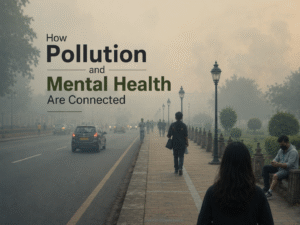
But there’s a quieter crisis happening at the same time. The link between pollution and mental health is real, and it’s affecting how Delhiites feel, not just how they breathe.
At Delhi Mind Clinic, we’re seeing this pattern every winter — patients whose anxiety, low mood, and fatigue spike right alongside the AQI. Here’s what’s actually going on with pollution and mental health, and what you can do about it.
Why Winter Makes Pollution and Mental Health Symptoms Worse
Pollution in Delhi is a year-round issue, but winter makes it far more dangerous. Cold, still air traps particulate matter closer to the ground instead of letting it disperse.
So pollution lingers in the air for much longer during the colder months. Combined with crop-burning smoke and Diwali firecrackers, this creates the thick winter smog Delhi has become known for — and it’s exactly this seasonal spike that makes the connection between pollution and mental health so noticeable each year.
how-pollution-and-mental-health
The Science: How Pollution Affects Mental Health and the Brain
This isn’t just “in your head” — there’s a real biological pathway connecting pollution and mental health:
Inflammation reaches the brain. Fine particulate matter (PM2.5) triggers inflammation throughout the body. Research shows this inflammatory response can disrupt neurotransmitters like serotonin and dopamine — the same chemicals responsible for regulating mood, motivation, and emotional balance.
Oxidative stress damages brain cells. Long-term pollution exposure has been linked to oxidative stress that affects cognitive function, memory, and focus.
A growing body of research backs this up. An Oxford University review of multiple research papers found evidence that both indoor and outdoor air pollution can contribute to serious mental illnesses.
Local data confirms it. A Delhi-NCR based study specifically examined the connection between AQI levels and depression, anxiety, and general well-being in city residents, given how far local pollution levels exceed WHO safety guidelines.
7 Proven Effects Linking Pollution and Mental Health
People living in high-pollution cities often report psychological changes that are easy to dismiss as “just a bad mood” or ordinary stress. Research increasingly shows these changes are connected to air quality. Here are seven of the most well-documented effects.
1. Increased Anxiety
Long-term exposure to poor air quality has been associated with heightened anxiety symptoms, including restlessness, racing thoughts, and a persistent sense of unease. If anxiety feels like it’s becoming harder to manage, our [INTERNAL LINK: Anxiety Treatment] page outlines the support options available at Delhi Mind Clinic.
2. Low Mood and Depressive Symptoms
Several studies have found a correlation between elevated pollution levels and higher rates of depressive symptoms, particularly in urban populations exposed to chronic smog. The American Psychiatric Association notes that people who breathe polluted air show changes in brain regions that regulate emotion, which may raise the likelihood of developing anxiety and depression over time.
3. Irritability and Mood Swings
Many people notice they feel more short-tempered or emotionally reactive on high-pollution days — a pattern that lines up with pollution’s effect on the body’s stress response.
4. Brain Fog and Poor Concentration
Reduced oxygen efficiency and inflammation can make it harder to focus, retain information, or think clearly, especially during prolonged smog episodes.
5. Fatigue and Low Motivation
Poor air quality is linked to disrupted sleep and lower energy levels, both of which can leave people feeling mentally drained and unmotivated.
6. Heightened Stress Response
Chronic exposure to pollution keeps the body’s stress systems mildly activated, which over time can make people more vulnerable to stress-related mental health difficulties. A recent umbrella review of global evidence, published in a peer-reviewed database, reinforces that this is an active and growing area of research.
7. Greater Risk for Existing Mental Health Conditions
For people already managing anxiety, depression, or another mental health condition, high-pollution periods can intensify symptoms and make day-to-day coping more difficult.
Why the Link Between Pollution and Mental Health Matters More in Delhi
Delhi consistently ranks among the most polluted cities in the world, particularly during the winter months when smog, stubble burning, vehicular emissions, and construction dust combine to push air quality into “severe” and “hazardous” categories.
This matters for mental health because:
Duration of exposure is longer. Unlike a single smoggy day, Delhi residents may face weeks of poor air quality every year, giving pollution more time to affect mood-regulating systems in the brain.
Indoor air isn’t always safer. Pollutants can seep indoors, meaning exposure often continues even when people stay inside.
Compounding stressors. Traffic, noise, and visibly poor air quality can add a layer of everyday psychological stress on top of the biological effects of pollution.
Vulnerable groups face greater risk. Children, older adults, and individuals already managing a mental health condition may experience more pronounced emotional effects.
How to Protect Your Mental Health During High-Pollution Days
While we can’t control outdoor air quality, there are meaningful steps that can help protect emotional wellbeing:
Track the Air Quality Index (AQI) and plan outdoor activities for times when pollution levels are comparatively lower.
Create a clean-air space at home using air purifiers and by keeping windows closed during peak pollution hours.
Prioritize sleep hygiene, since good sleep helps buffer against pollution-related mood disturbances.
Stay physically active indoors — gentle movement, stretching, or yoga can support mood even when outdoor exercise isn’t advisable.
Practice stress-reduction techniques such as mindfulness, deep breathing, or journaling to help regulate the nervous system. Our [INTERNAL LINK: Stress Management / Therapy Services] page has more on building these skills with professional guidance.
Stay connected with others. Social support is a strong protective factor against pollution-related stress and low mood.
Limit prolonged outdoor exposure, especially during early mornings when pollution levels tend to peak.
Seek professional support if you notice persistent changes in mood, anxiety, sleep, or concentration — especially during high-pollution seasons.
When to Reach Out for Support
If pollution season consistently affects your mood, sleep, energy, or ability to function — year after year — that’s not something to just push through. At Delhi Mind Clinic, we help patients recognize these seasonal patterns and build a plan that addresses both the environmental trigger and the underlying mental health impact. Our team, led by Dr. Sugandha Gupta (Founder & Director, with over a decade of experience treating anxiety and depression) and Dr. Paramjeet Singh (Senior Consultant Neuropsychiatrist and Joint Secretary of the Delhi Psychiatric Society), offers a combined medical and therapeutic approach to help you manage seasonal mental health dips.
Struggling with anxiety, low mood, or brain fog this pollution season? and let’s talk about it.
Young adulthood — roughly the ages between 18 and 25 — is one of the most transformative periods of life. It’s a time of new independence, career choices, relationships, and self-discovery. But it’s also the age range when most mental health conditions first begin to appear. Research consistently shows that nearly 75% of lifetime mental illnesses start before the age of 24.
Despite this, the early signs of mental illness in young adults are often mistaken for “just a phase,” stress, or personality quirks. This delay in recognition can mean months or even years pass before a young person gets the support they need. The good news? When the early signs of mental illness in young adults are caught early, timely help can make a significant difference in someone’s long-term wellbeing.
Understanding the early signs of mental illness in young adults starts with knowing the difference between normal stress and something that needs closer attention.
In this post, we break down the early warning signs of mental illness in young adults, why they’re so easy to overlook, and what steps to take if you notice them — in yourself or someone you care about.
Why Young Adulthood Is a Critical Window
The brain continues developing well into a person’s mid-20s, particularly the areas responsible for decision-making, emotional regulation, and impulse control. Combine this with major life transitions — moving away from home, starting college or a first job, navigating new relationships, financial pressure, and social media exposure — and it’s easy to see why this stage carries heightened emotional vulnerability.
Add to this the stigma that still surrounds mental health in many families and communities, and it becomes clear why so many young adults suffer in silence rather than speak up.
Common Early Signs of Mental Illness in Young Adults
Every individual is different, and not everyone will show the same symptoms. However, mental health professionals often look out for the following patterns when they persist for two weeks or longer and start interfering with daily life.
signs-of-mental-illness-in-young-adults
1. Noticeable Changes in Mood
Persistent sadness, irritability, or mood swings that seem disproportionate to the situation can be an early red flag. This isn’t about having a bad day — it’s a pattern that lingers and affects how someone functions.
2. Withdrawal from Friends and Family
A young adult who once enjoyed socialising but suddenly starts avoiding calls, cancelling plans, or isolating themselves in their room for extended periods may be struggling internally, even if they insist “everything is fine.”
3. Decline in Academic or Work Performance
A sudden drop in grades, missed deadlines, difficulty concentrating, or a general loss of motivation at college or work is often one of the first visible signs that something deeper is going on.
4. Changes in Sleep Patterns
Sleeping far more or far less than usual, frequent nightmares, or an inability to fall or stay asleep can all be connected to underlying emotional distress.
5. Appetite or Weight Fluctuations
Significant, unexplained changes in eating habits or weight — in either direction — are worth paying attention to, especially when paired with other signs on this list.
6. Loss of Interest in Activities Once Enjoyed
When hobbies, sports, or passions that used to bring joy start to feel pointless or exhausting, it can indicate more than simple boredom.
7. Difficulty Managing Emotions
Intense reactions to minor setbacks, frequent crying spells, unexplained anger, or emotional numbness are all signals that someone may be struggling to cope.
8. Excessive Worry or Fear
Constant anxiety about the future, relationships, health, or performance — especially when it feels uncontrollable — can be an early indicator of an anxiety-related condition.
9. Unusual Thoughts or Beliefs
Difficulty distinguishing reality from imagination, paranoia, or expressing thoughts that seem disconnected from reality should never be dismissed and warrant prompt professional evaluation.
10. Increased Use of Alcohol or Substances
Turning to alcohol, vaping, or other substances as a coping mechanism is a common — and often overlooked — sign of underlying emotional pain.
11. Talking About Feeling Hopeless or Worthless
Statements like “nothing matters” or “what’s the point” should always be taken seriously, even if said casually. This is one of the most important signs to never ignore.
12. Physical Complaints Without a Clear Cause
Frequent headaches, stomachaches, fatigue, or other unexplained physical symptoms can sometimes be the body’s way of expressing psychological distress.
Why These Early Signs of Mental Illness in Young Adults Often Go Unnoticed
Young adults are often skilled at masking their struggles — either out of fear of being judged, a desire for independence, or simply not having the vocabulary to describe what they’re feeling. Many families also normalize stress as “part of growing up,” which can delay recognition. Additionally, social media tends to present a curated, filtered version of life, making it harder for both young adults and their families to gauge what’s genuinely going on beneath the surface.
What to Do If You Notice These Signs
If you recognise several of these early signs of mental illness in young adults in yourself or someone you love, here are some constructive first steps:
Start a conversation. Approach the topic gently and without judgment. Simply asking “How have you really been feeling lately?” can open the door.
Listen without trying to fix everything immediately. Sometimes what’s needed most is to feel heard.
Avoid dismissive language. Phrases like “just snap out of it” or “everyone goes through this” can shut down communication.
Encourage professional support. A qualified mental health professional can help identify what’s going on and recommend an appropriate path forward.
Be patient. Recovery and self-understanding take time, and consistent support matters more than quick fixes.
When to Seek Professional Help
If these early signs of mental illness in young adults persist for more than two weeks, worsen over time, or begin to interfere with daily functioning — relationships, academics, work, or self-care — it’s time to consult a mental health professional. Early intervention is strongly associated with better long-term outcomes, making it one of the most valuable steps a young adult or their family can take.
If there is ever a mention of self-harm, suicide, or feeling like life isn’t worth living, this should be treated as urgent, and immediate professional or emergency support should be sought.
Final Thoughts: Recognising the Early Signs of Mental Illness in Young Adults
Recognising the early signs of mental illness in young adults isn’t about labelling normal ups and downs as something clinical — it’s about paying attention to patterns that persist and genuinely affect a person’s quality of life. The earlier these signs are identified, the sooner young adults can access the right support, tools, and guidance to navigate this pivotal stage of life with confidence.
At Delhi Mind Clinic, we understand how overwhelming this journey can feel — for young adults and their families alike. Our team is here to listen, guide, and support you through every step, with compassion and without judgment.
Being able to spot the early signs of mental illness in young adults — and acting on them — is one of the most powerful things a family or individual can do.
Specific Learning Disorder (SLD) is a neurodevelopmental condition that affects a child’s ability to read, write, or perform mathematical tasks. Many parents searching for the causes of specific learning disorder Delhi are often concerned about why their child is struggling despite having normal intelligence and access to education.
7 Key Causes of Specific Learning Disorder Delhi Parents Should Understand
If you need professional support, consulting the best psychiatrist in Delhi can provide valuable insights and personalized strategies for causes of specific learning disorder delhi. Consider Visiting:
Understanding the root causes can help families take early steps toward support and intervention. While each child’s experience is unique, research shows that SLD usually develops due to a combination of biological and environmental factors.
Below are the most important causes of specific learning disorder Delhi families should be aware of.
Brain Development and Neurological Differences
One of the primary causes of specific learning disorder Delhi is how the brain processes information. Children with SLD often have differences in brain structure or function that affect how they understand language, numbers, or written information.
According to medical research, learning disorders are linked to differences in how the brain receives, processes, and communicates information.
These neurological variations do not reflect intelligence but rather a different learning style that requires specialized support.
Genetic and Hereditary Factors
Family history plays a significant role in the development of learning disorders. Children who have parents or close relatives with similar learning challenges are more likely to experience SLD.
Research indicates that learning difficulties often run in families, suggesting a genetic component.
For parents exploring the causes of specific learning disorder Delhi, understanding family patterns can be an important first step.
Prenatal and Birth-Related Factors
Certain conditions during pregnancy or birth can influence a child’s brain development. These may include complications during pregnancy, premature birth, or low birth weight.
Studies show that early developmental risks can increase the likelihood of learning difficulties later in life.
These factors do not guarantee a learning disorder but may contribute to increased vulnerability.
Environmental Influences
A child’s early environment also plays a role in learning development. Factors such as poor nutrition, exposure to environmental toxins, or limited early learning stimulation may impact cognitive growth.
Research highlights that environmental conditions in early childhood can influence the development of learning abilities.
In a diverse and fast-paced city like Delhi, awareness of environmental influences is important when evaluating the causes of specific learning disorder Delhi.
Delays in Language and Cognitive Development
Early delays in speech, language, or motor skills can sometimes indicate a higher risk of developing SLD. Children who struggle with language comprehension or expression may later face difficulties in reading and writing.
Studies show that early developmental delays, including language and social skills, may be early indicators of learning disorders.
Identifying these signs early can help parents seek timely support.
Co-existing Developmental or Behavioral Conditions
Specific Learning Disorder often coexists with other developmental challenges such as attention difficulties or emotional regulation issues.
Research suggests that learning disorders can occur alongside other neurodevelopmental conditions, making diagnosis more complex.
Understanding these overlapping factors is essential when exploring the causes of specific learning disorder Delhi.
Academic and Instructional Factors
Although SLD is not caused by poor teaching or lack of education, the learning environment can influence how symptoms appear. Children may struggle more if teaching methods do not match their learning style.
Experts emphasize that learning disorders are not due to low intelligence or lack of opportunity, but differences in how the brain processes information.
Supportive teaching strategies can help reduce the impact of these challenges.
For reliable information on learning disorders and child development, you can visit the official resource provided by the National Institutes of Health.
Why Early Identification Matters
Recognizing the causes of specific learning disorder Delhi early allows for timely intervention and better outcomes. Children who receive support at an early stage are more likely to develop effective learning strategies and confidence.
Parents should watch for signs such as:
Difficulty reading or writing compared to peers
Trouble understanding instructions
Challenges with basic math concepts
Avoidance of academic tasks
Early evaluation by qualified professionals can provide clarity and direction.
Best psychiatrist in Delhi
Final Thoughts
Understanding the causes of specific learning disorder Delhi helps parents move from confusion to clarity. SLD is not a reflection of a child’s intelligence or effort but rather a difference in how the brain processes information.
By recognizing factors such as brain development, genetics, environmental influences, and early developmental delays, families can take informed steps toward support and intervention.
With awareness, early identification, and the right guidance, children with learning challenges can build confidence and reach their full potential.
Bipolar disorder is a brain ailment that causes extreme shifts in mood, energy, and ability to operate. Patients with bipolar illness have extreme shifts in mood, known as mood episodes, which often occur at regular intervals of a few days to a few weeks. These shifts in mood are either depressive episodes (a sad mood) or manic/hypomanic episodes (an abnormally happy or angry mood). Neutral-mood states are common among people with bipolar disorder. People with bipolar disorder who receive effective treatment can have normal, fulfilling lives.
Mood changes happen to everyone, including people who don’t have bipolar disorder. The good news is that these shifts in disposition rarely last more than a day. What’s more, those with bipolar disorder don’t often demonstrate the extreme behavioral changes or trouble adjusting to daily activities and social interactions that are common during mood episodes. A person with bipolar disorder may have issues in their personal relationships, their professional life, and their academic performance.
Three distinct diagnoses fall under the umbrella of bipolar disorder: bipolar I, bipolar II, and cyclothymic disorder.
Eighty to ninety percent of those with bipolar disorder have a family member who also has the condition or is depressed. Stress, irregular sleep patterns, narcotics, and alcohol can all cause mood swings in persons who are already vulnerable. Although the exact brain-based origins of bipolar disorder are unknown, dysregulated brain activity is thought to be caused by a chemical imbalance. 25 years old on average is the onset age.
Anxiety disorders, substance use disorders, and/or attention-deficit/hyperactivity disorder are typically present in people with bipolar I disorder (ADHD). Compared to the general population, those with bipolar I disorder have a much-increased risk of suicide.
Bipolar illness patients might experience extreme highs of happiness and vigor as well as extreme lows of melancholy, hopelessness, and sluggishness. Usually, people feel normal in the intervals between those times. Bipolar disorder is so named because the highs and lows can be compared to two “poles” of emotion.
The extreme mood swings of bipolar disorder do not occur in a predictable way. Before shifting to the opposite mood, a person may experience the same mood state (depressed or manic) multiple times. These episodes can take place over the course of several weeks, months, or even years.
The degree to which it worsens varies from person to person and can also alter over time, worsening or lessening.
Mania symptoms (“the highs”):
Making grand and unrealistic plans
Rapid speech and poor concentration
Excessive happiness, hopefulness, and excitement
Showing poor judgment
Less of an appetite
Sudden changes from being joyful to being irritable, angry, and hostile
Restlessness
Increased energy and less need for sleep
Unusually high sex drive
Becoming more impulsive
Less need for sleep
A larger sense of self-confidence and well-being
Being easily distracted
Drug and alcohol abuse
During depressive periods (“the lows”), a person with bipolar disorder may have:
Inability to feel pleasure
Sadness
Feelings of hopelessness or worthlessness
Loss of energy
Not enjoying things they once liked
Trouble concentrating
Forgetfulness
Talking slowly
Less of a sex drive
Uncontrollable crying
Trouble making decisions
Irritability
Insomnia
Appetite changes that make you lose or gain weight
Thoughts of death or suicide
Attempting suicide
Needing more sleep
Misuse of drugs or alcohol can increase the number of episodes in people with bipolar disorder of any kind. It comes in a variety of forms. A dual diagnosis, or having both bipolar disorder and alcohol use disorder, necessitates assistance from a specialist who can handle both problems.
The American Psychiatric Association’s Diagnosis and Statistical Manual of Mental Disorders (DSM) no longer recognizes five subtypes of schizophrenia, one of which is disorganized schizophrenia (hebephrenia).
Hebephrenia is characterized by chaotic thinking and acting. Disorganized behavior and speech, as well as a distortion in emotional expression known as mood incongruence, are hallmarks of hebephrenia.
Disorganized schizophrenia is characterized by less severe manifestations of hallucinations and delusions.
Schizophrenia’s Hebephrenic Symptoms
Clanking, or disorganized speech, is a common symptom of schizophrenia that presents itself in the speaker’s inability to focus and keep their thoughts in order.
Disorganized talkers may ramble on without a clear plan, answer inquiries with irrelevant information, make illogical assertions, or change the subject constantly. The following are symptoms of disordered speech:
Loose associations: bouncing rapidly from one subject to another without providing any context
Doing something over and over again despite resistance
False words that have significance only to the speaker
Lack of sense in the use of rhyme
When someone has significant cognitive disorganization, it can be quite difficult to grasp what they are saying.
The disordered actions typical of schizophrenia can hinder the pursuit of meaningful goals. A person with disorganized schizophrenia may have trouble getting started on an activity or completing it (such as making a meal). This extreme disorder makes independent functioning extremely challenging.
The following are some symptoms of disorganized behavior:
Symptoms that indicate a deterioration in everyday functioning
Emotional reactions that are unexpected or out of place
Inability to Control Impulses
Acts that don’t make sense or seem random
Normal self-care routines including showering, getting dressed, and dental hygiene may become impossible or substantially compromised.
Inappropriate affect describes a person’s emotional responses and the outward manifestations of those feelings (such as a smile when delighted).
People with disorganized schizophrenia have a “flat affect,” meaning they rarely, if ever, convey any emotion in their behavior. They may show emotions that are out of place, like laughing at a tragic movie. People with disorganized schizophrenia often display other unfavorable symptoms, such as an inability to make eye contact and a flat, emotionless expression on their faces.
If you’re between the ages of 15 and 25, you have a higher risk of developing disorganized schizophrenia. Lower educational attainment, more pronounced negative symptoms, and cognitive impairments are all factors that have been linked to an unfavorable prognosis, especially when the onset of symptoms occurs at a younger age.
Getting started on treatment quickly is essential for a full recovery. Multiple methods, including the following, are used in the treatment of disorganized schizophrenia.
Medication management Schizophrenia medication can help alleviate symptoms like hallucinations, delusions, paranoia, and thought disorders. The most noticeable signs of an illness are crucial in determining the most effective treatment.
In order to alleviate some symptoms and improve overall functioning, cognitive behavioral therapy (CBT) is prescribed as a form of psychotherapy. During CBT, patients zero in on specific sources of distress and attempt to establish personalized solutions.
Assistance with life skills training can assist people with disorganized schizophrenia to improve their social interactions and daily living abilities, with the ultimate goal of fostering greater autonomy.
Individuals with disorganized schizophrenia can benefit from supported employment programs, which provide guidance in securing and keeping gainful employment.
People with disorganized schizophrenia benefit from consistent contact with family members, who can provide both information and support. Family assistance that helps educate loved ones on schizophrenia and its treatment is essential. A better knowledge of the disease and more effective coping mechanisms can be achieved with the aid of family support.
First-episode psychosis in early-stage schizophrenia responds well to a multi-component treatment plan that includes psychotherapy, medication case management, employment and education support, and family resources; this approach is known as coordinated specialty care (CSC).
Disorganized schizophrenia typically presents at a younger age, although its symptoms are not always easy to recognize in their early stages. This subtype’s symptoms tend to develop slowly and persistently. The prognosis for people with disorganized schizophrenia does improve with proper and continued treatment, though.
People with disorganized schizophrenia can benefit greatly from help with activities of daily living, education, employment opportunities, and family support in order to slow the progression of their illness.