For general questions, please send us a message and we’ll get right back to you. You can also call us directly to speak with a member of our service team or insurance expert.
Life rarely moves in a straight line. A job loss, the end of a relationship, a health scare, or the death of someone close to us can shake our world overnight. For many people, these experiences bring on a heavy, persistent sadness that goes far beyond an “off day.” This is often what mental health professionals refer to as situational depression.
At Delhi Mind Clinic, we regularly meet people struggling to understand why a difficult event has left them feeling stuck, low, and unable to bounce back the way they expected to. If this sounds familiar, you are not alone — and understanding situational depression is the first step toward healing.
What Is Situational Depression?
Situational depression, also known as an adjustment disorder with depressed mood, is a short-term form of depression that develops in response to a specific stressful event or major life change. Unlike depression that seems to arise without any clear external cause, situational depression is directly linked to an identifiable trigger.
situational-depression
Common triggers include:
Loss of a loved one
Divorce or relationship breakdown
Job loss or major career setbacks
Financial difficulties
Serious illness or injury (personal or of a loved one)
Moving to a new city or country
Retirement
Academic pressure or exam failure
Becoming a new parent
Any sudden, unexpected life disruption
The key feature of situational depression is that it is a reaction to a real, specific circumstance — and it typically emerges within about three months of the triggering event.
Situational Depression vs. Clinical Depression: What’s the Difference?
Many people use the terms “depression” and “situational depression” interchangeably, but there are important distinctions:
Situational Depression
Clinical (Major) Depression
Triggered by a specific event or stressor
May occur without any obvious cause
Symptoms often improve once the stressor is resolved or the person adapts
Symptoms can persist regardless of external circumstances
Generally shorter in duration
Often lasts longer and may recur
Tied closely to the intensity of the triggering event
Rooted in a combination of biological, psychological, and environmental factors
While situational depression tends to be temporary, it should never be dismissed as “just stress.” Left unaddressed, it can sometimes evolve into a more prolonged depressive episode, which is why timely support matters.
Common Symptoms of Situational Depression
The symptoms of situational depression can look similar to other forms of depression, though they are usually tied closely to the triggering event. These may include:
Persistent sadness, hopelessness, or tearfulness
Difficulty concentrating or making decisions
Withdrawing from friends, family, or social activities
Loss of interest in activities once enjoyed
Changes in appetite (eating more or less than usual)
Sleep disturbances — insomnia or oversleeping
Fatigue and low energy
Irritability or frequent mood swings
Feelings of being overwhelmed or unable to cope
Physical symptoms such as headaches or stomach discomfort
In some cases, thoughts of not wanting to be around
If these symptoms are interfering with your daily functioning — work, relationships, self-care — it is worth reaching out to a mental health professional for support.
Why Do Some People Develop Situational Depression While Others Don’t?
Not everyone who faces a stressful life event develops situational depression. Several factors can influence a person’s vulnerability, including:
Prior mental health history — a previous episode of anxiety or depression can increase sensitivity to new stressors
Coping style — how a person typically processes stress and adversity
Social support — the presence (or absence) of a strong support system
Multiple stressors occurring together — facing several difficult events at once
Personality traits — such as a tendency toward perfectionism or high self-criticism
Lack of prior exposure to similar stress — a completely unfamiliar or unexpected disruption can feel more destabilising
Understanding these factors isn’t about assigning blame — it’s about recognising that situational depression is a normal, human response to abnormal or overwhelming circumstances.
Healthy Ways to Cope with Situational Depression
The encouraging news is that situational depression is highly responsive to support and self-care. Here are some approaches that can help:
1. Acknowledge What You’re Feeling
Suppressing emotions often makes them heavier. Give yourself permission to feel sad, angry, or confused — these are valid responses to a difficult situation.
2. Maintain a Routine
Even small, consistent daily habits — waking up at a set time, eating regular meals, light physical activity — can provide a sense of stability when everything else feels uncertain.
3. Stay Connected
Isolation tends to deepen low mood. Reach out to trusted friends or family members, even if it’s just to talk or sit together in silence.
4. Practice Gentle Physical Activity
A short walk, light stretching, or yoga can help regulate mood and reduce stress hormones, even when motivation feels low.
5. Limit Major Decisions
During an emotionally heavy period, avoid making large life decisions if possible. Give yourself time to process before committing to big changes.
6. Practice Mindfulness or Relaxation Techniques
Breathing exercises, meditation, or journaling can help create space between you and overwhelming emotions.
7. Seek Professional Support
A trained therapist or counsellor can help you process the triggering event, build coping strategies, and prevent the low mood from deepening into a longer-term condition.
When Should You See a Mental Health Professional?
While mild situational sadness often eases with time and self-care, it’s important to seek professional help if:
Symptoms last longer than a few weeks and don’t seem to be improving
You’re struggling to function at work, school, or home
You’re withdrawing significantly from people you care about
You notice a loss of interest in almost everything
You experience thoughts of hopelessness or self-harm
There is no need to wait until things feel unbearable. Early support often leads to faster, smoother recovery.
How Delhi Mind Clinic Can Help
At Delhi Mind Clinic, our experienced mental health professionals — including Dr. Sugandha Gupta and Dr. Paramajeet Singh — understand that every individual’s journey through a difficult life event is unique. We offer a compassionate, confidential space to help you:
Understand what you’re experiencing
Process the event or transition that triggered your low mood
Build practical coping strategies tailored to your life
Rebuild a sense of stability, resilience, and hope
You don’t have to navigate this alone. Reaching out for support is a sign of strength, not weakness.
Situational depression reminds us that our mental health is deeply connected to our life experiences. A painful event doesn’t just pass through us — it can leave a real emotional imprint. But with the right support, understanding, and coping strategies, it is entirely possible to move through this chapter and come out the other side steadier and stronger.
If you or someone you know is going through a difficult life transition and struggling to cope, Delhi Mind Clinic is here to help. Book a consultation with Dr. Sugandha Gupta or Dr. Paramajeet Singhtoday.
Frequently Asked Questions (FAQs)
1. How long does situational depression usually last? It varies by individual, but situational depression often improves within a few weeks to a few months, especially with support and healthy coping strategies. If symptoms persist beyond this, professional evaluation is recommended.
2. Can situational depression turn into long-term depression? Yes, in some cases, if left unaddressed, situational depression can develop into a more prolonged depressive episode. This is why early intervention and support are important.
3. Is situational depression a “real” mental health condition? Yes. It is a recognised clinical condition (often classified as an adjustment disorder with depressed mood) and deserves the same care and attention as other forms of depression.
4. Can children and teenagers experience situational depression? Absolutely. Children and teens can develop situational depression in response to events like parental divorce, bullying, academic pressure, or moving to a new school or city.
5. Do I need therapy for situational depression, or will it go away on its own? Mild cases may improve with time, self-care, and social support. However, if symptoms are significant, persistent, or interfering with daily life, speaking with a mental health professional can make recovery faster and more manageable.
Recognising the signs of depression early can make a significant difference in a person’s quality of life. Depression is one of the most common mental health conditions in the world today, yet it often goes unnoticed — even by the people experiencing it. Many mistake the signs of depression for “just a bad phase,” stress, or tiredness. But depression is a real, treatable medical condition.
At Delhi Mind Clinic, we believe that awareness is the first step toward healing. In this article, we break down the most common signs of depression, why they occur, and when it’s time to seek professional support.
What Is Depression?
Depression (clinically known as Major Depressive Disorder) is more than just feeling sad or having a low day. It is a persistent mental health condition that affects how a person thinks, feels, and functions in daily life. It can impact anyone — regardless of age, gender, profession, or background — and often develops gradually, making the signs of depression easy to overlook.
Common Signs of Depression
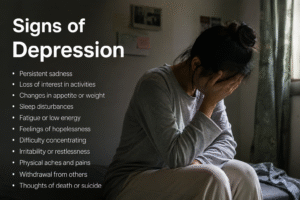
The signs of depression don’t look the same for everyone. Some people show visible emotional distress, while others mask it well behind a “normal” routine. Here are the most common signs of depression to watch out for:
11-signs-of-depression
1. Persistent Sadness or Low Mood
A continuous feeling of sadness, emptiness, or hopelessness that lasts for most of the day, nearly every day, for two weeks or longer.
2. Loss of Interest in Activities
Losing interest or pleasure in hobbies, work, socialising, or activities that were once enjoyable — often referred to as “anhedonia.”
3. Fatigue and Low Energy
Feeling constantly tired, drained, or physically heavy, even after adequate rest or sleep.
4. Changes in Sleep Patterns
This can go either way — difficulty falling or staying asleep (insomnia), or sleeping far more than usual (hypersomnia).
5. Changes in Appetite or Weight
Noticeable increase or decrease in appetite, leading to unintended weight gain or weight loss.
6. Difficulty Concentrating
Trouble focusing, making decisions, or remembering things — often affecting work performance or daily tasks.
7. Feelings of Worthlessness or Guilt
Persistent negative self-talk, excessive guilt over past mistakes, or a deep sense of not being “good enough.”
8. Irritability or Restlessness
Depression doesn’t always look like sadness — it can also show up as irritability, frustration, or restlessness, especially in men and younger individuals.
9. Withdrawal from Social Life
Pulling away from family, friends, or social commitments, and preferring isolation over connection.
10. Physical Symptoms Without a Clear Cause
Unexplained headaches, body aches, digestive issues, or other physical complaints that don’t respond to typical treatment.
11. Thoughts of Death or Self-Harm
In more severe cases, individuals may experience persistent thoughts about death, dying, or self-harm. This is a sign that requires immediate professional attention.
Why Early Recognition Matters
Depression tends to worsen without support. What starts as mild low mood can, over time, affect relationships, career performance, physical health, and overall well-being. Learning to spot the signs of depression early allows for timely intervention — through therapy, lifestyle changes, and professional guidance — which greatly improves outcomes.
When Should You Seek Help?
If you or someone you know has been experiencing several signs of depression for two weeks or more, and they are affecting daily functioning, it’s time to consult a mental health professional. Depression is not a sign of weakness — it is a medical condition, and like any other health issue, it responds well to appropriate care and support.
Expert Insight
Dr. Sugandha Gupta notes: “In clinical practice, one of the most overlooked signs of depression is a change in a person’s baseline energy and motivation. Patients often describe it as ‘just feeling off’ for weeks, without realising it’s a pattern worth addressing. Early conversations — even before a formal diagnosis — can make treatment far more effective.”
Dr. Paramjeet Singh adds: “Depression frequently presents differently across age groups and genders. In my experience, irritability and physical complaints are common presentations that get dismissed as ‘stress’ rather than recognised as signs of depression. A thorough evaluation helps rule out other causes and ensures the right course of care.”
Depression can be invisible to the outside world, but its impact is very real. Understanding the signs of depression — in yourself or a loved one — is a powerful first step toward getting the right support. You don’t have to navigate it alone.
At Delhi Mind Clinic, our team of experienced mental health professionals is here to help you understand what you’re going through and guide you toward a path of recovery, with compassion and confidentiality at every step.
If you recognise these signs in yourself or someone close to you, reaching out for professional support is a sign of strength, not weakness.
In today’s fast-paced world, it’s not uncommon for individuals to experience feelings of anxiety and depression. These mental health conditions can affect anyone, regardless of age, gender, or background. Recognizing the symptoms is the first step towards seeking help and promoting overall well-being. In this blog post, we’ll delve into the nuanced symptoms of anxiety and depression, shedding light on these often misunderstood conditions.
Depression And Anxiety
Understanding Anxiety:
Excessive Worrying: Anxiety often manifests as persistent and excessive worrying about various aspects of life, including work, relationships, or health.
Restlessness and Irritability: Individuals with anxiety may find it challenging to relax, experiencing restlessness and irritability even in seemingly calm situations.
Physical Symptoms: Anxiety can manifest physically with symptoms such as muscle tension, headaches, fatigue, and difficulty sleeping.
Difficulty Concentrating: Concentration and focus may suffer as a result of anxiety, making it difficult to complete tasks or make decisions.
Understanding Depression:
Persistent Sadness: One of the hallmark symptoms of depression is a persistent feeling of sadness or emptiness that lasts for weeks or even months.
Loss of Interest: Individuals experiencing depression may lose interest in activities they once enjoyed, withdrawing from social interactions and hobbies.
Changes in Appetite and Weight: Depression can affect appetite, leading to changes in weight. Some may experience an increase in appetite, while others may have a decreased interest in food.
Sleep Disturbances: Insomnia or excessive sleeping are common symptoms of depression, disrupting the natural sleep-wake cycle.
Feelings of Hopelessness and Worthlessness: Depression often brings about feelings of hopelessness, worthlessness, and a pervasive sense of guilt.
Common Ground:
Physical Symptoms: Both anxiety and depression can manifest physical symptoms such as fatigue, headaches, and changes in appetite.
Difficulty Concentrating: Impaired concentration is a shared symptom, impacting daily functioning for individuals with either condition.
Social Withdrawal: Both anxiety and depression may lead to social withdrawal, as individuals may find it challenging to engage with others due to fear, sadness, or a sense of inadequacy.
Conclusion:
Recognizing the symptoms of anxiety and depression is crucial for seeking timely support and treatment. Mental health is an integral part of overall well-being, and acknowledging these conditions is the first step toward fostering a more understanding and compassionate society. If you or someone you know is experiencing symptoms of anxiety or depression, reaching out to mental health professionals, friends, or family can make a significant difference on the journey to healing. Remember, you are not alone, and help is available.
An “accident” of sorts by a team of doctors in Vancouver Canada suggests that we might actually see our entire life flash by us in our last few moments.
A team of scientists was recording and studying the brainwaves of a terminally ill patient who was suffering from epilipsey. During the course of recording the patient suffered a major heart attack giving the scientists a recording of the brainwaves in the last few moments before death.
It revealed that in the 30 seconds before and after, the man’s brainwaves followed the same patterns as dreaming or recalling memories.
Dr Ajmal Zemmar, a co-author of the study, said that what the team, then based in Vancouver, Canada, accidentally got, was the first-ever recording of a dying brain.
Quoting Dr Zemmer – “This was actually totally by chance, we did not plan to do this experiment or record these signals. If I were to jump to the philosophical realm, I would speculate that if the brain did a flashback, it would probably like to remind you of good things, rather than the bad things.But what’s memorable would be different for every person.
This could possibly be a last recall of memories that we’ve experienced in life, and they replay through our brain in the last seconds before we die.
I think there’s something mystical and spiritual about this whole near-death experience,” Dr Zemmar said. And findings like this – it’s a moment that scientists lives for.”
The point to note that the brainwaves pattern started approximately 30 seconds before the heart stopped beating and continued for about 30 seconds after the heart stopped beating – the point at which the patient is typically declared dead.
A similar study in 2013 – carried out on healthy rats – may offer a clue. In that analysis, US researchers reported high levels of brainwaves at the point of the death until 30 seconds after the rats’ hearts stopped beating – just like the findings found in Dr Zemmar’s epileptic patient.
The completed article as reported in the medical Journal can be studied here: https://www.frontiersin.org/articles/10.3389/fnagi.2022.813531/full#h6