For general questions, please send us a message and we’ll get right back to you. You can also call us directly to speak with a member of our service team or insurance expert.
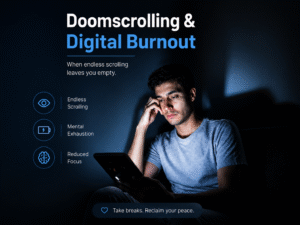
Doomscrolling & digital burnout have quietly become two of the most common mental health struggles of our always-online age. It’s 1 AM. You told yourself “just five more minutes” an hour ago. Your thumb keeps swiping — bad news, an argument in the comments, a stranger’s crisis, another headline that makes your stomach tighten. You’re exhausted, anxious, and somehow still not putting the phone down.
If this sounds familiar, you’re not alone — and you’re not lacking willpower. This pattern has a name: doomscrolling. And when it becomes a daily habit, it can lead to something bigger: digital burnout. Together, doomscrolling and digital burnout can chip away at your focus, sleep, and emotional resilience without you even realizing it.
At Delhi Mind Clinic, we’re seeing more people — students, working professionals, and parents alike — struggling with the mental toll of constant screen exposure. Let’s break down what’s really happening in your mind, and what you can do about it.
Doomscrolling & digital burnout
What Is Doomscrolling & Digital Burnout?
Doomscrolling refers to the compulsive habit of continuously scrolling through negative, distressing, or anxiety-inducing news and content, even when it makes you feel worse. It often happens late at night, during idle moments, or as an automatic response to stress. When this habit repeats day after day, it evolves into digital burnout — a deeper state of mental and emotional exhaustion. Understanding doomscrolling & digital burnout as two connected stages of the same problem is the first step toward addressing both.
The term “doomscrolling” gained popularity during global crises, when people found themselves glued to updates about tragedy, conflict, or uncertainty. But doomscrolling didn’t disappear once the headlines calmed down — it has quietly become a daily habit for millions of smartphone users, feeding directly into the wider pattern of digital burnout.
Why Do We Doomscroll? The Psychology Behind It
Doomscrolling isn’t a character flaw — it’s your brain doing exactly what it evolved to do, in an environment it was never designed for.
The negativity bias: Human brains are wired to pay closer attention to threats and danger. Negative news captures our attention far more powerfully than positive news, a survival mechanism from a time when spotting danger quickly kept us alive.
The need for closure: Uncertainty is uncomfortable. Scrolling can feel like an attempt to “stay informed” or find resolution, even though the endless feed rarely offers one.
Dopamine-driven design: Social media and news apps are built to keep you engaged. Every swipe offers the possibility of something new, triggering small dopamine hits that keep you coming back — a loop very similar to the mechanics of a slot machine.
Emotional avoidance: Sometimes scrolling isn’t about the news at all. It’s a way to numb out, avoid a difficult emotion, or delay dealing with something uncomfortable in real life.
From Doomscrolling to Digital Burnout: How the Cycle Builds
When doomscrolling becomes a daily pattern, it can snowball into digital burnout — a state of mental, emotional, and even physical exhaustion caused by prolonged and excessive screen engagement. This is the point where doomscrolling & digital burnout stop being separate issues and start reinforcing each other.
Common signs of doomscrolling & digital burnout include:
Persistent low mood, irritability, or a sense of dread
Difficulty concentrating or feeling mentally “foggy”
Disrupted sleep, or feeling tired even after sleeping
Increased anxiety about world events you have no control over
A nagging urge to check your phone, paired with guilt or frustration when you do
Feeling disconnected from people around you, despite being constantly “connected” online
Reduced motivation for work, hobbies, or things you used to enjoy
If several of these sound familiar, your mind may be signaling that it needs a reset — not more information, but more rest.
The Hidden Cost: How This Affects Your Mental Health
Constant exposure to distressing content keeps your nervous system in a low-grade state of alert. Over time, this can:
Heighten baseline anxiety, even when nothing is actively wrong
Make it harder to distinguish real threats from perceived ones
Interfere with sleep quality, which in turn affects mood regulation
Reduce your tolerance for uncertainty and everyday stress
Create a false sense of helplessness, as you absorb problems you cannot personally solve
The irony is that doomscrolling often begins with a desire to feel more informed or in control — but it frequently leaves people feeling more anxious and powerless instead.
How to Break the Doomscrolling & Digital Burnout Cycle: 7 Practical Steps
Recovery doesn’t require quitting your phone entirely. It’s about rebuilding a healthier relationship with information and screen time. Here are 7 practical, sustainable strategies to recover from doomscrolling & digital burnout:
1. Set “Information Windows”
Instead of checking news or social media throughout the day, choose two or three specific times to catch up. This limits the constant low-level anxiety of an ever-refreshing feed.
2. Use the “Pause and Notice” Technique
Before opening an app, pause for a moment and ask: “What am I hoping to feel right now?” This small check-in builds awareness of the emotional triggers behind the habit.
3. Create Phone-Free Zones and Times
Keep your phone out of the bedroom, and avoid screens for the first and last 30 minutes of your day. Mornings and nights are especially vulnerable windows for doomscrolling.
4. Curate Your Feed Intentionally
Unfollow or mute accounts that consistently leave you feeling anxious or drained. You don’t have to disengage from the world — just be selective about the lens you view it through.
5. Replace, Don’t Just Restrict
Willpower alone rarely works. Replace scrolling time with something equally accessible — a short walk, journaling, calling a friend, or a few minutes of quiet breathing.
6. Practice Grounding Techniques
When you notice anxiety rising from something you’ve read, try grounding yourself in the present moment — feel your feet on the floor, notice five things you can see, and take a few slow breaths. This helps shift your nervous system out of alert mode.
7. Reconnect With What You Can Control
Redirect some of that mental energy toward small, actionable steps in your own life — even something as simple as tidying a space or completing a task. This counters the sense of helplessness that doomscrolling often creates.
When to Seek Professional Support for Doomscrolling & Digital Burnout
Occasional doomscrolling is common and manageable with self-help strategies. However, if you notice ongoing anxiety, persistent low mood, sleep disturbances, or a sense of being emotionally overwhelmed that doesn’t improve, it may be time to talk to a mental health professional.
Doomscrolling & digital burnout, left unaddressed, can contribute to more significant difficulties with anxiety and mood over time. A trained therapist or counsellor can help you understand your personal triggers, build coping strategies, and address any underlying stress or anxiety that the habit may be masking.
In a world where information is endless and immediate, doomscrolling can feel almost unavoidable. But awareness is the first step toward change. By recognizing the pattern, understanding why it happens, and gently building healthier digital habits, you can protect yourself from doomscrolling & digital burnout without disconnecting from the world entirely.
Your mind deserves rest — not just from work, but from the constant noise of information overload.
At Delhi Mind Clinic, we help individuals navigate anxiety, stress, and the mental health challenges of modern digital life. If you’re feeling overwhelmed, exhausted, or stuck in unhealthy digital habits, reach out to our team for compassionate, professional support.