For general questions, please send us a message and we’ll get right back to you. You can also call us directly to speak with a member of our service team or insurance expert.
Young adulthood — roughly the ages between 18 and 25 — is one of the most transformative periods of life. It’s a time of new independence, career choices, relationships, and self-discovery. But it’s also the age range when most mental health conditions first begin to appear. Research consistently shows that nearly 75% of lifetime mental illnesses start before the age of 24.
Despite this, the early signs of mental illness in young adults are often mistaken for “just a phase,” stress, or personality quirks. This delay in recognition can mean months or even years pass before a young person gets the support they need. The good news? When the early signs of mental illness in young adults are caught early, timely help can make a significant difference in someone’s long-term wellbeing.
Understanding the early signs of mental illness in young adults starts with knowing the difference between normal stress and something that needs closer attention.
In this post, we break down the early warning signs of mental illness in young adults, why they’re so easy to overlook, and what steps to take if you notice them — in yourself or someone you care about.
Why Young Adulthood Is a Critical Window
The brain continues developing well into a person’s mid-20s, particularly the areas responsible for decision-making, emotional regulation, and impulse control. Combine this with major life transitions — moving away from home, starting college or a first job, navigating new relationships, financial pressure, and social media exposure — and it’s easy to see why this stage carries heightened emotional vulnerability.
Add to this the stigma that still surrounds mental health in many families and communities, and it becomes clear why so many young adults suffer in silence rather than speak up.
Common Early Signs of Mental Illness in Young Adults
Every individual is different, and not everyone will show the same symptoms. However, mental health professionals often look out for the following patterns when they persist for two weeks or longer and start interfering with daily life.
signs-of-mental-illness-in-young-adults
1. Noticeable Changes in Mood
Persistent sadness, irritability, or mood swings that seem disproportionate to the situation can be an early red flag. This isn’t about having a bad day — it’s a pattern that lingers and affects how someone functions.
2. Withdrawal from Friends and Family
A young adult who once enjoyed socialising but suddenly starts avoiding calls, cancelling plans, or isolating themselves in their room for extended periods may be struggling internally, even if they insist “everything is fine.”
3. Decline in Academic or Work Performance
A sudden drop in grades, missed deadlines, difficulty concentrating, or a general loss of motivation at college or work is often one of the first visible signs that something deeper is going on.
4. Changes in Sleep Patterns
Sleeping far more or far less than usual, frequent nightmares, or an inability to fall or stay asleep can all be connected to underlying emotional distress.
5. Appetite or Weight Fluctuations
Significant, unexplained changes in eating habits or weight — in either direction — are worth paying attention to, especially when paired with other signs on this list.
6. Loss of Interest in Activities Once Enjoyed
When hobbies, sports, or passions that used to bring joy start to feel pointless or exhausting, it can indicate more than simple boredom.
7. Difficulty Managing Emotions
Intense reactions to minor setbacks, frequent crying spells, unexplained anger, or emotional numbness are all signals that someone may be struggling to cope.
8. Excessive Worry or Fear
Constant anxiety about the future, relationships, health, or performance — especially when it feels uncontrollable — can be an early indicator of an anxiety-related condition.
9. Unusual Thoughts or Beliefs
Difficulty distinguishing reality from imagination, paranoia, or expressing thoughts that seem disconnected from reality should never be dismissed and warrant prompt professional evaluation.
10. Increased Use of Alcohol or Substances
Turning to alcohol, vaping, or other substances as a coping mechanism is a common — and often overlooked — sign of underlying emotional pain.
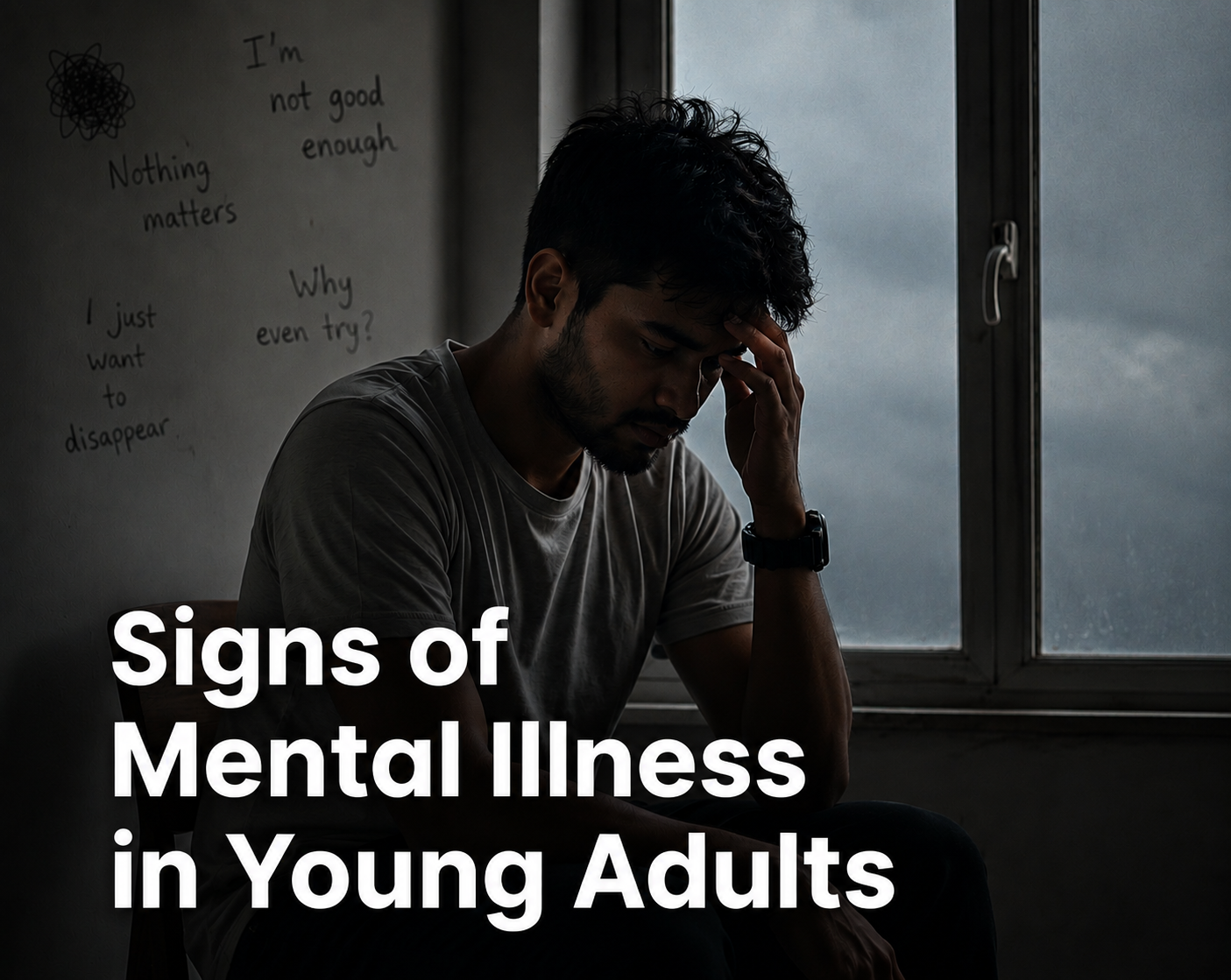
11. Talking About Feeling Hopeless or Worthless
Statements like “nothing matters” or “what’s the point” should always be taken seriously, even if said casually. This is one of the most important signs to never ignore.
12. Physical Complaints Without a Clear Cause
Frequent headaches, stomachaches, fatigue, or other unexplained physical symptoms can sometimes be the body’s way of expressing psychological distress.
Why These Early Signs of Mental Illness in Young Adults Often Go Unnoticed
Young adults are often skilled at masking their struggles — either out of fear of being judged, a desire for independence, or simply not having the vocabulary to describe what they’re feeling. Many families also normalize stress as “part of growing up,” which can delay recognition. Additionally, social media tends to present a curated, filtered version of life, making it harder for both young adults and their families to gauge what’s genuinely going on beneath the surface.
What to Do If You Notice These Signs
If you recognise several of these early signs of mental illness in young adults in yourself or someone you love, here are some constructive first steps:
Start a conversation. Approach the topic gently and without judgment. Simply asking “How have you really been feeling lately?” can open the door.
Listen without trying to fix everything immediately. Sometimes what’s needed most is to feel heard.
Avoid dismissive language. Phrases like “just snap out of it” or “everyone goes through this” can shut down communication.
Encourage professional support. A qualified mental health professional can help identify what’s going on and recommend an appropriate path forward.
Be patient. Recovery and self-understanding take time, and consistent support matters more than quick fixes.
When to Seek Professional Help
If these early signs of mental illness in young adults persist for more than two weeks, worsen over time, or begin to interfere with daily functioning — relationships, academics, work, or self-care — it’s time to consult a mental health professional. Early intervention is strongly associated with better long-term outcomes, making it one of the most valuable steps a young adult or their family can take.
If there is ever a mention of self-harm, suicide, or feeling like life isn’t worth living, this should be treated as urgent, and immediate professional or emergency support should be sought.
Final Thoughts: Recognising the Early Signs of Mental Illness in Young Adults
Recognising the early signs of mental illness in young adults isn’t about labelling normal ups and downs as something clinical — it’s about paying attention to patterns that persist and genuinely affect a person’s quality of life. The earlier these signs are identified, the sooner young adults can access the right support, tools, and guidance to navigate this pivotal stage of life with confidence.
At Delhi Mind Clinic, we understand how overwhelming this journey can feel — for young adults and their families alike. Our team is here to listen, guide, and support you through every step, with compassion and without judgment.
Being able to spot the early signs of mental illness in young adults — and acting on them — is one of the most powerful things a family or individual can do.