For general questions, please send us a message and we’ll get right back to you. You can also call us directly to speak with a member of our service team or insurance expert.
AI has quietly moved from our work desks into our private lives. A few years ago we used it to find information or finish a task faster. Today, many people open a chatbot to talk about their worries, their loneliness and even their relationships.
Is that harmless, or is something deeper going on? At Delhi Mind Clinic, we hear this question more and more. Here is what Dr. Paramjeet Singh, Consultant Psychiatrist, and Dr. Sugandha Gupta want you to know.
ai insights
1. Why AI Feels Like a Friend So Quickly
Think about what a good friend offers. They are available, they listen, and they don’t judge. A chatbot offers all three, at any hour, with no waiting and no awkward silence.
“Finding a person who has the time and the trust to listen is not always easy,” says Dr. Paramjeet Singh. “A chatbot is always there. It answers instantly and never criticises. That is exactly why many people start treating it as an emotional solution.”
Sharing a thought with a chatbot now and then is not wrong. The concern begins when it becomes the only place where we share our feelings.
2. Young People and Chatbots: What the Numbers Say
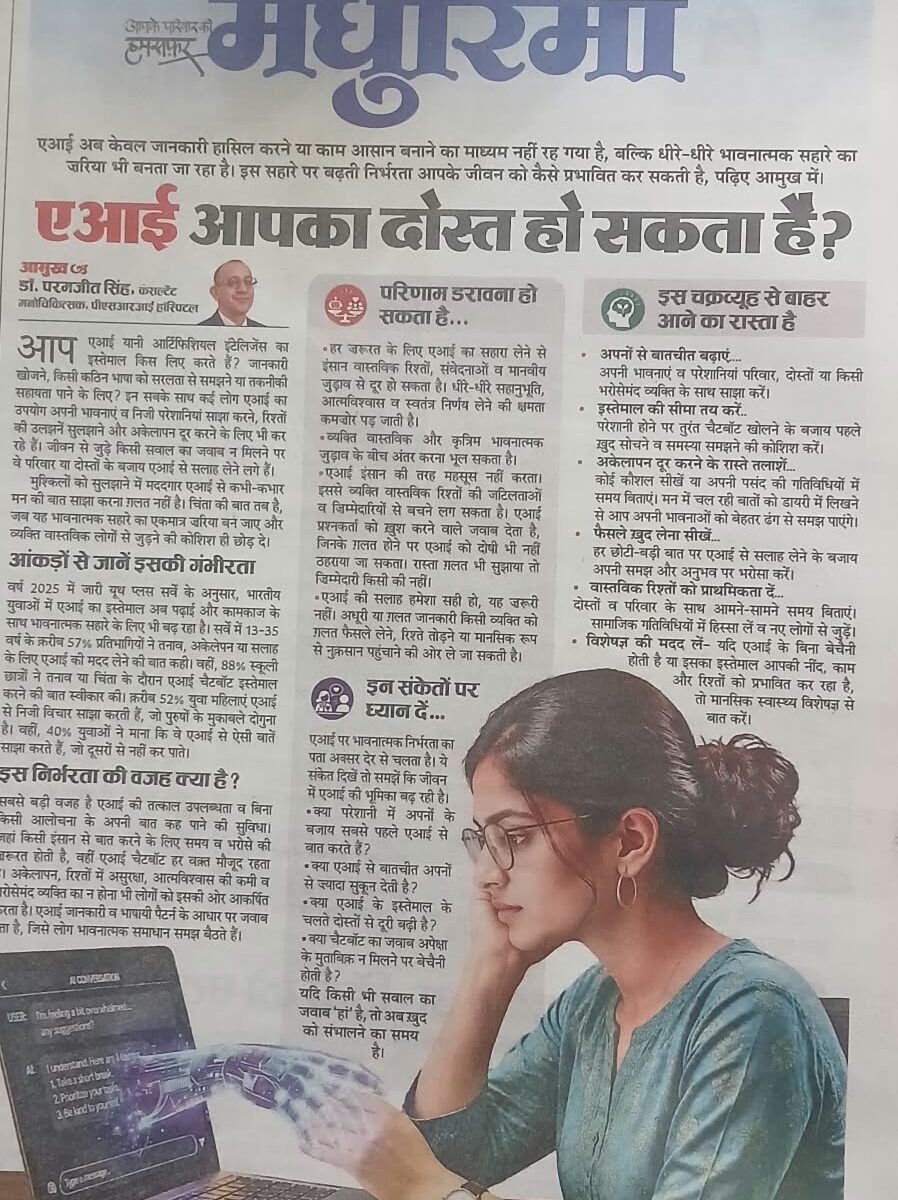
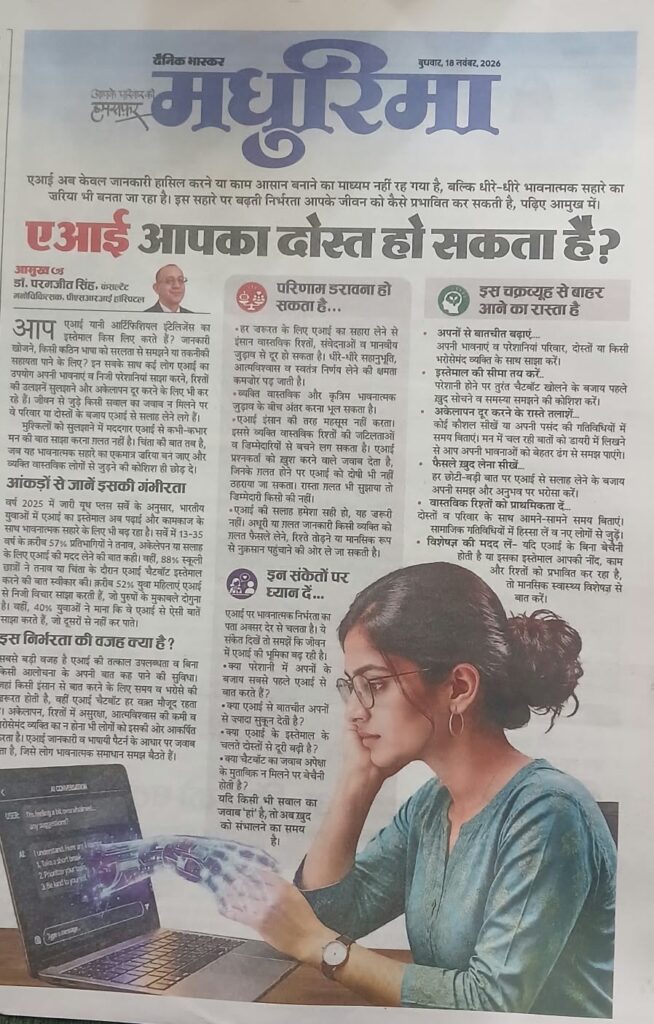
The article that inspired this post cites a Youth Plus survey from 2025 on Indian youth. As reported there:
About 57% of respondents aged 13 to 35 said they would turn to a chatbot during stress, loneliness or when seeking advice.
Around 88% of school students said they had used one while feeling stressed or anxious.
About 52% of young women said they share personal thoughts with these tools, roughly double the share of men.
About 40% of young people said they tell a chatbot things they cannot tell anyone else.
These numbers suggest that many young people feel unheard, and that AI has become the easiest place to be heard.
3. The Hidden Risks of Relying on AI Emotionally
This is where our concern as mental health professionals grows.
It does not feel anything. A chatbot can produce caring words, but it has no real empathy. Over time, a person may begin to avoid the messy, human side of relationships.
It tends to please. These tools are designed to give answers that satisfy the person asking. You may hear agreement when you actually need honest guidance.
It can be wrong. Incomplete or incorrect advice on a sensitive personal matter can lead to poor decisions, strained relationships and emotional harm. When that happens, no one is accountable.
Your own strengths can weaken. If every small decision goes through a chatbot, self-confidence and independent thinking slowly fade.
4. Signs of Unhealthy Emotional Dependence
Dependence like this usually builds slowly. Ask yourself:
Do I talk to a chatbot first, before the people close to me?
Does chatting with it comfort me more than talking to family or friends?
Have I drifted away from friends since I started using it so much?
Do I feel restless when it doesn’t respond the way I expected?
If you answered “yes” to any of these, it is a good moment to pause and take stock. It doesn’t mean something is wrong with you. It means your support system may need some attention.
5. Dr. Sugandha Gupta on Why AI Cannot Replace Real Connection
“Healing happens in relationships,” says Dr. Sugandha Gupta. “When someone sits across from you and notices your tone, your silence and your body language, that is something no chatbot can truly do. It can be a useful tool, but it should never become the only listener in your life.”
She adds that lonely people often turn to technology first because it feels safe. The real goal, she says, is to rebuild that sense of safety with people, slowly and at your own pace.
6. How to Use AI Safely: 5 Practical Steps
You don’t have to quit. You just need to use these tools with awareness.
Talk to people first. Share your feelings with family, friends or someone you trust before reaching for a chatbot.
Pause before you type. When you feel distressed, try to understand the problem yourself first.
Set limits. Decide how much time you give to these conversations each day.
Find other outlets. Learn a skill, follow a hobby, or write your thoughts in a diary.
Make your own decisions. For everyday choices, trust your judgment and experience instead of asking a chatbot every time.
Spending face-to-face time with family and friends, and joining social activities, helps you build connections that no screen can replace.
7. When to Talk to a Professional About AI Use
If your sleep, work or relationships are being affected, or if you can’t stop even when you want to, please speak to a professional. Seeking help is a sign of strength.
A psychiatrist or psychologist can help you understand what you are really feeling and why, and guide you toward healthier ways of coping. You can read more on our anxiety treatment page and our counselling services.
For general information, these external resources are helpful:
Frequently Asked Questions About AI and Mental Health
Is it wrong to share my feelings with a chatbot?
Not if it is occasional. It becomes a concern when it replaces real conversations.
Can AI replace a therapist?
No. A chatbot cannot assess your overall situation, notice warning signs or take responsibility for your care.
How do I know if I’m too dependent?
If you consistently turn to it before people, feel restless without it, or are pulling away from loved ones, it is time to reassess.
Final Thoughts
AI can be a helpful tool, but it is not a friend in the true sense. It is a tool that talks like one. Use it wisely, keep your real relationships strong, and reach out for professional support when you need it.