For general questions, please send us a message and we’ll get right back to you. You can also call us directly to speak with a member of our service team or insurance expert.
Walk into any Indian classroom, scroll through any teenager’s Instagram feed, or sit at any family dinner table, and you’ll likely find a conversation — spoken or unspoken — about how someone looks. “You’ve put on weight.” “Why are you so dark?” “Beta, eat less rice.” These comments, often meant casually, are shaping how an entire generation of Indian teenagers sees themselves.
Body image issues among Indian teens are no longer a rare concern whispered about in therapy rooms. They are becoming a widespread, everyday reality — and one that deserves far more attention than it currently gets. Understanding why body image issues among Indian teens are becoming so common is the first step toward helping the young people in our lives feel more at home in their own skin.
What Is Body Image, and Why Does It Matter So Much in the Teenage Years?
Body image refers to how a person perceives, thinks, and feels about their own body — not just how they actually look. During adolescence, the body is changing rapidly, identity is still forming, and peer approval matters intensely. This makes teenagers especially vulnerable to developing a distorted or negative view of themselves.
When body image issues take root early, they don’t just affect confidence. They can shape a teen’s relationship with food, exercise, social situations, and their own sense of self-worth for years to come. This is precisely why body image issues among Indian teens deserve early attention rather than being brushed aside as a passing phase.
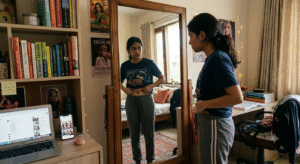
Body image issues among Indian teens
Why Are Body Image Issues Rising Among Indian Teens?
Several overlapping factors are fuelling body image issues among Indian teens today:
1. Social Media and the Filtered Reality
Instagram, Snapchat, and short-video platforms expose teens to a constant stream of edited, filtered, and curated images. Many teens compare their unfiltered, everyday selves to these unrealistic standards, leading to persistent dissatisfaction with their own appearance.
2. Cultural Obsession With Fairness and “Ideal” Body Types
India’s long-standing preoccupation with fair skin, slimness for girls, and muscularity for boys sends a strong, often unspoken message: your worth is tied to your appearance. Advertisements, matrimonial preferences, and even well-meaning relatives reinforce these narrow ideals.
3. Family Comments and “Casual” Body Shaming
Comments about weight, height, skin tone, or eating habits made by parents, grandparents, or relatives — often without any harmful intent — can leave lasting emotional marks. Many Indian teens report that some of the most hurtful body-related remarks come from within their own homes.
4. Academic and Social Pressure
Board exams, competitive coaching classes, and packed schedules leave little room for physical activity, rest, or emotional processing. This pressure often gets tangled up with body image, especially when appearance becomes another area where teens feel they must “perform.”
5. Peer Comparison and Bullying
Nicknames based on weight or complexion, teasing in school WhatsApp groups, or exclusion based on appearance can quietly erode a teenager’s self-esteem over time.
Signs a Teen May Be Struggling With Body Image
Recognising body image issues among Indian teens early can make a real difference. Parents, teachers, and caregivers can watch for signs such as:
Frequently criticizing their own appearance or comparing themselves to others
Avoiding mirrors, photos, or social gatherings
Sudden changes in eating patterns or excessive focus on food and exercise
Wearing baggy clothes to “hide” their body, or the opposite — becoming preoccupied with certain outfits
Withdrawing from friends, sports, or activities they once enjoyed
Increased irritability, anxiety, or low mood, especially around appearance-related topics
Seeking constant reassurance about how they look
It’s important to note that occasional self-consciousness is a normal part of growing up. The concern arises when these thoughts and behaviours become persistent, distressing, or start affecting daily functioning.
The Emotional and Mental Health Impact
Left unaddressed, body image issues among Indian teens can contribute to:
Chronic low self-esteem and self-worth tied entirely to appearance
Social withdrawal and isolation
Anxiety and depressive symptoms
Unhealthy relationships with food and exercise
Difficulty forming secure, confident identities into adulthood
This is why body image struggles should never be dismissed as “just a phase” or vanity. For many teens, this is a genuine emotional burden that shapes how they experience the world.
How Parents Can Support a Teen Struggling With Body Image
Addressing body image issues among Indian teens often starts at home. Here’s how parents can help:
Watch your own language. Avoid commenting on your teen’s body, weight, or food choices — even in jest. Model body-neutral or body-positive language at home.
Create space for open conversation. Let your teen know they can talk about how they feel about their appearance without judgment or immediate advice-giving.
Focus on what the body can do, not just how it looks. Encourage strength, energy, and capability rather than appearance-based praise.
Limit appearance-focused comparisons within the family, including comparing siblings or cousins.
Be mindful of social media use and have honest conversations about filters, editing, and curated content — without shaming your teen for using these platforms.
Notice, don’t ignore. If you observe persistent distress, withdrawal, or changes in eating or mood, take it seriously rather than assuming it will pass.
How Teens Can Build a Healthier Relationship With Their Body
Teens themselves can also take small, meaningful steps to work through body image issues:
Curate your social media feed — unfollow accounts that consistently make you feel inadequate.
Practice noticing when you’re engaging in negative self-talk, and gently challenge it.
Spend time with people who make you feel accepted as you are.
Engage in movement or activities you genuinely enjoy, rather than ones focused purely on changing your appearance.
Remember that photos and reels rarely reflect real, everyday life.
When to Seek Professional Support
If body image concerns are affecting your teen’s mood, relationships, eating habits, school performance, or overall sense of self, it may be time to consult a mental health professional. Early support can make a significant difference — helping teens build resilience, self-compassion, and a healthier sense of identity before these patterns become deeply entrenched.
At Delhi Mind Clinic, our team works closely with adolescents and families across Delhi to address body image issues among Indian teens with sensitivity, evidence-based approaches, and a non-judgmental space where teens feel truly heard.
Expert Insights on Body Image Issues Among Indian Teens
“In my practice, I’ve noticed that Indian teens rarely talk about body image in isolation — it’s usually tangled up with academic pressure, family expectations, and how they’re perceived by peers. What helps most is when parents shift the conversation from ‘how do you look’ to ‘how do you feel,’ and when teens learn that their worth was never meant to be measured by a mirror.” — Dr. Sugandha Gupta
“One pattern I see often is that teens who struggle with body image stay silent for a long time before anyone notices. Families sometimes mistake withdrawal or irritability for ‘typical teenage moodiness.’ My advice to parents is simple: don’t wait for a crisis to start the conversation. Early, non-judgmental support changes outcomes significantly.” — Dr. Paramjeet Singh
Frequently Asked Questions
Q1: At what age do body image issues among Indian teens typically begin? Body image concerns often start emerging around early adolescence (ages 11–14), as physical changes, peer comparison, and social media exposure increase, though they can appear earlier or later depending on the individual.
Q2: Are boys also affected by body image issues, or is it mainly girls? While much of the conversation focuses on girls, boys are increasingly affected too — often around muscularity, height, and body shape — though they may be less likely to talk about it openly.
Q3: How is body image different from an eating disorder? Body image concerns relate to how a person perceives and feels about their appearance. Eating disorders are diagnosable mental health conditions involving disordered eating patterns. Not everyone with body image issues develops an eating disorder, but body image struggles are often an early risk factor — professional evaluation is important if eating patterns change significantly.
Q4: How can schools help address body image issues among Indian teens? Schools can play a big role through awareness sessions, training teachers to avoid appearance-based comments, encouraging media literacy, and creating safe spaces for students to discuss self-esteem and mental health.
Body image issues among Indian teens are shaped by a complex mix of culture, family, social media, and academic pressure. But with awareness, open conversation, and timely support, teens can be guided toward a healthier, more compassionate relationship with themselves. Addressing body image issues among Indian teens isn’t about a single conversation — it’s an ongoing, everyday practice of empathy at home and, when needed, professional guidance.
If you’re concerned about your teen’s emotional wellbeing or relationship with their body image, reaching out to a qualified mental health professional can be a meaningful first step. Tackling body image issues among Indian teens early — with empathy at home and expert support when needed — can help the next generation grow up feeling truly comfortable in their own skin.