For general questions, please send us a message and we’ll get right back to you. You can also call us directly to speak with a member of our service team or insurance expert.
Teletherapy is simply therapy that happens over a video call, a phone call, or a secure chat instead of inside a clinic room. You speak to a trained mental health professional from your own home, your office cabin, or even a quiet corner of a café.
A few years ago, many of us would have laughed at the idea of sharing personal worries through a screen. Today, it is a normal part of how people look after their health. If you live in Delhi, you already know the reality. Two hours of traffic for a 50-minute appointment is hard to justify, and that is often where good intentions stop.
Teletherapy removes that barrier. In this guide, we explain how it works, who it suits, and how to begin. We have also included the views of two of our clinicians, Dr. Sugandha Gupta and Dr. Paramjeet Singh.
How Does Teletherapy Work?
The process is much simpler than most people expect.
Book a slot. Choose a time that suits you through our website or by phone.
Share a little about yourself. A short intake form helps us understand what you are going through.
Get your link. You receive a private joining link on your phone or email.
Meet your therapist. Join from any device with a camera, a microphone, and a steady internet connection.
Plan the next steps. Your therapist will discuss goals and how often you should meet.
That’s it. No special software knowledge is needed.
Teletherapy
7 Proven Benefits of Teletherapy
1. It saves time
No travel, no parking, no waiting room. Your session fits between meetings or after the kids are asleep.
2. It feels more private
Many people hesitate to visit a mental health clinic because they worry about being seen. With teletherapy, that worry goes away.
3. You are more relaxed at home
Sitting on your own sofa with a cup of chai often makes it easier to speak honestly.
4. It reaches more people
Students living away from home, working professionals who travel, people with limited mobility, and families abroad can all access the same care.
5. Sessions stay regular
Rain, strikes, and heavy traffic do not cancel your appointment. Regular sessions matter because progress in therapy builds slowly.
6. You can choose the right professional
You are not restricted to someone who lives nearby, so it is easier to find a therapist who suits your needs and communication style.
7. It is easier to start
For a first-timer, logging in from home feels far less intimidating than walking into a clinic.
What Can Teletherapy Help With?
People come to us with many kinds of concerns, including:
Work stress and burnout
Constant worry or anxious thoughts
Persistent low mood
Relationship and family conflicts
Grief and loss
Low confidence
Exam and career pressure
Difficulty adjusting to big life changes
You do not need to be in crisis to start. Many people come simply because they feel “not like themselves” and want to understand why.
Expert Opinion: What Our Clinicians Say About Teletherapy
“One thing I notice is that people open up faster in teletherapy than they expect. Being in a familiar space lowers their guard. They often tell me in the second or third session that they would have put off therapy for months if they had to travel for it. For a lot of my clients, the biggest hurdle was never the therapy itself. It was getting through the door.”
“Teletherapy works best when the person is willing to show up regularly and be honest. The screen is only a medium. What heals is the relationship between client and therapist. I would also say that online care is not meant for every situation. If someone is in a serious crisis, or if I feel an in-person assessment is needed, I will always recommend meeting face to face.”
Is Teletherapy as Effective as In-Person Therapy?
For many common concerns, research suggests that online therapy can work as well as sitting across from a therapist. The strongest factor is the bond you build with your therapist, along with your own consistency.
That said, teletherapy is not a perfect fit for everyone. If you are in immediate danger or facing a severe emergency, please seek in-person help right away. You can read more about mental health care on the World Health Organization’s mental health page. If you need free support in India, the government’s Tele-MANAS service offers tele-counselling across the country.
6 Simple Tips to Get the Most Out of Your Teletherapy Session
Pick a private spot. A closed room works best.
Check your connection a few minutes early.
Wear earphones. They improve audio and protect your privacy.
Keep a notebook nearby to jot down thoughts or tasks.
Be honest, even when it is awkward. Your therapist is there to help, not to judge.
Give it time. Trust builds over a few sessions, not one.
Is Teletherapy Confidential?
Yes. Confidentiality is a basic part of professional mental health care. At Delhi Mind Clinic, your personal details and session content are handled with strict care. To protect yourself further, join from a private network, not public Wi-Fi, and keep your device secure.
Who Should Try Teletherapy?
Teletherapy could suit you if you:
have a packed schedule and little time to travel,
feel more comfortable speaking from home,
live outside Delhi or travel frequently,
are a student, a working professional, or a full-time caregiver,
have wanted to try therapy but felt nervous about visiting a clinic.
Frequently Asked Questions About Teletherapy
How long does a teletherapy session last?
Most sessions run for 45 to 60 minutes.
Do I need any special equipment?
No. A phone, tablet, or laptop with a camera and a stable connection is enough.
Can I switch between online and in-clinic sessions?
In many cases, yes. Speak to our team about the options available.
Is teletherapy only for serious problems?
Not at all. Everyday stress and personal growth are good reasons to begin.
How do I know if teletherapy is right for me?
A short first conversation with a professional will help you decide.
Ready to Begin Your Teletherapy Journey?
Asking for help is not weakness. It is one of the most sensible decisions you can make for yourself. If you have been thinking about it for a while, this is a good time to start.
If you or someone you know is in immediate danger, please contact local emergency services or go to the nearest hospital. Teletherapy is not a substitute for emergency care.
The history of autism is a story of curiosity, misunderstanding, and, finally, compassion. For more than a century, doctors, researchers, and families have worked to understand why some people experience the world differently. Today, we know autism as a lifelong neurodevelopmental difference. But that understanding took many decades to build.
At Delhi Mind Clinic, parents often ask us, “Is autism new?” or “Why do we hear about it so much more now?” The answer lies in the history of autism itself. In this guide, we walk through seven major milestones, bust a few myths, and share what our experts, Dr. Sugandha Gupta and Dr. Paramjeet Singh, want every family to know.
Quick Answer: Autism was first named in the early 1900s, described as a distinct condition in the 1940s, and officially recognised as a spectrum in 2013. Our understanding has changed enormously since then.
What Is Autism? A Brief Overview
Before exploring the history of autism, let us define it. Autism spectrum disorder (ASD) is a neurodevelopmental condition. It affects how a person communicates, interacts with others, and processes sensory information.
It is called a “spectrum” because every person is different. Some individuals need significant daily support. Others live independently and have remarkable strengths in areas like memory, pattern recognition, or creativity.
Autism did not suddenly appear in the 20th century. Historians believe that people with autistic traits have always existed. Old records describe individuals who were deeply focused on particular interests, spoke very little, or behaved in ways that communities found unusual.
However, without a medical term, these individuals were often misunderstood. Many were labelled with unrelated conditions. Others were simply described as “odd” or “different.” This lack of language is an important part of the early history of autism.
history of autism
Milestone 1: 1911 – The Word “Autism” Is Born
The word itself comes from the Greek word autos, meaning “self.” In 1911, Swiss psychiatrist Eugen Bleuler used the term “autism” while describing withdrawal from the outside world in adults with schizophrenia.
This early meaning was very different from how we use the word today. Still, it marks the first step in the history of autism as a named concept.
Milestone 2: 1943 – Leo Kanner’s Groundbreaking Study
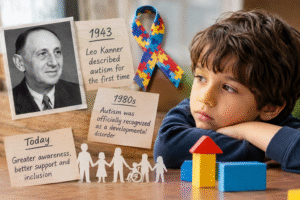
In 1943, American child psychiatrist Leo Kanner published a landmark paper describing eleven children. These children showed strong difficulty connecting with others, a need for sameness, and unusual responses to their surroundings.
Kanner called the condition “early infantile autism.” Most experts agree that this paper is the true starting point of the modern history of autism as a clinical condition.
Milestone 3: 1944 – Hans Asperger’s Parallel Work
At almost the same time, Austrian paediatrician Hans Asperger described a group of children with strong verbal skills but marked social difficulties. His work was written in German and remained unknown to the English-speaking world for decades.
Later research, including historical studies published in 2018, raised serious questions about Asperger’s wartime role. Because of this, many clinicians now prefer the broader term “autism spectrum disorder” over “Asperger syndrome.”
Milestone 4: The 1950s–1960s – A Dark Chapter of Myths
An honest history of autism must include its painful mistakes. For several years, some experts wrongly believed that cold or distant parenting caused autism. This idea, often called the “refrigerator mother” theory, placed enormous blame and guilt on mothers.
This theory was completely incorrect. In 1964, psychologist Bernard Rimland challenged it in his book Infantile Autism, arguing that autism has biological roots. His work, along with growing parent advocacy, helped change the direction of research.
Dr. Paramjeet Singh shares: “Even today, I meet parents who quietly carry guilt, wondering if they did something wrong. The history of autism clearly shows that blaming parents was a scientific error. Autism is not caused by poor parenting. Families need support, not judgement.”
Milestone 5: 1980 – Autism Gets an Official Diagnosis
In 1980, autism was formally included in the American Psychiatric Association’s diagnostic manual (DSM-III) as a separate condition. Before this, many children were wrongly grouped under childhood schizophrenia.
This change was a turning point in the history of autism. It gave clinicians a common language, helped researchers study autism properly, and opened the door to services in schools and clinics.
Milestone 6: 1981 and the 1990s – The Spectrum Idea Grows
In 1981, British psychiatrist Lorna Wing introduced the idea that autistic traits exist across a wide range. She helped popularise the term “Asperger syndrome” in English and shaped the modern “spectrum” concept.
During the 1990s, diagnostic criteria widened, and awareness grew rapidly. More children, including girls and those with milder presentations, began to be identified. This is one reason why diagnosis numbers have increased over time.
Milestone 7: 2013 – One Spectrum, One Diagnosis
In 2013, the DSM-5 merged several separate labels into a single diagnosis: autism spectrum disorder. Doctors now describe each person’s support needs in areas such as social communication and repetitive behaviours.
Many parents worry that autism is “increasing.” Looking at the history of autism helps explain this. Several factors play a role:
Better awareness: Parents and teachers now recognise early signs.
Wider criteria: The spectrum approach includes more people.
Improved screening: Paediatric check-ups now include developmental questions.
Reduced stigma: Families are more willing to seek help.
Dr. Sugandha Gupta explains: “When we study the history of autism, we see that these children were always there. What has changed is our ability to notice, understand, and support them. Early identification gives a child the best chance to build communication and confidence.”
How Autism Care Has Changed Over Time
The history of autism also shows a major shift in how we support people. Decades ago, many individuals were placed in institutions. Today, care focuses on understanding the whole person.
Modern support commonly includes:
Early developmental assessment by a qualified specialist.
Speech and communication support tailored to the child.
Occupational and sensory-based activities to help with daily skills.
Behavioural and social skills guidance for children and families.
Inclusive education plans that respect the child’s learning style.
Parent counselling so families feel confident and supported.
Every plan should be personalised. There is no single approach that fits all.
The Neurodiversity Movement: A New Chapter
One of the most hopeful chapters in the history of autism began in the 1990s. Autistic self-advocates, including author and speaker Temple Grandin, began sharing their own voices. The neurodiversity movement encouraged society to see autism as a natural variation of the human brain, not simply something to be “fixed.”
Dr. Paramjeet Singh adds: “Today, our goal is not to make a child ‘normal.’ Our goal is to help each child communicate, learn, and enjoy life in their own way. Respecting strengths is just as important as addressing challenges.”
Common Myths the History of Autism Has Corrected
Myth: Bad parenting causes autism. Fact: It does not.
Myth: Autistic people have no feelings. Fact: Many feel deeply but express emotions differently.
Myth: Autism only affects boys. Fact: Girls are often diagnosed later because their signs can be subtle.
Myth: Autism can be “outgrown.” Fact: Autism is lifelong, but support can make a real difference.
When Should You Seek an Evaluation?
Knowing the history of autism is helpful, but acting early is even better. Consider speaking with a specialist if your child:
Does not respond to their name by 12 months
Has limited eye contact or shared smiles
Shows delayed speech or loses previously gained skills
Strongly resists changes in routine
Is very sensitive to sounds, textures, or lights
These signs do not always mean autism, but a professional assessment can bring clarity and peace of mind.
Final Thoughts: Learning From the History of Autism
The history of autism reminds us how far we have come, from confusion and blame to science, empathy, and inclusion. There is still more to learn, but one lesson is clear: understanding leads to better support.
If you have concerns about your child’s development or want guidance as a family, our team is here to help. Book a consultation with Dr. Sugandha Gupta or Dr. Paramjeet Singh at Delhi Mind Clinic and take the first step with confidence.
Frequently Asked Questions
Who first discovered autism? Eugen Bleuler first used the word in 1911, while Leo Kanner described autism as a distinct condition in children in 1943.
Is the history of autism the same as the history of Asperger syndrome? No. Asperger syndrome was described separately in 1944 and is now included within autism spectrum disorder.
Can autism be detected early? Yes. Many signs can be noticed in the first two years of life, and early assessment is encouraged.
An ADHD assessment for adults is a structured clinical evaluation. It tells you whether ADHD explains your long-standing struggles with focus, time and organisation.
Do you start tasks but rarely finish them? Do you lose keys, miss deadlines or feel restless even when you are tired? Many adults live this way for years and blame themselves. For some, the real reason is Attention Deficit Hyperactivity Disorder (ADHD).
This guide explains the warning signs, what happens in an ADHD assessment for adults, and how to choose a trusted clinic in Delhi.
What Is Adult ADHD?
ADHD is a neurodevelopmental condition. It affects attention, planning, impulse control and activity levels.
It begins in childhood, but it is often missed. Many adults in India grew up hearing that they were lazy, careless or “too sensitive”. They were never assessed.
In adults, ADHD rarely looks like a child bouncing off the walls. Restlessness often turns into a constant inner buzz, while problems with focus and organisation show up at work, in studies and at home. You can read more in this overview of ADHD from the National Institute of Mental Health.
adhd assessment
7 Warning Signs You May Need an ADHD Assessment for Adults
Signs differ from person to person. These seven are the most common:
Trouble starting or finishing tasks. You plan well but struggle to begin, or you leave work half done.
Poor time management. You are often late, underestimate how long things take or miss deadlines.
Forgetfulness. You lose keys, phones and documents, or forget bills and appointments.
Easy distraction. Your mind drifts in meetings, conversations and while reading.
Inner restlessness. You find it hard to relax, or you feel “on” all the time.
Impulsive choices. You make sudden purchases, interrupt others or quit jobs without much thought.
Strong emotions. Small setbacks bring big frustration, or you swing between hyperfocus and boredom.
Having a few of these traits does not mean you have ADHD. Stress, anxiety, low mood and poor sleep can look the same. That is why a proper assessment matters more than an online quiz.
Why an ADHD Assessment for Adults Is Worth It
A careful evaluation can give you:
Clarity. An explanation for lifelong patterns
Less self-blame. More understanding and self-compassion
Better planning. Strategies built around how your mind works
Support at work or in studies. Practical adjustments and coaching
Treatment of related problems. Anxiety, low mood and sleep trouble often travel with ADHD
Stronger relationships. Partners, family and colleagues can understand you better
Who Should Consider an ADHD Assessment for Adults?
It may be time to book an evaluation if:
Your difficulties started in childhood or the teenage years
They affect more than one area of life, such as work, home and relationships
You have tried to “just try harder” for years without lasting change
A child in your family has ADHD and you recognise the same patterns in yourself
You have been treated for anxiety or low mood, but something still feels unexplained
How an ADHD Assessment for Adults Works: Step by Step
There is no single blood test or scan for ADHD. A good ADHD assessment for adults is a careful clinical process, usually led by a psychiatrist or clinical psychologist.
1. Detailed Clinical Interview
The clinician asks about your daily routine, work or studies, relationships, health and lifestyle. You will also talk about when the problems began.
2. Childhood and Developmental History
ADHD starts early in life. The clinician explores your school years and behaviour. Old school reports, or a parent’s or sibling’s memories, can help.
3. Rating Scales and Questionnaires
Validated questionnaires measure the type and severity of symptoms. They support the interview but never replace it.
4. Screening for Other Conditions
Anxiety, depression, sleep disorders, trauma and learning difficulties can mimic ADHD or occur alongside it. The clinician checks for these so nothing is missed.
5. Feedback and a Personalised Plan
You receive a clear explanation of the findings and the next steps that suit you.
How Long Does an ADHD Assessment for Adults Take?
The time depends on how complex your history is and how the clinic works. A proper evaluation takes more than a quick chat and may span more than one session.
Be cautious of any service that offers an instant diagnosis in a few minutes.
Are Online ADHD Tests Reliable?
Online screening quizzes can help you decide whether to seek help. They cannot diagnose ADHD, because they only record how you answer a few questions.
An online quiz is a starting point. It can never replace an ADHD assessment for adults carried out by a qualified professional.
What Happens After an ADHD Diagnosis?
A diagnosis is the start of practical support. Your plan may include:
Psychoeducation for you and your family
Cognitive behavioural strategies for focus, planning and emotions
Skills training in organisation, routines and time management
Coaching and workplace or study adjustments
Lifestyle support, including sleep, exercise and stress management
Treatment of related concerns such as anxiety or low mood
Medical treatment, where your doctor judges it appropriate for you
It is a structured evaluation, including an interview, history and questionnaires. It helps decide whether ADHD is behind long-standing problems with attention, organisation and impulsivity.
Can ADHD be diagnosed for the first time in adulthood?
Yes. Many people are identified in their 20s, 30s, 40s or later, often when work or family demands increase. The symptoms must have been present since earlier in life.
Who can carry out an ADHD assessment for adults?
A qualified mental health professional, usually a psychiatrist or clinical psychologist with experience in adult neurodevelopmental conditions.
What should I bring to my assessment?
Bring old school reports, previous medical or mental health records and a list of your difficulties. A family member who knew you as a child can also help.
Can anxiety or depression be mistaken for ADHD?
Yes. Anxiety, low mood, sleep problems and chronic stress can cause poor concentration and restlessness. A good assessment separates these from ADHD, or finds when they occur together.
Is my assessment confidential?
Yes. Your information is medical information and is treated confidentially by qualified clinicians.
Can women have ADHD too?
Absolutely. Women are often diagnosed late because their symptoms may be more inward, such as daydreaming, disorganisation and anxiety.
Book Your ADHD Assessment for Adults at Delhi Mind Clinic
If you recognise yourself in this article, you do not have to struggle alone. A careful assessment can bring answers, and the right support can make daily life feel more manageable.
At Delhi Mind Clinic, our team offers confidential, evidence-based evaluations for adults, with clear feedback and a personalised plan.
Emetophobia is an intense and persistent fear of vomiting, of seeing someone else vomit, or of feeling nauseous. It is classified as a specific phobia, a type of anxiety disorder in which a particular object or situation triggers disproportionate fear.
Almost nobody enjoys being sick. But for a person with emetophobia, the fear goes far beyond ordinary dislike. It can shape daily routines, food choices, relationships, travel, and career decisions. Many people live with emetophobia for years without knowing it has a name, or that effective help exists.
At Delhi Mind Clinic, we often meet people who say, “I thought I was the only one who felt this way.” You are not alone, and this condition is treatable.
Common Symptoms of Emetophobia
Emetophobia looks different from person to person, but common signs include:
Emotional and mental symptoms
Intense anxiety or panic at the thought of vomiting
Constant worry about getting sick, or about others being sick
Fear of losing control or being embarrassed in public
Distress when hearing or reading about nausea or stomach illness
Physical symptoms
Racing heart, sweating, trembling
Real nausea triggered by anxiety itself (which then feeds the fear)
Shortness of breath, dizziness, or tightness in the chest
Stomach discomfort during stressful moments
Behavioral symptoms (avoidance and safety behaviors)
Avoiding restaurants, street food, hospitals, or crowded places
Strictly limiting what they eat, or checking expiry dates repeatedly
Excessive handwashing or cleaning
Avoiding travel, parties, or public transport
Avoiding pregnancy or being around young children, out of fear of illness
Staying away from people who are unwell
Emetophobia
What Causes Emetophobia?
There is rarely one single cause. Emetophobia usually develops through a mix of factors:
A distressing early experience. A frightening episode of vomiting in childhood, or watching someone else become very ill, can leave a lasting impression.
Anxiety-prone temperament. People who naturally feel anxious or have a strong need for control may be more vulnerable.
Learned behavior. Growing up around a highly anxious or overly cautious caregiver can shape how a child responds to illness.
Related anxiety conditions. Emetophobia often appears alongside generalized anxiety, social anxiety, panic attacks, or obsessive-compulsive patterns.
Stressful life phases. Periods of high stress can trigger or intensify the fear.
Understanding the cause is helpful, but it is not always necessary for recovery. Treatment focuses mainly on changing how the mind and body respond to fear today.
How Emetophobia Affects Daily Life
Left unaddressed, emetophobia can quietly shrink a person’s world. Some people:
Limit their diet to a handful of “safe” foods, which may affect nutrition and weight
Turn down social invitations, weddings, or work travel
Avoid medical care, even when needed
Feel isolated, ashamed, or misunderstood
Develop depression or other anxiety symptoms over time
The good news is that the avoidance cycle can be broken.
Is Emetophobia a Mental Health Condition?
Yes. Emetophobia is a recognized specific phobia. It is not a sign of weakness or something you can “just snap out of.” It is a real anxiety condition with real, evidence-based treatments. A qualified psychiatrist or clinical psychologist can assess your symptoms and rule out other conditions that may look similar, such as health anxiety, OCD, or an eating-related concern.
According to the World Health Organization, anxiety disorders are among the most common mental health conditions worldwide, and effective treatments are available.
Emetophobia Treatment: 5 Proven Approaches
Emetophobia responds well to professional help. For a general overview of how phobias are treated, you can also read the NHS guide to phobias. The most common approaches are:
1. Cognitive Behavioral Therapy (CBT)
CBT helps you identify the thought patterns that fuel the fear, such as “If I feel nauseous, something terrible will happen,” and gradually replace them with realistic, balanced thinking.
2. Exposure Therapy
This is often considered the gold-standard approach for phobias. Under the guidance of a trained therapist, you face your fears in small, manageable steps, building tolerance and confidence at your own pace. The goal is not to force you into distress but to help your mind learn that the feared situation is survivable.
3. Acceptance and Commitment Therapy (ACT)
ACT teaches you to make room for uncomfortable sensations and thoughts without letting them control your choices, so you can move toward what matters in your life.
4. Relaxation and Breathing Techniques
Diaphragmatic breathing, grounding exercises, and progressive muscle relaxation can reduce the physical symptoms of anxiety and help you stay steady during difficult moments.
5. Psychiatric Evaluation When Needed
If emetophobia is accompanied by severe anxiety, panic, or depression, a psychiatrist can evaluate whether additional medical support would be appropriate as part of your overall treatment plan. This is always individualized, so please do not self-treat.
Self-Help Tips to Manage Emetophobia
While professional guidance is the most effective path, these small steps can support your recovery:
Notice avoidance. Write down what you avoid and how it affects your life.
Practice slow breathing. Inhale for four counts, exhale for six.
Challenge catastrophic thoughts. Ask, “What is the actual likelihood of this happening, and could I cope?”
Reduce reassurance-seeking. Repeatedly Googling symptoms or asking others for reassurance may feel calming but strengthens anxiety over time.
Take care of the basics. Regular sleep, balanced meals, and physical activity all lower overall anxiety.
Talk about it. Sharing your fear with a trusted person reduces shame.
When Should You Seek Professional Help?
Consider reaching out to a mental health professional if:
Fear of vomiting is controlling your food, travel, work, or relationships
You are losing weight or avoiding eating because of the fear
You experience panic attacks
You feel hopeless, low, or constantly on edge
You have been struggling for months or years and nothing seems to help
Early support leads to faster, easier recovery, but it is never too late to begin.
Frequently Asked Questions About Emetophobia
1. What is emetophobia?
Emetophobia is an intense, persistent fear of vomiting or of being around vomiting. It is a type of specific phobia and is treatable.
2. How common is emetophobia?
It is more common than most people think, though many sufferers never talk about it because of embarrassment. It appears to affect more women than men, and often begins in childhood or adolescence.
3. Can emetophobia be cured?
Many people recover fully or see a major reduction in symptoms with the right therapy, particularly CBT with exposure-based techniques. Recovery takes time and consistency.
4. Is emetophobia the same as health anxiety or OCD?
No, though they can overlap. A proper clinical assessment helps distinguish between them so that treatment is accurate.
5. Can emetophobia cause nausea?
Yes. Anxiety itself can trigger nausea and stomach discomfort, which can then reinforce the fear and create a difficult cycle.
6. Can children and teenagers have emetophobia?
Yes. It often starts early in life. Children may show it through food refusal, school avoidance, or frequent stomach complaints. Early, gentle support makes a big difference.
7. How long does emetophobia treatment take?
This varies by person and severity. Many people begin to notice improvement within a few weeks to a few months of regular therapy.
You Don’t Have to Face This Alone
Emetophobia can feel overwhelming, but it does not have to define your life. With the right support, you can eat, travel, socialize, and live without constant fear.
At Delhi Mind Clinic, our team provides compassionate, confidential, and evidence-based care for anxiety, phobias, and related conditions. If emetophobia is affecting your life or the life of someone you love, we are here to help.
Schizophrenia is a serious but treatable mental health condition that affects how a person thinks, feels and behaves. Searches for schizophrenia have been rising lately, partly because more people are talking openly about mental health and partly because families are noticing changes in loved ones and want answers.
If you or someone close to you has been acting differently, this guide will help. It explains the early signs, the causes, the treatment options, and when to see a specialist.
What Is Schizophrenia?
Schizophrenia is a long-term brain condition that changes how a person perceives reality. The World Health Organization estimates that it affects around 1 in 300 people worldwide.
It usually begins in the late teens to early thirties. It can look different from person to person, which is why it is often missed in the early stages.
Schizophrenia is not a “split personality.” It is also not caused by weak willpower, bad parenting or black magic. It is a medical condition, and it responds to proper care.
Schizophrenia
7 Warning Signs of Schizophrenia
Not everyone shows all of these. Several signs together, lasting for weeks, are a reason to seek help.
1. Hearing or Seeing Things Others Do Not
Hearing voices that nobody else hears is one of the best-known signs of schizophrenia. Some people also see things that are not there.
2. Strong False Beliefs (Delusions)
The person may believe they are being watched, followed or harmed, or that they have special powers. Logical explanations do not change these beliefs.
3. Confused or Disorganised Speech
Sentences may jump from topic to topic or make little sense. Following a conversation becomes hard.
4. Withdrawal From Family and Friends
Someone who used to be social may start staying alone, skipping meals and avoiding contact. Families often mistake this for laziness or a phase.
5. Drop in Study or Work Performance
A sudden fall in grades, focus or job performance can be an early signal of schizophrenia, especially in young adults.
6. Flat or Unusual Emotions
The person may seem emotionless, laugh at odd moments, or react in ways that do not match the situation.
7. Neglecting Self-Care
Poor hygiene, disturbed sleep and loss of daily routine are common as the condition progresses.
What Causes Schizophrenia?
There is no single cause. Research points to a mix of factors:
Genetics: A family history raises the risk.
Brain chemistry and development: Differences in how brain circuits work play a role.
Stress and trauma: Severe stress can trigger symptoms in someone who is already vulnerable.
Substance use: Cannabis and other drugs can increase the risk or bring on an early episode.
Having one of these risk factors does not mean a person will develop schizophrenia.
Common Myths About Schizophrenia
Myth: People with schizophrenia are violent. Fact: Most are not. They are far more likely to be harmed than to harm others.
Myth: It cannot be treated. Fact: With the right care, many people live stable, productive lives.
Myth: It is caused by a curse or lack of discipline. Fact: It is a medical condition.
Stigma often delays treatment by years. Early help leads to better outcomes.
How Is Schizophrenia Treated?
Treatment works best when it combines several approaches, guided by a qualified psychiatrist:
Medical treatment prescribed and monitored by a psychiatrist to reduce symptoms.
Psychotherapy, such as cognitive behavioural therapy, to manage thoughts and stress.
Family education and support, so loved ones understand the condition and can help.
Rehabilitation and skills training to rebuild routine, work and social confidence.
Healthy lifestyle habits, including regular sleep, exercise and avoiding alcohol and drugs.
Please never stop or change treatment without your doctor’s advice.
“Families often wait until the situation becomes severe before seeking help. With schizophrenia, the early months matter a great deal. If someone shows sudden withdrawal, unusual beliefs or disturbed sleep, please consult a mental health professional early. Timely care can change the course of the illness.”
“Schizophrenia is a medical condition, not a personal failing. Recovery is possible when treatment is continued regularly and the family stays involved. Patience, understanding and a non-judgmental attitude at home are as important as clinical care.”
When Should You See a Doctor?
Consult a psychiatrist if you notice:
Hearing voices or seeing things others do not
Strong, fixed suspicions or fears without basis
Sudden withdrawal and a decline in daily functioning
Talk of self-harm or harming others (seek urgent help immediately)
How to Support Someone With Schizophrenia
Listen calmly without arguing about their beliefs.
Avoid blame, labels and ridicule.
Encourage regular treatment and follow-ups.
Learn about the condition so you can respond with confidence.
Look after your own wellbeing as a caregiver too.
Frequently Asked Questions About Schizophrenia
Can schizophrenia be cured?
Schizophrenia is a long-term condition, but symptoms can be well controlled with consistent treatment, and many people lead fulfilling lives.
At what age does schizophrenia start?
Usually between the late teens and early thirties, though it can appear at other ages.
Is schizophrenia hereditary?
Family history increases the risk, but most people with a relative who has schizophrenia never develop it.
Can stress cause schizophrenia?
Stress alone does not cause it, but it can trigger symptoms in people who are already vulnerable.
Final Thoughts
Schizophrenia is not the end of a person’s story. Understanding the signs, ending the stigma and seeking help early make a real difference.
Concerned about schizophrenia in yourself or a loved one? Book a confidential consultation with the specialists at Delhi Mind Clinic today. Support is available, and recovery is possible.
OCD and other mental health conditions are still misunderstood in India. Many people stay silent out of fear of being judged. But when famous faces speak openly about their own struggles, the conversation changes.
This post celebrates ten popular Indian stars who have shared their mental health journeys publicly. None of them are named here as having OCD. Their stories matter because they have made it easier for everyone, including people living with OCD, to talk about mental health and seek help.
Top 10 Indian Stars Who Helped Break the Mental Health Stigma
1. Deepika Padukone
deepika padukone
She is the best-known voice on the subject in India. Deepika founded The Live Love Laugh Foundation to reduce stigma around mental health and encourage people to seek help. Her work was honoured with a Crystal Award at the World Economic Forum in 2020. harpersbazaararabiaCNBC
2. Shah Rukh Khan
The superstar has spoken about a low phase after a long injury recovery, and has said he felt depressed. He is among the Indian stars who have talked about fighting depression and anxiety. His openness showed that even the most successful people can struggle. gulfnews
3. Anushka Sharma
anushka sharama
The actress and producer has spoken about living with anxiety, and has described it as a normal, biological health issue rather than a weakness.
4. Alia Bhatt
alia bhatt
Alia has spoken about anxiety and about managing attention difficulties. She has described using discipline, mindfulness and routines to cope. Her honesty resonates with young Indians in particular. vintageisthenewold
5. Shruti Haasan
shruti haasan
Shruti has said she is always looking for tools to deal with anxiety, and that mental health awareness should not be limited to one day on the calendar. She is a strong voice for ongoing, year-round conversation. gulfnews
6. Varun Dhawan
varun-dhawan
The actor has spoken up about mental health challenges, encouraging young men especially to talk about what they are going through.
7. Ankita Lokhande
ankita lokhande
Ankita has spoken often about her battle with depression. Her story reminds us that emotional pain after a loss is real, and that support matters. gulfnews
8. Yo Yo Honey Singh
yo yo honey singh
The musician is among the Indian celebrities who have revealed they suffered from bipolar disorder. His comeback story shows that recovery is possible with the right support. vintageisthenewold
9. Shaheen Bhatt
Shaheen Bhatt
The writer wrote the book I’ve Never Been (Un)Happier in 2020 and spoke openly about dealing with depression since the age of 12. Her book gave many readers the words to describe their own feelings. womensweb
10. Virat Kohli
virat kohli
The cricketer has spoken about a period of intense stress and loneliness during a difficult tour. He has encouraged people to speak up rather than carry it alone, showing that mental strength includes asking for help.
Why Their Openness Matters for People Living With OCD
OCD affects people of every age and background, but shame keeps many from seeking help. When popular figures talk about mental health:
Stigma shrinks, and people feel less alone.
Families take symptoms more seriously.
More people reach out to professionals early.
What Is OCD? (Simple Explanation)
OCD (obsessive-compulsive disorder) is a mental health condition with two parts:
Obsessions: unwanted, distressing thoughts, images or urges that keep coming back.
Compulsions: repeated actions or mental rituals performed to reduce that distress.
Liking things neat is a preference. OCD begins when the thoughts and rituals cause real suffering and take over your day.
Common Signs of OCD
Washing or cleaning far more than needed
Checking locks, switches or appliances again and again
“OCD is often mistaken for a love of cleanliness or perfection. In reality, it is a condition in which distressing thoughts and rituals begin to control daily life. Early recognition makes recovery easier, and families can help most by offering understanding rather than criticism.”
“ Many people live with OCD silently for years. It is treatable, and structured therapy with proper professional guidance can bring real improvement. Asking for help is not weakness. It is the first step toward getting your life back.”
How Is OCD Treated?
OCD responds well to professional care. Evidence-based approaches include:
Cognitive Behavioural Therapy (CBT): helps change unhelpful thought patterns.
Exposure and Response Prevention (ERP): gradually helps you face fears without performing rituals.
Healthy routines: sleep, exercise and stress management support recovery.
A qualified specialist can build a plan that suits you.
When Should You See a Specialist for OCD?
Reach out if rituals or thoughts take up much of your day, affect work, studies or relationships, or leave you feeling exhausted or ashamed. If a family member shows these signs, a gentle conversation can make a big difference.
Final Thoughts
These ten stars show that speaking up is a sign of strength. If you or someone you love is struggling with OCD, anxiety or low mood, you don’t have to face it alone.
Is OCD the same as being very clean or organised?
No. OCD involves distressing thoughts and compulsions that interfere with daily life.
Can OCD be treated?
Yes. Many people improve significantly with professional support.
Do celebrities really speak about mental health in India?
Yes. A growing number of Indian public figures now talk openly about it, which helps reduce stigma.