Have you ever avoided applying for a job you really wanted, stayed silent in a meeting out of fear of saying the “wrong” thing, or put off starting something new because you were terrified it wouldn’t work out? If this sounds familiar, you may be dealing with a fear of failure — a psychological pattern that affects far more people than you might think.
Fear of failure, sometimes called atychiphobia in its more intense form, isn’t about being lazy, unmotivated, or lacking ambition. In fact, it often affects highly capable, driven individuals who care deeply about doing well. Left unaddressed, it can quietly hold people back from careers, relationships, and personal growth.
In this article, we’ll explore what fear of failure really is, why it develops, how it shows up in everyday life, and practical strategies to work through it.
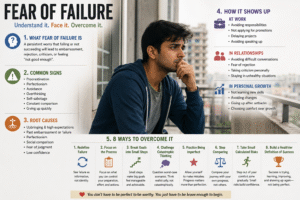
What Is Fear of Failure?
Fear of failure is an intense, persistent worry about not succeeding — to the point that it influences your decisions, behaviour, and even your sense of self-worth. It goes beyond the normal nervousness most people feel before an exam, interview, or big presentation.
For someone experiencing fear of failure, the thought of failing can feel more distressing than the failure itself. This fear can be so overwhelming that it leads to avoidance — skipping opportunities altogether just to escape the possibility of not measuring up.
Common Signs of Fear of Failure
Fear of failure can look different from person to person, but some common patterns include:
If several of these resonate with you, it may be worth exploring where this fear is coming from.
What Causes Fear of Failure?
Fear of failure rarely comes from a single source. It usually develops through a combination of experiences, upbringing, and personality factors, including:
1. Childhood Experiences and Upbringing
Growing up in an environment with high expectations, harsh criticism, or conditional approval (where love or praise felt tied to achievement) can create a deep-rooted association between failure and rejection.
2. Past Experiences of Failure or Public Embarrassment
A particularly painful failure — especially one that happened publicly — can leave a lasting emotional imprint, making the brain want to avoid similar situations at all costs.
3. Perfectionistic Tendencies
People who hold themselves to extremely high standards often equate anything less than perfect with failure, making the fear more intense and frequent.
4. Comparison and Social Pressure
In today’s hyper-connected world, constant comparison with others’ curated success on social media can amplify feelings of inadequacy and heighten the fear of falling short.
5. Fear of Judgment
For many, the fear isn’t really about failing itself — it’s about what others will think. This fear of judgment or losing respect and status can be a powerful driver of avoidance behaviour.
“In my clinical practice, I often see fear of failure masquerading as procrastination or ‘lack of motivation.’ In reality, the person cares so much about the outcome that the anxiety around it becomes paralysing. The first step is always helping them separate their self-worth from their performance.” — Dr. Sugandha Gupta, Psychiatrist, Delhi Mind Clinic
How Fear of Failure Affects Daily Life
When left unchecked, fear of failure doesn’t just affect big life decisions — it can quietly shape everyday behaviour:
- At work: Avoiding leadership roles, new projects, or promotions despite being qualified
- In relationships: Holding back from vulnerability or commitment out of fear of “failing” at the relationship
- In personal growth: Avoiding hobbies, creative pursuits, or fitness goals because of fear of not being “good enough” at them
- In mental well-being: Contributing to chronic stress, low self-esteem, and in some cases, symptoms of anxiety
Over time, this avoidance can create a cycle: the more you avoid situations, the more your confidence erodes, which in turn strengthens the fear.
8 Ways to Overcome Fear of Failure
The good news is that fear of failure is highly manageable with the right strategies and support. Here are some approaches that can help:
1. Reframe What Failure Means
Instead of viewing failure as the opposite of success, try seeing it as part of the process. Many of the world’s most successful individuals attribute their growth to lessons learned from failing first. Ask yourself: “What can I learn from this, regardless of the outcome?”
2. Set Realistic, Process-Focused Goals
Shift your focus from outcome-based goals (“I must get this exact result”) to process-based goals (“I will prepare well and give my best effort”). This reduces the all-or-nothing pressure that fuels fear.
3. Challenge Perfectionism
Practice allowing yourself to do things imperfectly. Completing a task at 80% is often far more valuable than never starting because it isn’t perfect.
4. Break Tasks into Smaller Steps
Large goals can feel overwhelming and increase fear. Breaking them into smaller, manageable steps makes the process feel less intimidating and builds confidence with each small win.
5. Practice Self-Compassion
Notice your inner critic and consciously replace harsh self-talk with the kind of encouragement you’d offer a close friend. Self-compassion has been shown to reduce fear-driven avoidance.
6. Visualize Success — and Survivable Failure
Instead of only visualizing success, also visualize what would happen if things didn’t go as planned. Most people realize that even in a “worst case” scenario, they would cope and move forward — this can be surprisingly reassuring.
7. Take Small, Consistent Action
Facing small fears repeatedly, in manageable doses, helps retrain your brain to see challenging situations as safe rather than threatening. Momentum builds courage.
8. Seek Professional Support
When fear of failure significantly impacts your career, relationships, or overall well-being, speaking with a mental health professional can help you understand the root causes and build personalised strategies to move forward with confidence.
“Fear of failure that goes untreated for years often doesn’t stay confined to one area of life — it spreads. A person who avoids risk at work may start avoiding it in relationships too. What looks like ‘playing it safe’ is frequently an anxiety pattern that responds very well to the right therapeutic approach, once it’s identified.” — Dr. Paramjeet Singh, Psychiatrist, Delhi Mind Clinic
When Should You Seek Help?
While mild fear of failure is common and manageable on your own, it may be time to seek professional guidance if you notice:
- The fear is stopping you from pursuing important goals or opportunities
- It’s affecting your relationships, career, or academic performance
- You experience significant anxiety, sleep disturbances, or physical symptoms tied to this fear
- You find yourself avoiding activities you once enjoyed
- The fear is accompanied by persistent low mood, self-doubt, or hopelessness
A qualified psychologist or counsellor can help identify the underlying patterns driving your fear and work with you to build lasting coping strategies through structured, evidence-based approaches.
Read Some Other Articles
External Articles
Final Thoughts
Fear of failure is a deeply human experience — but it doesn’t have to define your choices or limit your potential. By understanding where this fear comes from and actively practising strategies to manage it, you can build the confidence to take meaningful steps forward, even when the outcome isn’t guaranteed.
Remember: growth rarely comes from certainty. It comes from being willing to try, even when you’re afraid.
If fear of failure is holding you back from living the life you want, professional support can make a real difference. At Delhi Mind Clinic, our team is here to help you understand your fears and build the confidence to move forward.
Frequently Asked Questions (FAQs)
Q1. Is fear of failure a mental illness? Fear of failure itself is not classified as a mental illness, but when intense and persistent, it can be a specific phobia (atychiphobia) or be linked with anxiety-related conditions. A mental health professional can help assess this.
Q2. Why do successful people also fear failure? Success doesn’t eliminate fear of failure — in fact, high achievers often fear failure due to high personal standards, fear of losing status, or past experiences tied to achievement and approval.
Q3. Can fear of failure be completely cured? While it may not disappear entirely, fear of failure can be significantly reduced and managed so it no longer controls your decisions or limits your growth.
Q4. How is fear of failure different from normal nervousness? Nervousness is a temporary, situational response, while fear of failure is a persistent pattern that influences decision-making and often leads to avoidance, even when the stakes are low.
Q5. Should I see a therapist for fear of failure? If this fear is significantly affecting your career, relationships, or emotional well-being, speaking with a therapist can help you understand the root cause and develop effective coping strategies.