For general questions, please send us a message and we’ll get right back to you. You can also call us directly to speak with a member of our service team or insurance expert.
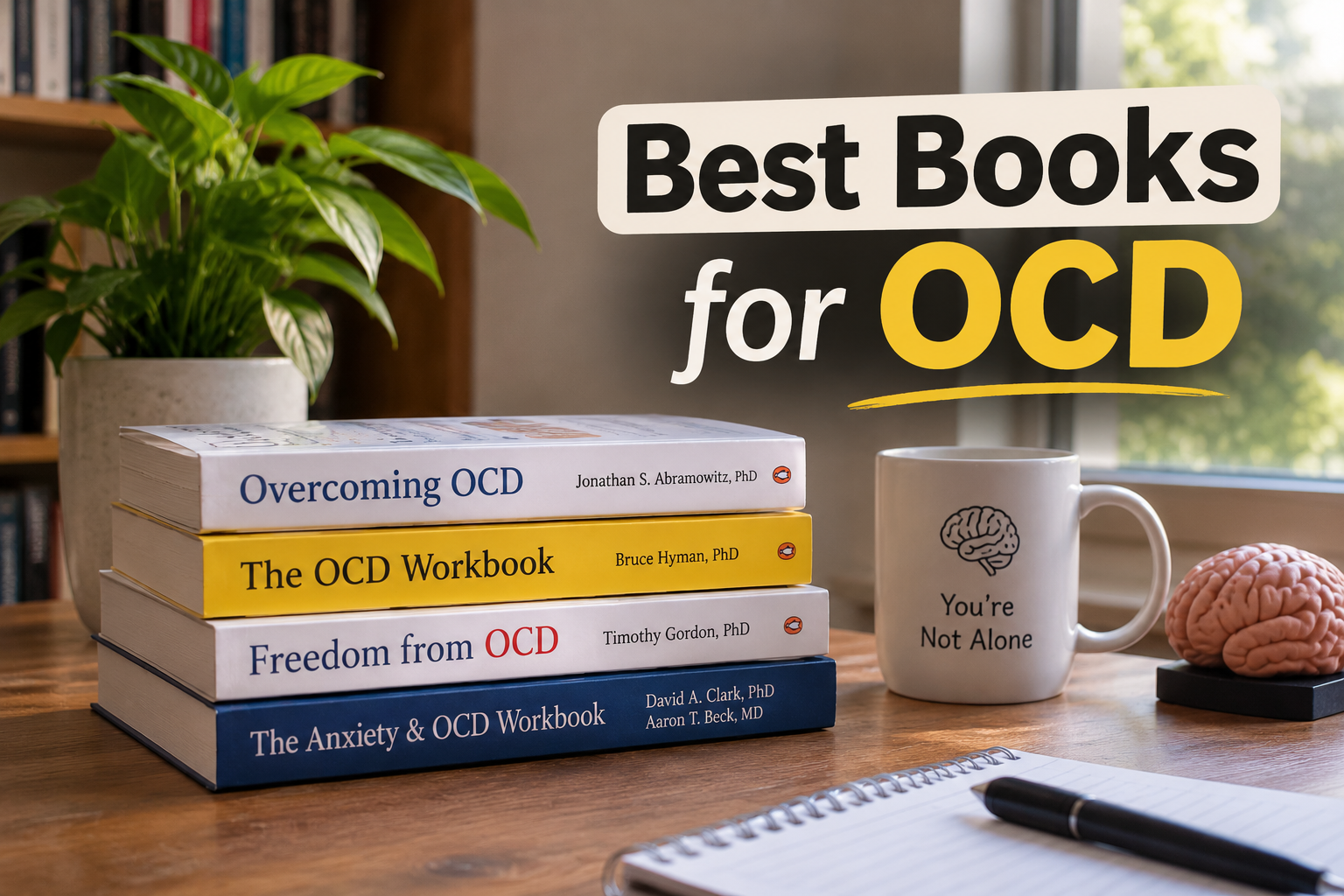
If you’ve ever been stuck in a loop of unwanted thoughts, you know how exhausting OCD can be. Many people start their search for the best books for OCD late at night, after yet another round of checking, washing or mental replaying. If that’s you, you’re in the right place.
Books can’t replace professional care. But the right one can make you feel understood, explain what’s happening in your mind, and give you practical tools to use between therapy sessions. We asked our psychiatrists, Dr. Sugandha Guptaand Dr. Paramajeet Singh, to help us put together this list at Delhi Mind Clinic.
Why Reading Can Help With OCD
Obsessive-compulsive disorder is not about being “too neat” or “a perfectionist.” It involves intrusive thoughts (obsessions) and the urge to do something to cancel them out (compulsions). Learning how this cycle works is often the first real step towards breaking it.
“When people understand that an intrusive thought is just a thought, not a warning or a character flaw, a huge weight lifts. Good self-help reading can start that shift.” — Dr. Sugandha Gupta
That’s why the best books for OCD do three things well. They explain the condition in plain language, they reduce shame, and they offer exercises you can actually try.
9 Best Books for OCD (Our Picks)
1. Brain Lock by Jeffrey M. Schwartz
This is a classic. Schwartz introduces a four-step method for relabelling obsessions and shifting your attention to something useful. It’s a good starting point if you’re new to the subject and want a simple framework.
2. The Imp of the Mind by Lee Baer
Many people with OCD are scared of the content of their thoughts: harm, taboo themes, “what if” fears. Baer reassures readers that these thoughts are far more common than most people realise. If shame is your biggest burden, begin here.
3. Getting Over OCD by Jonathan S. Abramowitz
Abramowitz is a respected clinical psychologist, and his book is a practical, step-by-step guide. It walks you through exposure and response prevention (ERP), the gold-standard psychological approach, in a way you can follow at home.
4. Stop Obsessing! by Edna Foa and Reid Wilson
Written by two well-known experts, this book is structured and easy to follow. It helps you build your own recovery plan, and many readers find the worksheets especially useful.
5. The OCD Workbook by Bruce Hyman and Cherry Pedrick
If you learn best by doing, pick this one. It’s full of exercises, checklists and tracking tools to map your triggers and measure your progress.
6. Overcoming Unwanted Intrusive Thoughts by Sally Winston and Martin Seif
This book speaks directly to people troubled by distressing thoughts. It teaches you to stop fighting them and to respond with calm acceptance instead.
7. The Mindfulness Workbook for OCD by Jon Hershfield and Tom Corboy
Mindfulness and therapy-based skills work well together. This workbook shows how to notice urges without acting on them, which is a skill that takes practice but pays off.
8. Freedom from Obsessive-Compulsive Disorder by Jonathan Grayson
Grayson writes with warmth and a little humour. He explains why reassurance-seeking backfires and encourages readers to face fears gradually and with courage.
9. Can I Tell You About OCD? by Amita Jassi and Sarah Hull
This short, gentle book is aimed at young people, parents and teachers. It’s a lovely pick if you want to explain OCD to a child or a family member who doesn’t quite “get it.”
How to Choose From the Best Books for OCD
With so many options, it helps to match the book to where you are right now.
Just diagnosed or still confused? Start with The Imp of the Mind or Brain Lock.
Want a structured plan? Try Getting Over OCD or Stop Obsessing!
Prefer worksheets? Go for The OCD Workbook.
Feeling overwhelmed by thoughts? Pick Overcoming Unwanted Intrusive Thoughts.
Supporting a loved one? Read Can I Tell You About OCD?
A Psychiatrist’s Advice on Using Books for OCD
Reading alone won’t fix everything, and our doctors are keen to say so.
“I tell patients to treat a self-help book like a gym guide. You can read it all day, but change comes from practising the exercises. Start small, be patient, and don’t judge yourself harshly if progress feels slow.” — Dr. Paramajeet Singh
Here are a few tips from both doctors:
Read a chapter at a time, not the whole book in one night.
Do the exercises, even the ones that feel uncomfortable.
Avoid using the book itself for reassurance. Reading the same page again and again can turn into a compulsion.
Keep a short journal of what you try and what you notice.
“If a book makes your anxiety spike badly, pause and talk to a professional. The best books for OCD are meant to support treatment, not replace it.” — Dr. Sugandha Gupta
best-books-for-ocd
When Books Aren’t Enough
Self-help is a helpful companion, but some people need more. Consider reaching out to a mental health professional if:
Your rituals take up more than an hour a day
OCD is affecting your work, studies or relationships
You feel hopeless, or your distress keeps growing
You’ve tried self-help for a few weeks with little change
There’s no single winner among the best books for OCD. The right one is the one you’ll actually open and use. Start with a title that matches your needs, go at your own pace, and be kind to yourself along the way.
You don’t have to figure this out alone. If OCD is taking over your days, our team at Delhi Mind Clinic is here to help.