For general questions, please send us a message and we’ll get right back to you. You can also call us directly to speak with a member of our service team or insurance expert.
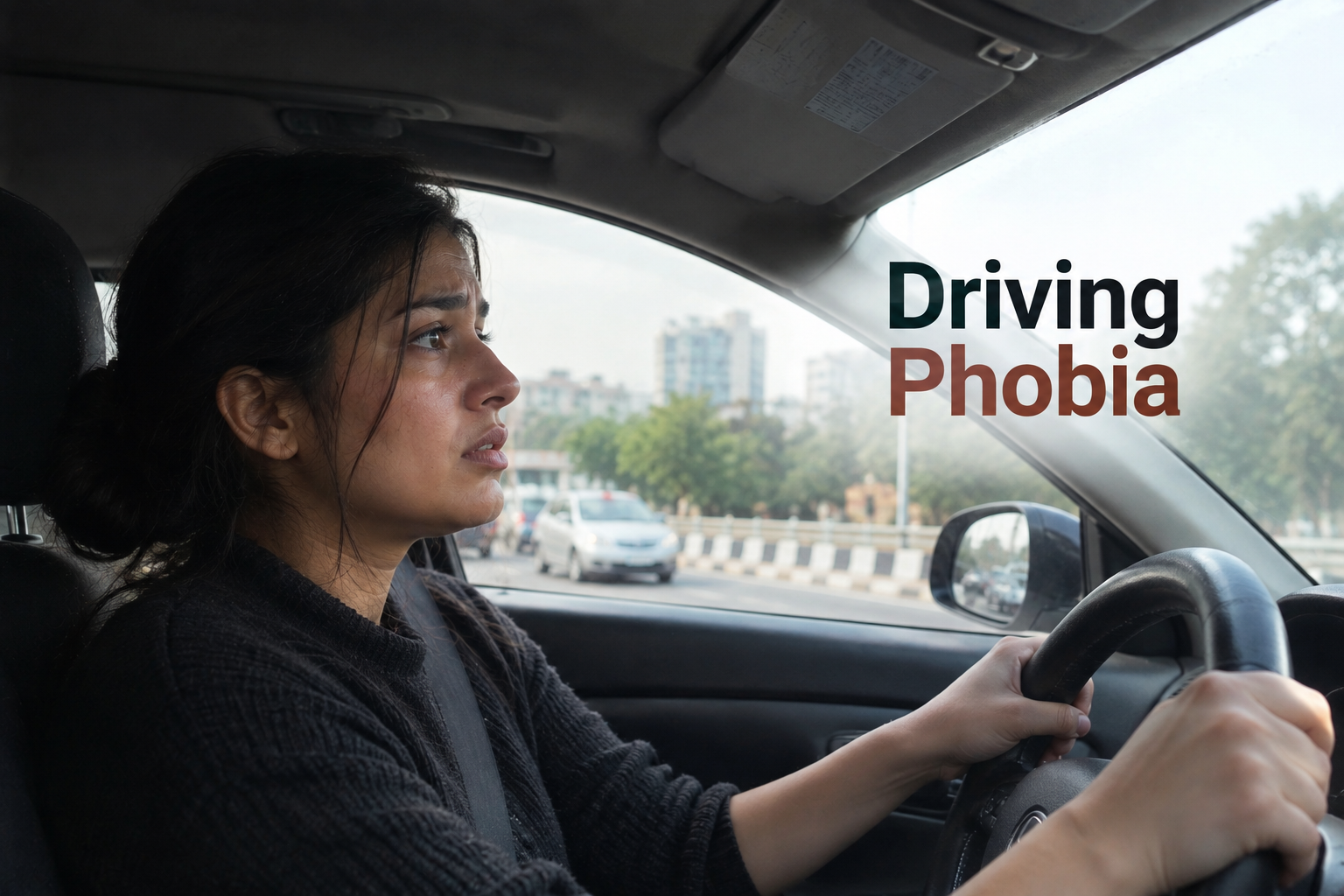
Driving phobia is an intense and persistent fear of driving that goes far beyond ordinary nervousness. Your heart races, your palms sweat, and your mind fills with “what if” thoughts the moment you think about getting behind the wheel.
If you live with driving phobia, you are not alone. It affects new learners and experienced drivers alike. In a busy city like Delhi, with heavy traffic, flyovers, and constant honking, it can feel even more overwhelming.
The good news is that this fear is treatable. In this guide, you will learn the symptoms, the causes, and seven proven ways to overcome the fear of driving.
DRIVING PHOBIA
What Is Driving Phobia?
Driving phobia, also called vehophobia or driving anxiety, is a specific phobia centred on driving or travelling in a vehicle. The fear is out of proportion to the real danger.
A little nervousness before a long drive is normal. A phobia is different because it disrupts your daily life.
Some people fear driving in general. Others fear particular situations:
Highways and expressways
Flyovers, bridges, and tunnels
Night driving
Heavy traffic
Driving alone
Changing lanes or overtaking
Driving in rain or fog
According to the NHS guide to phobias, a phobia is an overwhelming fear of a situation or object that poses little real danger. It can usually be treated successfully.
Symptoms of Driving Phobia
Driving phobia affects both body and mind.
Physical symptoms
Racing heartbeat or chest tightness
Sweating and trembling
Shortness of breath
Dizziness
Nausea
Tense hands, neck, and shoulders
Emotional symptoms
Sudden panic or intense fear
Dread of accidents or losing control
Feeling trapped on the road
Trouble concentrating while driving
Behavioural symptoms
Avoiding driving completely
Relying on others or cabs for every trip
Choosing longer routes to avoid certain roads
Turning down jobs or events because of travel
Causes of Driving Phobia
Driving phobia rarely has a single cause. It usually builds from a mix of experiences and thought patterns.
A past accident or near-miss. Even witnessing a crash can teach the mind to link driving with danger.
Panic attacks while driving. Many people begin to fear the panic itself, and driving becomes the trigger.
General anxiety. People prone to worry or overthinking are more likely to develop fear around driving.
Low confidence. New drivers, or those who stopped driving for a long time, may doubt their skills.
Stressful roads. Aggressive traffic and sudden braking can overload a sensitive nervous system. The WHO fact sheet on road traffic injuries shows how widespread road safety concerns are around the world.
Negative influences. Harsh criticism from an instructor or repeated accident stories can plant fear.
How Driving Phobia Affects Daily Life
Fear of driving can quietly shrink your world. It may limit your career, reduce your independence, and strain relationships.
Many people feel embarrassed and hide the problem. Avoidance brings short-term relief, but it strengthens the fear over time. That is why early support matters.
7 Proven Ways to Overcome Driving Phobia
1. Try Cognitive Behavioural Therapy for Driving Phobia
Cognitive Behavioural Therapy (CBT) helps you spot fearful thoughts such as “I will definitely crash.” You then learn to replace them with realistic ones.
CBT is among the most widely recommended approaches for driving phobia. You can read more about it on our CBT therapy page.
2. Use Gradual Exposure
Under professional guidance, you face feared situations one small step at a time. You might start by sitting in the parked car, then try a short drive on a quiet road, then move to busier routes.
Each success builds confidence.
3. Practise Slow Breathing
Breathe in for four counts and out for six. Repeat this before starting the engine.
Slow breathing calms the body’s alarm system and reduces physical symptoms.
4. Challenge Catastrophic Thoughts
Ask yourself: “What is the most likely outcome, not the worst one?”
Writing down your fears and the facts side by side can reduce their power.
5. Start Small and Plan Ahead
Choose a familiar route at a quiet time of day. Take a calm, supportive companion with you.
Knowing your route in advance reduces uncertainty and builds a sense of control.
6. Process Past Trauma
If your fear began after an accident, trauma-focused therapy can help. It reduces the emotional hold of the memory so that it no longer controls your driving.
7. Seek Professional Support
Self-help works for mild anxiety. Moderate to severe driving phobia responds best to a structured plan from a qualified mental health professional.
At Delhi Mind Clinic, we understand how limiting this fear can be. Our approach is compassionate, confidential, and paced to suit you.
Whether your fear began after an accident or built up slowly, we focus on treating driving phobia through evidence-based therapy. Explore our anxiety treatment services to learn more.
Ready to take the first step? Book a consultation and start your journey toward confident driving.
Frequently Asked Questions
What is the fear of driving called?
It is commonly called vehophobia, amaxophobia, or driving anxiety.
Why am I suddenly afraid to drive?
Sudden fear often follows an accident, a near-miss, a panic attack, or a stressful period.
Can driving phobia go away on its own?
Mild nervousness may fade with practice. True driving phobia often worsens with avoidance, so professional help improves your chances of lasting recovery.
How long does it take to overcome driving phobia?
It varies with the cause, severity, and consistency of practice. Many people notice progress within a few weeks of structured therapy.
Is driving phobia common in India?
Yes. Dense traffic and unpredictable road behaviour in Indian cities can contribute to driving anxiety.
Final Thoughts
Driving phobia can leave you feeling stuck, but it does not have to be permanent. With patience, practice, and the right support, you can regain your confidence and independence on the road.