For general questions, please send us a message and we’ll get right back to you. You can also call us directly to speak with a member of our service team or insurance expert.
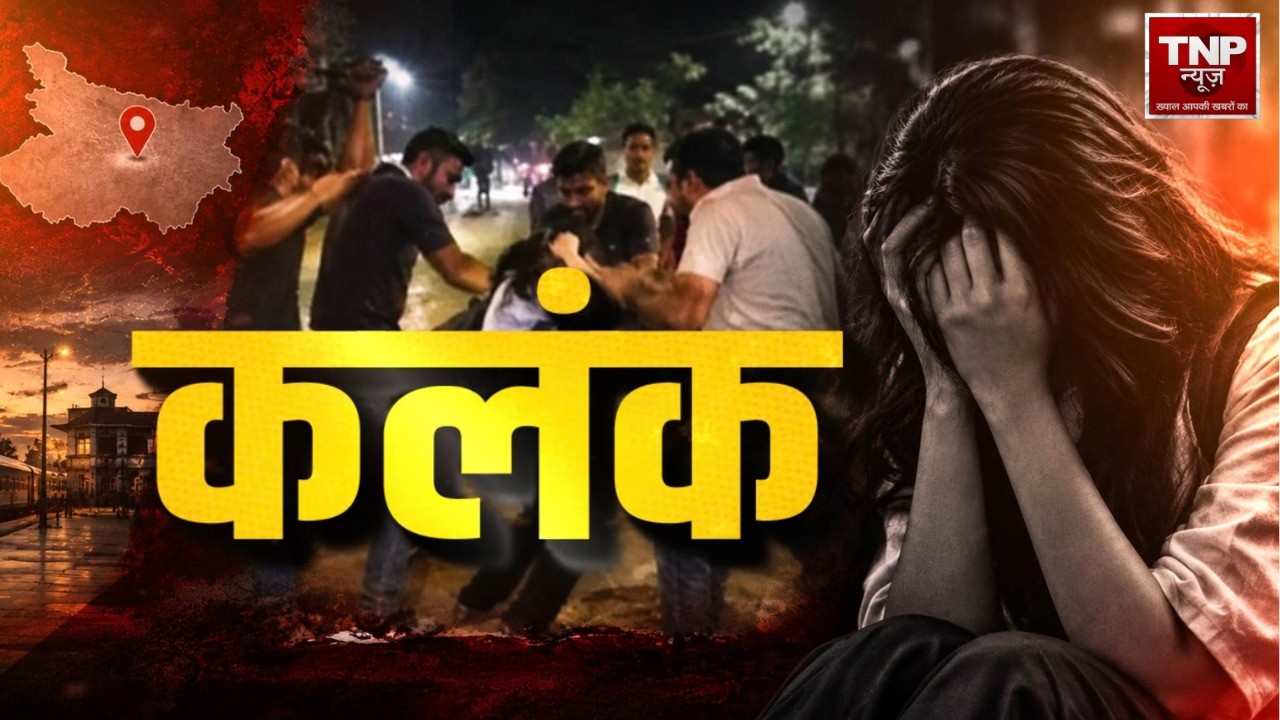
Girl safety in India is once again a national conversation after a disturbing incident in Jamui, Bihar, where two teenagers were harassed and assaulted while returning home from coaching classes. The visuals that emerged were hard to watch — but harder still is the pattern behind them, one that repeats itself in cities and villages across the country with alarming regularity.
During a televised panel discussion on the case, Dr. Sugandha Gupta, Founder-Director and Consultant Psychiatrist at Delhi Mind Clinic, offered something rare in this conversation: a clinical, psychological explanation for why this keeps happening — not just outrage, but insight that can actually inform prevention.
This post breaks down her key observations into seven truths every parent, educator, and policymaker concerned about girl safety in India needs to understand.
Why Girl Safety in India Is a Mental Health Issue, Not Just a Law-and-Order Issue
Most conversations around girl safety in India focus on policing, punishment, and legal reform. These matter. But Dr. Gupta’s clinical experience points to something the headlines usually miss: the roots of this behaviour are psychological, and they form long before any law can intervene.
As a practicing psychiatrist who regularly sees survivors and, in some clinical contexts, perpetrators of gender-based violence, her perspective moves the conversation from reaction to prevention.
1: Patriarchal Conditioning Starts the Cycle
According to Dr. Gupta, the single biggest driver behind crimes against girls is a deep-rooted patriarchal mindset — the belief that one’s gender grants entitlement or power over another person.
This conditioning rarely announces itself. It shows up quietly, in small everyday moments — who gets to speak first at the dinner table, whose comfort matters more, whose ambitions are taken seriously. Over time, these small signals compound into a worldview.
2: Children Learn Violence Before They Understand It
Dr. Gupta pointed to a well-established psychological concept: learned behaviour. Children who grow up watching disrespect or aggression toward women at home don’t need to be told this is acceptable — they absorb it simply by observing it repeatedly.
This is one of the most overlooked factors in discussions about girl safety in India. Policy can regulate adults. It cannot easily undo what a child has already learned to consider “normal.”
3: This Isn’t Limited to One Class or Education Level
A common but dangerous assumption is that gender-based violence is a problem of poverty or low education. Dr. Gupta was direct in dismantling this myth: in her psychiatric OPD, she sees cases of gender violence and sexual abuse across every economic background, every education level, and every age group.
Girl safety in India cannot be treated as someone else’s problem, confined to “other” communities. The conditioning that enables this behaviour cuts across class lines.
girls safety in india
4: Fear of Consequence Is Disappearing
A recurring theme in the panel discussion was the absence of deterrence. When legal processes are slow, when social shame is used to silence victims rather than perpetrators, and when family “honour” becomes a reason to suppress complaints — the message received by offenders is that consequences are unlikely.
In behavioural terms, actions without consequences tend to repeat and even escalate. This is a core reason why incidents affecting girl safety in India often follow disturbingly similar patterns.
5: Social Media Is Normalising Harm for Young Minds
Dr. Gupta raised a distinctly modern concern: the role of social media and viral content in shaping how adolescents perceive harmful behaviour. Many young viewers don’t process what they’re watching as criminal — they see it as content, sometimes even something to imitate.
This adds a new and urgent dimension to girl safety in India: protecting not just girls from harm, but protecting impressionable young viewers from absorbing the wrong lessons about power and dominance.
6: Change Has to Start Inside the Home
Perhaps the most actionable insight Dr. Gupta offered was this: children who see respect modelled at home carry it forward. A child who watches a father speak to a mother with patience and without aggression internalises that standard — and is far more likely to extend the same respect to girls and women later in life.
This is where real, lasting progress on girl safety in India begins — not in a courtroom, but at a dinner table.
7: Prevention Beats Cure — But Only If It Starts Early
Dr. Gupta’s closing message was simple but pointed: “Prevention is better than cure, and prevention has to start at the grassroots level.” That means gender sensitisation woven into school curriculums (not one-off lectures), community workshops, street theatre, and consistent, visible accountability for offenders — regardless of age or background.
What This Means for Girl Safety in India Going Forward
The Jamui case is not an isolated tragedy — it’s a symptom of conditioning that starts far earlier and far closer to home than most people are comfortable admitting. Improving girl safety in India will require more than faster arrests or stricter laws. It requires a generational shift in how respect, gender, and power are taught from childhood.
At Delhi Mind Clinic, our team works closely with survivors of trauma and abuse, as well as families trying to understand and reshape harmful behavioural patterns. If you or someone you know is processing the psychological impact of an incident like this, professional support can make a meaningful difference.