For general questions, please send us a message and we’ll get right back to you. You can also call us directly to speak with a member of our service team or insurance expert.
Recognising PTSD signs and symptoms early can make a significant difference in getting the right support at the right time. Living through a deeply distressing or life-threatening event can leave more than just physical scars. For many people, the emotional aftermath lingers long after the danger has passed — showing up as unwanted memories, sleepless nights, or a sense of being constantly on edge. This is often the reality of Post-Traumatic Stress Disorder (PTSD), a mental health condition that can develop after exposure to trauma.
In this guide, we walk through the most common PTSD signs and symptoms, explain why they occur, and outline when it’s time to seek professional help.
At Delhi Mind Clinic, we regularly meet individuals who have been struggling with these symptoms for months or even years without realizing that what they’re experiencing has a name — and that it’s treatable. In this article, we break down the key signs and symptoms of PTSD so you can better understand what to look for, whether in yourself or a loved one.
What Is PTSD?
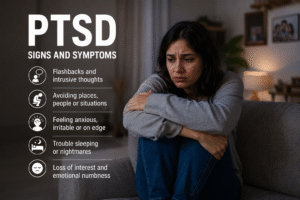
PTSD-signs-and-symptoms
PTSD is a mental health condition triggered by experiencing or witnessing a traumatic event — such as an accident, natural disaster, physical or sexual assault, combat exposure, childhood abuse, or the sudden loss of a loved one. While it’s natural to feel fear, sadness, or anxiety after such events, PTSD occurs when these reactions persist, intensify, or interfere with daily life well beyond what would be expected.
Not everyone who experiences trauma develops PTSD, and symptoms can appear immediately or emerge weeks, months, or even years later.
“One of the most common misconceptions we see in clinical practice is that PTSD only affects people who have been through combat or catastrophic accidents. In reality, we treat patients whose trauma stems from road accidents, domestic abuse, medical emergencies, or even prolonged workplace stress. The nature of the event matters less than how the mind processes and stores that experience,” says Dr. Sugandha Gupta.
The 7 Most Common PTSD Signs and Symptoms
Mental health professionals typically group PTSD signs and symptoms into four broad clinical categories, covering seven core patterns you’re likely to notice in daily life. Understanding these PTSD signs and symptoms can help you recognize patterns that might otherwise seem unrelated.
1. Intrusive Memories and Flashbacks
Among the most recognizable PTSD signs and symptoms are recurrent, unwanted distressing memories of the traumatic event that intrude without warning, and flashbacks — feeling as though the trauma is happening all over again.
2. Trauma-Related Nightmares
Disturbing dreams tied directly or indirectly to the traumatic event are a common PTSD symptom, often disrupting sleep quality and leaving a person anxious about going to bed.
3. Intense Distress at Reminders of the Trauma
This PTSD sign includes intense emotional distress and physical reactions — such as a racing heart, sweating, or trembling — when reminded of the event by a sound, smell, place, or anniversary date.
4. Avoidance of People, Places, or Conversations
People with PTSD often go out of their way to avoid anything associated with the trauma, including people, places, activities, or conversations that bring back memories of the event. While avoidance may feel like a coping mechanism in the short term, it often reinforces fear and prevents emotional healing over time.
5. Negative Changes in Thinking and Mood
Trauma can significantly alter how a person views themselves, others, and the world. This group of PTSD signs and symptoms includes persistent negative beliefs (“I am broken,” “No one can be trusted”), ongoing guilt or shame, loss of interest in once-enjoyable activities, emotional numbness, and difficulty experiencing positive emotions such as happiness or love.
6. Hypervigilance and Being Easily Startled
Constantly feeling “on guard,” watchful for danger, or easily startled reflects a nervous system stuck in high-alert mode — one of the more physically exhausting PTSD symptoms to live with day to day.
“Patients often describe feeling like their body is stuck in ‘alarm mode’ long after the actual danger has passed. This isn’t a sign of weakness or overreaction — it’s the nervous system’s natural, biological response to overwhelming stress. Understanding this helps reduce the shame many patients feel about their symptoms, which is often the first step toward seeking help,” explains Dr. Paramjeet Singh.
7. Irritability, Anger, and Sleep Difficulties
Rounding out the common PTSD signs and symptoms are irritability, angry outbursts, difficulty concentrating, trouble falling or staying asleep, and — in some cases — engaging in risky or reckless behaviour.
How Long Do Symptoms Need to Last?
For a formal diagnosis, these symptoms typically need to persist for more than one month and cause significant distress or difficulty functioning in daily life — at work, in relationships, or in routine activities. If symptoms appear soon after the trauma but resolve within a few weeks, it may be a different, shorter-term stress reaction rather than PTSD.
PTSD in Children and Teens
PTSD doesn’t only affect adults. In younger children, symptoms may look different and can include:
Re-enacting the traumatic event through play
Frightening dreams that may not have clear content
Increased clinginess or separation anxiety
Regression in behaviour, such as bedwetting after being previously toilet-trained
Parents and caregivers should watch for sudden behavioural changes following a distressing experience.
Why Early Recognition Matters
PTSD symptoms can affect every area of life — relationships, work performance, physical health, and overall quality of life. Left unaddressed, they can also contribute to other concerns such as chronic anxiety, low mood, or difficulty maintaining close relationships.
The encouraging news is that PTSD is a well-researched and highly treatable condition. With the right therapeutic support — such as trauma-focused psychotherapy, counselling, and structured coping strategies — most people experience significant improvement in their symptoms and overall wellbeing.
When Should You Seek Professional Help?
Consider reaching out to a mental health professional if you or someone you know:
Has been experiencing the symptoms above for more than a month
Finds daily functioning, work, or relationships increasingly difficult
Feels persistently on edge, numb, or disconnected since a traumatic event
Is using avoidance, isolation, or other coping patterns that seem to be worsening over time
Reaching out for support is not a sign of weakness — it’s often the first and most important step toward recovery
PTSD can feel isolating, but no one has to navigate it alone. Recognising the PTSD signs and symptoms covered above — intrusive memories, avoidance, negative shifts in mood and thinking, and heightened arousal — is the first step toward understanding what you or a loved one may be going through.
At Delhi Mind Clinic, our team of experienced mental health professionals — including Dr. Sugandha Gupta and Dr. Paramjeet Singh — is here to help you understand your symptoms, explore compassionate treatment options, and work toward lasting recovery. If you recognise these signs in yourself or someone close to you, we encourage you to reach out and start the conversation.