For general questions, please send us a message and we’ll get right back to you. You can also call us directly to speak with a member of our service team or insurance expert.
Do you wake up already tired, dread opening your laptop, and feel like nothing you do at work is ever “enough”? You’re not alone. Workplace burnout has become one of the most talked-about mental health concerns of our time, affecting professionals across every industry — from IT and healthcare to sales, education, and startups.
Workplace burnout isn’t just “being stressed” or “having a bad week.” It’s a state of chronic physical and emotional exhaustion caused by prolonged, unmanaged workplace stress. Left unaddressed, workplace burnout can quietly erode your productivity, relationships, and overall wellbeing.
In this article, we break down what workplace burnout really is, how to recognize it early, what causes it, and — most importantly — how you can start recovering.
What Is Workplace Burnout?
The World Health Organization officially classifies burnout as an “occupational phenomenon” resulting from chronic workplace stress that has not been successfully managed. It is characterized by three core dimensions:
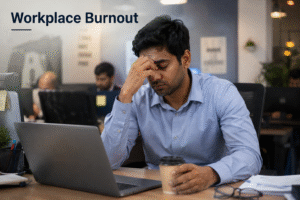
Workplace-burnout
Emotional exhaustion – feeling drained, depleted, and unable to cope
Cynicism or detachment – growing negative or distant feelings toward your job, colleagues, or clients
Reduced professional efficacy – a persistent sense of underachievement or incompetence, even when your performance hasn’t actually declined
Workplace burnout develops gradually. It rarely shows up overnight — it builds up over weeks or months of sustained pressure without adequate recovery time.
Common Signs of Workplace Burnout
Recognizing workplace burnout early can make all the difference. Watch out for these warning signs:
Physical Symptoms
Constant fatigue, even after a full night’s sleep
Frequent headaches or muscle tension
Changes in sleep patterns (insomnia or oversleeping)
Lowered immunity — getting sick more often
Changes in appetite
Emotional and Mental Symptoms
Feeling helpless, trapped, or defeated
Loss of motivation and a sense of purpose
Increased irritability, impatience, or short temper
Growing cynicism or detachment from your work
Difficulty concentrating or making decisions
A persistent feeling of self-doubt
Behavioral Symptoms
Withdrawing from responsibilities or colleagues
Procrastinating on tasks you used to handle easily
Using food, screen time, or other habits to numb out
Skipping breaks, meals, or personal time to “keep up”
Isolating from friends and family
If several of these symptoms sound familiar and have persisted for weeks, it may be time to pause and take stock.
What Causes Workplace Burnout?
Workplace burnout is rarely caused by one single factor. It’s usually the result of a mismatch between a person and their work environment. Common contributors include:
Unmanageable workload — Consistently having more work than time allows
Lack of control — Little say over your schedule, tasks, or decisions
Unclear expectations — Not knowing exactly what’s expected of you
Lack of recognition — Feeling that your efforts go unnoticed or unrewarded
Poor workplace relationships — Conflict, lack of support, or a toxic team culture
Unfair treatment — Bias, favoritism, or inconsistent policies
Values mismatch — When your job goes against your personal values or interests
Always-on culture — Constant connectivity through emails and messages, blurring the line between work and personal life
Understanding why you’re burning out is often the first step toward meaningful recovery — because the solution usually needs to address the root cause, not just the symptoms.
Burnout vs. Stress: What’s the Difference?
It’s easy to confuse burnout with ordinary stress, but they’re not the same thing.
Stress
Burnout
Feeling of too much pressure
Feeling of no energy left
Over-engagement with work
Disengagement from work
Emotions feel intense/reactive
Emotions feel blunted/numb
Urgency and anxiety
Helplessness and hopelessness
Can still find motivation
Loss of motivation and meaning
Damage is mainly physical
Damage is emotional and psychological
Stress often feels like “too much” — too many deadlines, too many demands. Burnout, on the other hand, feels like “not enough” — not enough energy, not enough motivation, not enough of yourself left to give.
How to Recover From Workplace Burnout
The good news: workplace burnout is reversible, especially when addressed early. Here are practical steps that can help.
1. Acknowledge It
The first step is simply naming what you’re experiencing. Many professionals push through workplace burnout because they associate it with weakness or underperformance — but recognizing it is actually a sign of self-awareness, not failure.
2. Set Boundaries Around Work
Define clear working hours and try to stick to them
Turn off work notifications after hours when possible
Learn to say no to tasks that exceed your capacity
Take your full lunch breaks and any earned leave
3. Prioritize Rest and Recovery
Rest isn’t a reward for finishing everything — it’s a requirement for sustainable performance. Prioritize consistent sleep, regular movement, and time away from screens.
4. Reconnect With What Matters
Burnout often disconnects us from a sense of purpose. Spending time on hobbies, relationships, and activities unrelated to work can help restore a sense of identity beyond your job title.
5. Talk About It
Isolation makes burnout worse. Talking to a trusted friend, family member, mentor, or manager about how you’re feeling can lighten the load and open doors to practical solutions, like redistributing workload or adjusting deadlines.
6. Seek Professional Support
Sometimes workplace burnout runs deep enough that self-help strategies aren’t enough on their own. A mental health professional can help you understand the underlying patterns driving your workplace burnout, build sustainable coping strategies, and support you in making longer-term changes — whether that means resetting boundaries, improving communication at work, or exploring a career shift.
When Should You Seek Help?
Consider reaching out to a mental health professional if:
Workplace burnout symptoms have lasted more than a few weeks
You feel persistently low, anxious, or hopeless
Your relationships or physical health are being affected
You find it hard to function in daily life, at work or at home
Self-care strategies aren’t creating any noticeable improvement
Seeking support early can prevent workplace burnout from progressing into more serious concerns such as chronic anxiety or depression.
Expert Perspective
At Delhi Mind Clinic, our clinical team — including psychiatrists and psychologists such as Dr. Paramjeet Singh and Dr. Sugandha Gupta— regularly works with professionals navigating the effects of chronic workplace stress. Across these consultations, a few patterns consistently stand out:
Burnout is often dismissed for too long because it’s mistaken for “just being tired” or a temporary rough patch, delaying the point at which people seek support.
Many professionals feel they need to justify or “earn” rest, which makes early intervention harder — recovery tends to go more smoothly when boundaries and support are put in place before exhaustion becomes chronic.
Workplace burnout rarely exists in isolation — it frequently overlaps with sleep difficulties, relationship strain, and a general sense of losing touch with one’s own needs and interests.
A combined approach — addressing both the individual’s coping patterns and the workplace factors contributing to stress — tends to produce more sustainable recovery than focusing on just one side.
This kind of clinical experience underscores why early recognition and timely professional support matter: the longer burnout goes unaddressed, the more it can affect not just work performance, but overall mental and physical wellbeing.
Workplace burnout is not a personal failing — it’s a signal that something in your environment or routine needs to change. In today’s fast-paced, always-connected work culture, burnout has become increasingly common, but that doesn’t mean it should be normalized or ignored.
If you notice the signs of burnout in yourself or someone you care about, know that support is available. At Delhi Mind Clinic, our team of experienced mental health professionals can help you understand what’s driving your burnout and guide you toward practical, personalized strategies for recovery — so you can feel like yourself again, both at work and beyond.
Q1. Is workplace burnout a mental illness? Burnout itself is classified as an occupational phenomenon, not a medical condition. However, if left unaddressed, it can contribute to or worsen mental health conditions such as anxiety and depression.
Q2. How long does it take to recover from workplace burnout? Recovery time varies from person to person and depends on the severity of the workplace burnout and the changes made. It can range from a few weeks to several months of consistent effort.
Q3. Can workplace burnout come back after recovery? Yes, if the root causes aren’t addressed, workplace burnout can recur. That’s why long-term strategies like boundary-setting, workload management, and ongoing self-care are important.
Q4. Should I quit my job if I’m burned out? Not necessarily. Many people recover from burnout while staying in their roles by making changes to boundaries, workload, or support systems. A career change may help in some cases, but it isn’t always the first or only solution.
Q5. How is burnout diagnosed? There isn’t a single test for burnout. A mental health professional typically assesses your symptoms, work history, and overall wellbeing through conversation to understand the full picture.