For general questions, please send us a message and we’ll get right back to you. You can also call us directly to speak with a member of our service team or insurance expert.
Bipolar disorder is one of the most misunderstood mental health conditions in the world. It affects millions of people across all ages, professions, and backgrounds, yet many stay silent out of fear of judgment.
When public figures speak openly about their mental health, it changes the conversation. Their honesty reminds us that this is a medical condition, not a weakness, and that people living with it can build successful, meaningful lives with the right support.
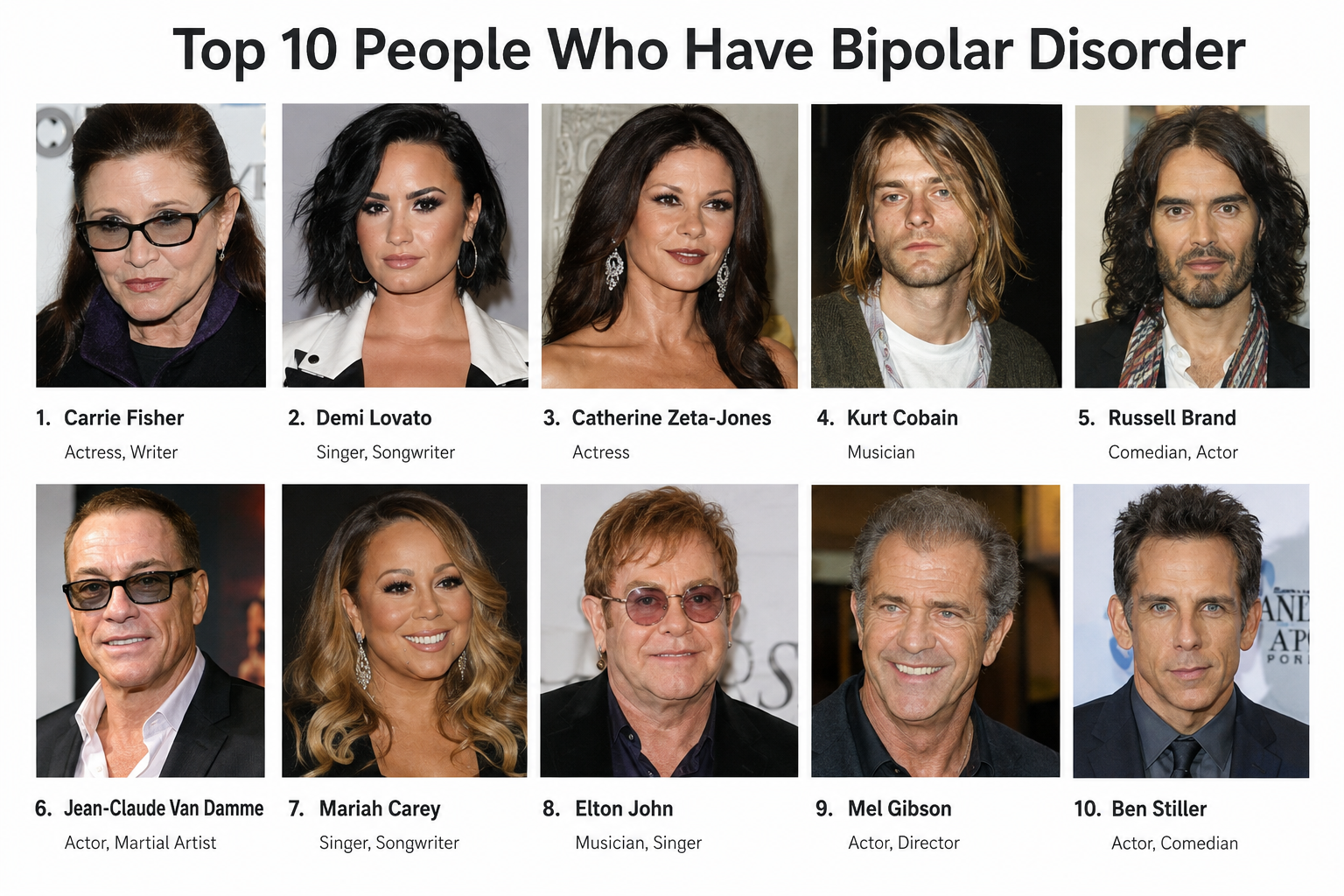
In this article, we look at 10 well-known people who have publicly shared their experiences, and then answer the most common questions about the condition.
What Is Bipolar Disorder?
It is a mental health condition marked by significant shifts in mood, energy, activity levels, and concentration. These shifts go well beyond ordinary ups and downs and include:
Manic or hypomanic episodes: unusually high energy, reduced need for sleep, racing thoughts, impulsive decisions, and elevated or irritable mood.
Depressive episodes: persistent sadness, loss of interest, fatigue, difficulty concentrating, changes in sleep or appetite, and feelings of hopelessness.
There are several forms, including Type I, Type II, and Cyclothymia, each differing in the intensity and pattern of episodes.
10 Public Figures Who Spoke Up About Their Mental Health
Note: Every person listed below has spoken publicly about their own diagnosis.
1. Demi Lovato: Singer and Actress
Demi Lovato: Singer and Actress
Demi Lovato has been one of the most vocal advocates for mental health awareness. They have spoken openly about being diagnosed with bipolar disorder and about seeking professional help early. Through music, documentaries, and interviews, Demi has helped millions of young people feel less alone.
2. Catherine Zeta-Jones: Oscar-Winning Actress
Catherine Zeta-Jones
The acclaimed actress publicly shared her Type II diagnosis and chose to seek treatment openly. Her decision encouraged many people to talk about mental health without shame.
3. Stephen Fry: Actor, Writer, and Broadcaster
Stephen Fry
Stephen Fry has discussed living with a milder, related mood condition known as cyclothymia. He is known for explaining it with intelligence, humor, and honesty, including in an acclaimed documentary.
4. Carrie Fisher: Actress and Author
Best known for Star Wars, Carrie Fisher wrote and spoke candidly about her mental health for many years. She used humor and storytelling to challenge stigma and remains a powerful advocacy voice.
5. Selena Gomez: Singer, Actress, and Entrepreneur
Selena Gomez revealed her diagnosis and shared that understanding it gave her clarity and relief. She continues to promote open conversations about mental health.
6. Mariah Carey: Singer-Songwriter
Mariah Carey
Mariah Carey shared that she was diagnosed with Type II and had lived with it privately for years. She has said that speaking openly helped her feel freer and more supported.
7. Jean-Claude Van Damme: Actor and Martial Artist
Jean-Claude Van Damme
The action star has spoken about his diagnosis, showing that this condition can affect anyone, including people known for strength and toughness.
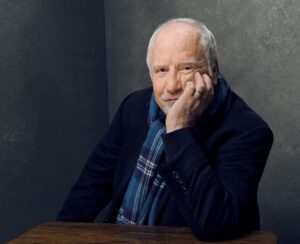
8. Richard Dreyfuss: Oscar-Winning Actor
Richard Dreyfuss
Richard Dreyfuss has talked openly about living with the condition throughout his long career in film, showing that a fulfilling, lasting career is possible with proper care.
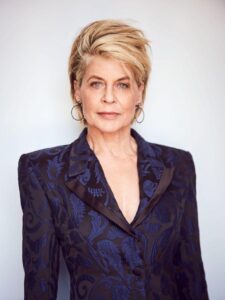
9. Linda Hamilton: Actress
Linda Hamilton
Known for The Terminator films, Linda Hamilton has spoken about her diagnosis and how awareness and support shaped her recovery.
10. Halsey: Singer-Songwriter
Halsey has been open about their bipolar disorder diagnosis since early in their career, often addressing the experience through music and conversations with fans.
Why Their Stories Matter
Stigma is one of the biggest reasons people delay seeking help. In many families, mood changes are dismissed as “attitude,” “stress,” or “a phase,” and a person may struggle for years before getting an accurate diagnosis.
When well-known figures share their journeys, three things happen:
A diagnosis stops defining a person. These individuals are artists, parents, advocates, and leaders.
Early help is encouraged. Many describe how the right diagnosis changed their lives.
Silence is broken. Every honest conversation helps someone else reach out.
Common Signs and Symptoms of Bipolar Disorder
If you or someone you love experiences the following, it may be time to speak with a mental health professional.
During a manic or hypomanic phase:
Feeling unusually energetic or “wired”
Needing very little sleep without feeling tired
Talking rapidly or jumping between ideas
Taking unusual risks or making impulsive decisions
Feeling unusually confident or irritable
During a depressive phase:
Prolonged sadness or emptiness
Loss of interest in activities once enjoyed
Extreme tiredness or low energy
Trouble sleeping or sleeping too much
Difficulty concentrating or making decisions
Thoughts of hopelessness
Myths vs. Facts
Myth
Fact
It is just mood swings
It is a clinical condition with distinct, lasting episodes
People with it cannot lead normal lives
With proper care, many live healthy, successful lives
It is caused by weak willpower
It involves biological, genetic, and environmental factors
It cannot be managed
It is highly manageable with professional treatment
How Is Bipolar Disorder Treated?
This is a long-term condition, but it is very treatable. A comprehensive care plan usually includes:
Professional evaluation and accurate diagnosis by a qualified psychiatrist
Medical treatment tailored to each person and supervised by a specialist
Psychotherapy, such as cognitive behavioral therapy and family-focused therapy
Lifestyle support: regular sleep, a balanced routine, stress management, and avoiding alcohol and substance use
Mood tracking to recognize early warning signs
Family education and support
Treatment should always be personalized. Never start, stop, or change any treatment without medical advice.
How to Support a Loved One
Family and friends play a major role in recovery. You can help by:
Listening without judging or trying to “fix” things
Learning about the condition so you can recognize early warning signs
Encouraging regular sleep, routine, and follow-up visits
Staying calm during difficult episodes and avoiding arguments
Taking care of your own well-being as a caregiver
Frequently Asked Questions
Q1. Can bipolar disorder be cured?
It is a lifelong condition, but with consistent treatment and support, symptoms can be effectively managed and many people live stable, fulfilling lives.
Q2. At what age does it usually begin?
It often first appears in late adolescence or early adulthood, though it can begin earlier or later.
Q3. Is bipolar disorder the same as depression?
No. Depression involves only low moods, while this condition includes both depressive episodes and episodes of elevated mood or high energy.
Q4. Is it hereditary?
Genetics play a significant role, but other biological and environmental factors also contribute.
Q5. When should I see a psychiatrist?
If mood changes are intense, long-lasting, or affecting your work, relationships, or daily life, seek a professional evaluation.
Final Thoughts
The stories of these 10 public figures show that recovery, stability, and success are possible. Understanding bipolar disorder is the first step, followed by reaching out for support without fear or shame.
📞 Need Help? Talk to the Experts at Delhi Mind Clinic
AtDelhi Mind Clinic, our compassionate team provides confidential evaluation, diagnosis, and personalized care for bipolar disorder and other mental health conditions.