For general questions, please send us a message and we’ll get right back to you. You can also call us directly to speak with a member of our service team or insurance expert.
Every family has its own rhythm — its own way of laughing, arguing, comforting, and coming back together after a hard day. But behind these everyday moments lies something deeper and often overlooked: family mental health. Understanding and nurturing your family’s mental health can transform the way your household copes, connects, and grows together.
When we talk about mental wellbeing, we usually think of it as an individual issue. Yet mental health rarely exists in isolation. It is shaped — and often healed — within the family unit. A supportive home can be one of the strongest protective factors against stress, anxiety, and emotional burnout, while a strained or disconnected one can quietly affect every member’s emotional world.
At DelhiMindClinic.com, we believe that understanding and prioritizing family mental health isn’t just helpful — it’s essential for building homes where every member, from the youngest to the oldest, feels safe, heard, and valued. Below, we walk through 7 essential secrets to strengthening family mental health, so your household can thrive together.
What Does “Family Mental Health” Really Mean?
Family mental health refers to the emotional, psychological, and social wellbeing of a family as a collective system — not just the individuals within it. It includes:
How family members communicate and resolve conflict
The emotional safety each person feels at home
How stress, grief, or major life changes are processed together
The patterns of support (or silence) that get passed down through generations
How connected — or disconnected — members feel from one another
Think of a family as an emotional ecosystem. When one member struggles, it naturally affects the others. Similarly, when the family environment is warm, communicative, and emotionally responsive, it becomes a source of resilience for everyone in it.
Why Family Mental Health Deserves More Attention
1. It Shapes How Children Understand Emotions
Children learn emotional regulation primarily by observing the adults around them. A home where feelings are acknowledged rather than dismissed teaches children that emotions are normal, manageable, and safe to express.
2. It Influences How Adults Cope With Stress
Work pressure, financial worries, and daily responsibilities can weigh heavily on parents and caregivers. A supportive family environment acts as a buffer, helping adults process stress in healthier ways instead of internalizing or suppressing it.
3. It Affects Relationship Patterns for Life
The communication styles, conflict-resolution habits, and emotional openness (or avoidance) modeled at home often become the blueprint people carry into their own future relationships and families.
4. It Strengthens Family Bonds During Difficult Times
Illness, loss, financial setbacks, or major transitions test every family. Families with strong emotional foundations tend to navigate these challenges with more unity and less long-term strain.
Common Signs a Family May Need to Focus on Mental Wellbeing
It’s not always obvious when family mental health needs attention. Some subtle signs include:
Frequent misunderstandings or unresolved arguments
Family members withdrawing or spending less time together
A general sense of tension, even without an obvious cause
Children or teens becoming unusually quiet, irritable, or withdrawn
Difficulty discussing feelings openly without judgment or defensiveness
One or more members feeling emotionally “unseen” within the family
Recognizing these patterns early — rather than dismissing them as “just a phase” — can make a significant difference in preventing deeper emotional strain.
7 Essential Secrets to Strengthening Family Mental Health
family-mental-health
These 7 secrets to family mental health are simple to start, but powerful when practiced consistently.
1. Create Space for Open Conversations
Set aside regular, low-pressure time — even 10–15 minutes a day — where family members can share how they’re feeling without fear of criticism or being rushed to “fix” the problem. This habit alone can significantly improve family mental health over time.
2. Practice Active Listening
Listening to understand, rather than to respond, helps family members feel genuinely heard. This means putting away distractions, maintaining eye contact, and resisting the urge to immediately offer solutions.
3. Normalize Talking About Emotions
Avoid treating sadness, anger, or anxiety as things to hide. When emotions are discussed openly and without shame, family members are more likely to seek support early rather than suppressing difficulties until they escalate — a key pillar of good family mental health.
4. Build Predictable Rituals of Connection
Shared meals, weekend walks, or a simple bedtime check-in create consistency and emotional security — especially for children, who thrive on predictability.
5. Respect Individual Coping Styles
Not everyone processes stress the same way. Some family members may need quiet time alone, while others seek comfort through conversation. Respecting these differences, rather than forcing one “right” way to cope, strengthens trust.
6. Model Healthy Conflict Resolution
Disagreements are natural in every family. What matters is how they’re handled — with respect, patience, and a willingness to repair the relationship afterward, rather than avoidance or blame.
7. Recognize When Professional Support Can Help
Just as families seek medical guidance for physical health, reaching out to a mental health professional is a proactive, healthy step — not a sign of failure. Family counseling or therapy can offer tools and perspective that are difficult to access on your own, especially during prolonged stress, major transitions, or recurring conflict. Investing in professional support is one of the most effective ways to protect long-term family mental health.
The Ripple Effect of Strong Family Mental Health
When families prioritize family mental health, the benefits extend far beyond the home. Children grow into emotionally resilient adults. Parents experience less chronic stress. Relationships across generations become more compassionate. And the family, as a whole, becomes a source of strength rather than strain during life’s inevitable challenges.
Family mental health isn’t about achieving a “perfect” home — it’s about creating an environment where imperfection, growth, and honest emotion are welcomed rather than hidden.
Strong families aren’t the ones without struggles — they’re the ones that learn to face struggles together. By prioritizing communication, empathy, and emotional safety, every family can build a foundation that supports each member’s mental wellbeing, today and for generations to come.
If your family is going through a difficult phase or simply wants to strengthen your emotional connection, reaching out for professional guidance can be a meaningful first step toward better family mental health. At DelhiMindClinic.com, we’re here to support families in building healthier, happier, and more emotionally connected homes.
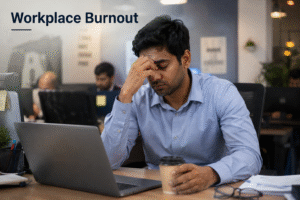
Do you wake up already tired, dread opening your laptop, and feel like nothing you do at work is ever “enough”? You’re not alone. Workplace burnout has become one of the most talked-about mental health concerns of our time, affecting professionals across every industry — from IT and healthcare to sales, education, and startups.
Workplace burnout isn’t just “being stressed” or “having a bad week.” It’s a state of chronic physical and emotional exhaustion caused by prolonged, unmanaged workplace stress. Left unaddressed, workplace burnout can quietly erode your productivity, relationships, and overall wellbeing.
In this article, we break down what workplace burnout really is, how to recognize it early, what causes it, and — most importantly — how you can start recovering.
What Is Workplace Burnout?
The World Health Organization officially classifies burnout as an “occupational phenomenon” resulting from chronic workplace stress that has not been successfully managed. It is characterized by three core dimensions:
Workplace-burnout
Emotional exhaustion – feeling drained, depleted, and unable to cope
Cynicism or detachment – growing negative or distant feelings toward your job, colleagues, or clients
Reduced professional efficacy – a persistent sense of underachievement or incompetence, even when your performance hasn’t actually declined
Workplace burnout develops gradually. It rarely shows up overnight — it builds up over weeks or months of sustained pressure without adequate recovery time.
Common Signs of Workplace Burnout
Recognizing workplace burnout early can make all the difference. Watch out for these warning signs:
Physical Symptoms
Constant fatigue, even after a full night’s sleep
Frequent headaches or muscle tension
Changes in sleep patterns (insomnia or oversleeping)
Lowered immunity — getting sick more often
Changes in appetite
Emotional and Mental Symptoms
Feeling helpless, trapped, or defeated
Loss of motivation and a sense of purpose
Increased irritability, impatience, or short temper
Growing cynicism or detachment from your work
Difficulty concentrating or making decisions
A persistent feeling of self-doubt
Behavioral Symptoms
Withdrawing from responsibilities or colleagues
Procrastinating on tasks you used to handle easily
Using food, screen time, or other habits to numb out
Skipping breaks, meals, or personal time to “keep up”
Isolating from friends and family
If several of these symptoms sound familiar and have persisted for weeks, it may be time to pause and take stock.
What Causes Workplace Burnout?
Workplace burnout is rarely caused by one single factor. It’s usually the result of a mismatch between a person and their work environment. Common contributors include:
Unmanageable workload — Consistently having more work than time allows
Lack of control — Little say over your schedule, tasks, or decisions
Unclear expectations — Not knowing exactly what’s expected of you
Lack of recognition — Feeling that your efforts go unnoticed or unrewarded
Poor workplace relationships — Conflict, lack of support, or a toxic team culture
Unfair treatment — Bias, favoritism, or inconsistent policies
Values mismatch — When your job goes against your personal values or interests
Always-on culture — Constant connectivity through emails and messages, blurring the line between work and personal life
Understanding why you’re burning out is often the first step toward meaningful recovery — because the solution usually needs to address the root cause, not just the symptoms.
Burnout vs. Stress: What’s the Difference?
It’s easy to confuse burnout with ordinary stress, but they’re not the same thing.
Stress
Burnout
Feeling of too much pressure
Feeling of no energy left
Over-engagement with work
Disengagement from work
Emotions feel intense/reactive
Emotions feel blunted/numb
Urgency and anxiety
Helplessness and hopelessness
Can still find motivation
Loss of motivation and meaning
Damage is mainly physical
Damage is emotional and psychological
Stress often feels like “too much” — too many deadlines, too many demands. Burnout, on the other hand, feels like “not enough” — not enough energy, not enough motivation, not enough of yourself left to give.
How to Recover From Workplace Burnout
The good news: workplace burnout is reversible, especially when addressed early. Here are practical steps that can help.
1. Acknowledge It
The first step is simply naming what you’re experiencing. Many professionals push through workplace burnout because they associate it with weakness or underperformance — but recognizing it is actually a sign of self-awareness, not failure.
2. Set Boundaries Around Work
Define clear working hours and try to stick to them
Turn off work notifications after hours when possible
Learn to say no to tasks that exceed your capacity
Take your full lunch breaks and any earned leave
3. Prioritize Rest and Recovery
Rest isn’t a reward for finishing everything — it’s a requirement for sustainable performance. Prioritize consistent sleep, regular movement, and time away from screens.
4. Reconnect With What Matters
Burnout often disconnects us from a sense of purpose. Spending time on hobbies, relationships, and activities unrelated to work can help restore a sense of identity beyond your job title.
5. Talk About It
Isolation makes burnout worse. Talking to a trusted friend, family member, mentor, or manager about how you’re feeling can lighten the load and open doors to practical solutions, like redistributing workload or adjusting deadlines.
6. Seek Professional Support
Sometimes workplace burnout runs deep enough that self-help strategies aren’t enough on their own. A mental health professional can help you understand the underlying patterns driving your workplace burnout, build sustainable coping strategies, and support you in making longer-term changes — whether that means resetting boundaries, improving communication at work, or exploring a career shift.
When Should You Seek Help?
Consider reaching out to a mental health professional if:
Workplace burnout symptoms have lasted more than a few weeks
You feel persistently low, anxious, or hopeless
Your relationships or physical health are being affected
You find it hard to function in daily life, at work or at home
Self-care strategies aren’t creating any noticeable improvement
Seeking support early can prevent workplace burnout from progressing into more serious concerns such as chronic anxiety or depression.
Expert Perspective
At Delhi Mind Clinic, our clinical team — including psychiatrists and psychologists such as Dr. Paramjeet Singh and Dr. Sugandha Gupta— regularly works with professionals navigating the effects of chronic workplace stress. Across these consultations, a few patterns consistently stand out:
Burnout is often dismissed for too long because it’s mistaken for “just being tired” or a temporary rough patch, delaying the point at which people seek support.
Many professionals feel they need to justify or “earn” rest, which makes early intervention harder — recovery tends to go more smoothly when boundaries and support are put in place before exhaustion becomes chronic.
Workplace burnout rarely exists in isolation — it frequently overlaps with sleep difficulties, relationship strain, and a general sense of losing touch with one’s own needs and interests.
A combined approach — addressing both the individual’s coping patterns and the workplace factors contributing to stress — tends to produce more sustainable recovery than focusing on just one side.
This kind of clinical experience underscores why early recognition and timely professional support matter: the longer burnout goes unaddressed, the more it can affect not just work performance, but overall mental and physical wellbeing.
Workplace burnout is not a personal failing — it’s a signal that something in your environment or routine needs to change. In today’s fast-paced, always-connected work culture, burnout has become increasingly common, but that doesn’t mean it should be normalized or ignored.
If you notice the signs of burnout in yourself or someone you care about, know that support is available. At Delhi Mind Clinic, our team of experienced mental health professionals can help you understand what’s driving your burnout and guide you toward practical, personalized strategies for recovery — so you can feel like yourself again, both at work and beyond.
Q1. Is workplace burnout a mental illness? Burnout itself is classified as an occupational phenomenon, not a medical condition. However, if left unaddressed, it can contribute to or worsen mental health conditions such as anxiety and depression.
Q2. How long does it take to recover from workplace burnout? Recovery time varies from person to person and depends on the severity of the workplace burnout and the changes made. It can range from a few weeks to several months of consistent effort.
Q3. Can workplace burnout come back after recovery? Yes, if the root causes aren’t addressed, workplace burnout can recur. That’s why long-term strategies like boundary-setting, workload management, and ongoing self-care are important.
Q4. Should I quit my job if I’m burned out? Not necessarily. Many people recover from burnout while staying in their roles by making changes to boundaries, workload, or support systems. A career change may help in some cases, but it isn’t always the first or only solution.
Q5. How is burnout diagnosed? There isn’t a single test for burnout. A mental health professional typically assesses your symptoms, work history, and overall wellbeing through conversation to understand the full picture.
Open your phone right now, and there’s a good chance you’ll find at least one app promising to “boost your mood,” “reduce your stress,” or “talk you through anxiety.” Over the past few years, AI chatbots and mental health apps have quietly become part of daily life for millions of people — especially younger users who find it easier to type out their feelings to a bot at 2 a.m. than to book an appointment.
At Delhi Mind Clinic, we get asked about this often: “Can an app really help my anxiety?” “Is talking to an AI chatbot the same as therapy?” “Should I trust these apps with my mental health?”
This blog post breaks down what AI chatbots and mental health apps actually do, where they genuinely help, where they fall short, and how to use them wisely — without replacing the human support that real healing often needs.
What Are AI Chatbots and Mental Health Apps, Exactly?
AI chatbots and mental health apps are digital tools designed to support emotional wellbeing. They generally fall into a few categories:
Conversational chatbots that simulate supportive conversation, using natural language processing to respond to how you’re feeling.
Mood and habit trackers that help you log emotions, sleep, and daily patterns over time.
Guided self-help tools offering structured exercises based on approaches like cognitive behavioural techniques, mindfulness, and journaling.
Meditation and relaxation apps that use guided audio, breathing exercises, and calming visuals to reduce stress in the moment.
Some of these tools are built by mental health professionals and grounded in evidence-based frameworks. Others are more casual wellness products with far less clinical rigour behind them — and knowing the difference matters.
Ai-chatbots-and-mental-health-apps
Why Are So Many People Turning to AI Chatbots for Mental Health Support?
The rise of AI chatbots and mental health apps isn’t happening in a vacuum. A few real factors are driving it:
1. Availability, Anytime
Mental health struggles don’t stick to office hours. A chatbot is available at midnight, during a panic moment, or on a quiet Sunday when no clinic is open.
2. Lower Barrier to Starting
For many people, the idea of walking into a clinic feels intimidating. Typing a message to an app feels safer as a first step — especially for those who aren’t ready to speak to a person yet.
3. Anonymity and Reduced Stigma
In a culture where mental health is still surrounded by stigma, an app can feel like a judgment-free space to admit “I’m not okay” for the first time.
4. Affordability
Many mental health apps are free or low-cost, which makes them accessible to people who may not yet be able to afford regular professional sessions.
5. Consistency
Apps don’t get tired, distracted, or busy. They can offer the same calm, structured check-in every single day, which builds a helpful routine for some users.
Where AI Chatbots and Mental Health Apps Genuinely Help
It’s easy to dismiss these tools as “just an app,” but used correctly, they do offer real value:
Building a daily self-awareness habit — logging moods and thoughts helps people notice patterns they’d otherwise miss.
Practising coping skills — breathing exercises, grounding techniques, and journaling prompts are simple but effective tools for everyday stress.
A bridge to professional help — for many people, using an app is the first step that eventually leads them to seek real therapy or counselling.
Support between sessions — for those already working with a therapist, apps can reinforce techniques discussed in session.
Reducing isolation in small moments — sometimes, just having something respond when you’re overwhelmed can feel steadying.
The Real Limitations of AI Chatbots and Mental Health Apps
This is where it’s important to be honest — because your mental health deserves more than good marketing copy.
They Cannot Diagnose You
An AI chatbot cannot understand the full context of your history, your relationships, your body, and your life the way a trained mental health professional can. Patterns that look “mild” in a chat window can sometimes be far more serious in person.
They Cannot Replace Human Connection
Healing often happens through relationship — being truly seen, heard, and understood by another person. No algorithm can fully replicate the safety of a real therapeutic relationship.
Risk in Crisis Situations
If someone is going through a serious mental health crisis, a chatbot is not equipped to provide the urgent, human intervention that’s needed. Relying on an app during a crisis can dangerously delay real help.
Data Privacy Concerns
Not every app is transparent about how your emotional data is stored, used, or shared. Given how sensitive mental health information is, this deserves real scrutiny before you share your innermost thoughts with any platform.
One-Size-Fits-All Responses
Even the most advanced chatbot responds based on patterns in data — not lived clinical judgment. Two people with “the same” symptoms can need completely different approaches, something only a professional assessment can determine.
How to Use AI Chatbots and Mental Health Apps Wisely
If you’re already using — or considering — one of these apps, here’s how to get the most out of it safely:
Treat it as a supplement, not a substitute. Use it alongside professional support, not instead of it.
Choose apps built with clinical input. Look for tools developed with psychologists, psychiatrists, or licensed mental health experts involved in their design.
Check the privacy policy. Understand exactly how your data is stored and whether it’s shared with third parties.
Notice if you’re relying on it to avoid real help. If you find yourself using an app to sidestep talking to a professional about something serious, that’s worth paying attention to.
Know when to escalate. If you’re experiencing persistent low mood, overwhelming anxiety, or thoughts of self-harm, reach out to a mental health professional or a trusted person immediately — don’t rely on an app alone.
What Our Doctors Say
We asked our senior clinicians at Delhi Mind Clinic to share their perspective on this growing trend.
Dr. Paramjeet Singh, Senior Neuropsychiatrist
“In my practice, I’ve seen a growing number of patients — especially young adults — who mention using an AI chatbot before they ever consider seeing a psychiatrist. I don’t see this as a bad thing in itself. For someone hesitant to seek help, an app can lower that first barrier. My concern is when it becomes a substitute rather than a starting point. Conditions like anxiety, depression, or bipolar disorder often present with overlapping symptoms that require a trained clinical eye to differentiate — something no chatbot is equipped to do. I always tell my patients: use these tools if they help you build awareness, but don’t let them delay a proper diagnosis.”
— Dr. Paramjeet Singh, Senior Consultant Neuropsychiatrist, Delhi Mind Clinic
Dr. Sugandha Gupta, Founder & Director, Delhi Mind Clinic
“AI chatbots can’t read body language, tone, or family history — the subtle cues we rely on in a real consultation. Still, they have a place, especially in India where stigma keeps many people from seeking help. If a mood-tracking app helps someone open up for the first time, that’s valuable. Our job as clinicians is to make sure that conversation continues safely, beyond the app.”
We believe technology has a real, growing role to play in mental wellness — especially in making the first step feel less overwhelming. AI chatbots and mental health apps can be a gentle entry point, a daily companion, or a helpful add-on to therapy.
But they are not, and should not be treated as, a replacement for professional care. Mental health is deeply personal, shaped by your history, your body, your relationships, and your circumstances — and that calls for a trained human who can truly listen, assess, and guide you.
If you’ve been using an app to manage stress, anxiety, or low mood and feel like you need more support, that’s not a failure — it’s simply the next right step. Our team at Delhi Mind Clinic is here to offer that human connection, with a safe, non-judgmental space to be heard.
Are AI chatbots and mental health apps safe to use? Many are safe for everyday stress management and self-awareness, but they aren’t equipped to handle serious mental health conditions or crisis situations. Always check an app’s credibility and privacy practices.
Can an AI chatbot replace a therapist? No. Chatbots can support daily coping and self-reflection, but they cannot replace the depth of understanding, diagnosis, and personalised guidance a trained mental health professional provides.
When should I stop relying on an app and see a professional instead? If your symptoms are persistent, intensifying, affecting your daily life, or involve any thoughts of self-harm, it’s time to speak with a mental health professional right away.
Are these apps useful for mild everyday stress? Yes — for general stress, mindfulness, and building healthy routines, many apps offer genuinely helpful, low-pressure support.
If you’ve been tossing and turning at night, staring at the ceiling fan at 2 AM, or waking up feeling exhausted no matter how early you went to bed — you’re far from alone. Sleep problems in India have become a silent epidemic, quietly affecting students, working professionals, homemakers, and senior citizens alike.
In a country that prides itself on hustle culture and “making it work,” sleep is often the first thing we sacrifice. But the cost of that sacrifice is higher than most people realize.
sleep-problems-india
How Common Are Sleep Problems in India?
Sleep problems in India are far more widespread than most people assume. Urban Indians, in particular, report high rates of poor sleep quality, difficulty falling asleep, and frequent nighttime awakenings. Metro cities like Delhi, Mumbai, and Bengaluru consistently rank among the most sleep-deprived in surveys, driven by long commutes, demanding work hours, and round-the-clock digital connectivity.
What makes this especially concerning is that many people don’t even recognize they have a sleep problem. They simply accept fatigue, irritability, and brain fog as “normal” parts of daily life — when in reality, these are often signs that the body isn’t getting the rest it needs.
Why Are So Many Indians Struggling to Sleep Well?
Sleep problems in India rarely have a single cause. Instead, they tend to stem from a combination of lifestyle, environmental, and psychological factors that are unique to how we live and work today.
1. Screen Time and Digital Overload
From late-night scrolling to binge-watching web series, screens have quietly taken over the hours that used to be reserved for winding down. The blue light from phones and laptops interferes with the body’s natural sleep signals, making it harder to fall asleep even when you’re tired. This is one of the most common contributors to sleep problems in India, especially among younger, urban populations. In fact, this pattern is closely tied to doomscrolling and digital burnout, a growing concern we’ve discussed in detail separately.
2. Work Stress and Long Hours
India’s fast-paced work culture, especially in IT, corporate, and startup environments, often blurs the line between work and personal time. Late-night emails, international client calls, and constant pressure to perform keep the mind active well past bedtime — a major driver of work-related sleep problems in India.
3. Noise and Urban Living Conditions
Traffic, construction, crowded housing, and general city noise make quality sleep difficult, especially in densely populated urban areas. Many people simply don’t have a quiet enough environment to sleep deeply.
4. Irregular Routines
Shift work, late dinners, inconsistent sleep-wake timings, and social obligations that stretch late into the night all disrupt the body’s internal clock, known as the circadian rhythm.
5. Anxiety and Overthinking
For many, the bedroom has become a place for worrying rather than resting. Financial stress, relationship concerns, career uncertainty, and general anxiety often surface most strongly at night, when there are no distractions left to mask them. This overlap between sleep and mental health is well documented — you can read more about how anxiety disorders affect the mind and body.
Dr. Sugandha Gupta, Senior Psychiatrist & Founder, Delhi Mind Clinic, notes that in her clinical experience, sleep and anxiety often feed into each other in a cycle: “A large number of patients who come to us with sleep complaints are, at the root, dealing with unaddressed anxiety. The mind doesn’t switch off simply because the lights are turned off — it needs to feel safe enough to rest, and that’s often where professional support makes the biggest difference.”
6. Lack of Awareness Around Sleep Health
Unlike diet and exercise, sleep is rarely discussed as a pillar of health in Indian households. Many people don’t realize that ongoing sleep problems in India often go undiagnosed simply because they’re seen as normal, rather than as a symptom of an underlying issue or “bad luck.”
7. Cultural and Social Expectations
Late-night family gatherings, festivals, and social obligations are deeply woven into Indian life, often pushing bedtimes later without people realizing the cumulative toll it takes. Over time, this contributes to some of the sleep problems in India that go unnoticed simply because they’re seen as part of everyday culture.
The Hidden Impact of Poor Sleep
Sleep problems in India are often dismissed as minor inconveniences, but the ripple effects can touch nearly every part of life. Research backs this up — a study published by NIMHANS researchers found that sleep-related disorders remain frequent yet consistently under-reported in the Indian population, with real consequences for long-term health:
Mental health — Poor sleep is closely linked to increased stress, low mood, and difficulty managing emotions.
Physical health — Chronic sleep disruption is associated with weakened immunity, weight gain, and long-term health risks.
Cognitive performance — Memory, focus, and decision-making all suffer when sleep is inadequate, affecting both students and working professionals.
Relationships — Irritability and low patience caused by sleep deprivation can strain personal and professional relationships.
Productivity — Ironically, sacrificing sleep to “get more done” often backfires, leading to lower efficiency and more mistakes the next day.
Signs Your Sleep Problem May Need Attention
While the occasional restless night is normal, it may be time to seek support if you notice:
Difficulty falling asleep most nights, even when tired
Waking up multiple times during the night
Waking up feeling unrefreshed despite sleeping for several hours
Persistent daytime fatigue or drowsiness
Increased irritability, anxiety, or low mood alongside poor sleep
Racing thoughts or overthinking as soon as you lie down
Relying on habits like excessive screen use just to “switch off” your mind
If these patterns sound familiar and have been going on for weeks rather than days, it’s worth having a conversation with a mental health professional rather than continuing to push through.
Building Better Sleep Habits: Where to Start
While every individual’s situation is different, a few foundational habits can help manage everyday sleep problems in India and make a meaningful difference for many people:
Keep a consistent sleep schedule. Going to bed and waking up at the same time each day — even on weekends — helps regulate your body’s internal clock.
Create a wind-down routine. Dimming lights, reducing screen use, and doing something calming an hour before bed signals to your brain that it’s time to slow down.
Be mindful of caffeine and heavy meals. Consuming these too close to bedtime can interfere with your ability to fall and stay asleep.
Make your bedroom sleep-friendly. A cool, dark, and quiet environment supports deeper, more restorative sleep.
Address anxious thoughts during the day, not just at night. Journaling or setting aside dedicated “worry time” earlier in the day can prevent your mind from racing once you’re in bed.
Move your body regularly. Physical activity during the day, even a short walk, can improve sleep quality significantly.
These strategies can help, but it’s important to remember that persistent sleep problems are often connected to deeper emotional or psychological patterns — and self-help strategies alone may not be enough to resolve them.
When to Seek Professional Support
Sleep problems in India are often treated as something to simply push through, but ongoing sleep difficulties deserve the same attention as any other health concern. If poor sleep has been affecting your mood, energy, relationships, or ability to function for more than a few weeks, it’s a sign worth taking seriously. This concern is echoed in a recent systematic review of sleep problems in India, which describes rising rates of insomnia and sleep-related conditions as “a wake-up call for promotion of sleep health” across the country.
Dr. Paramjeet Singh, Senior Consultant Neuropsychiatrist, Delhi Mind Clinic, adds: “Sleep is often the first thing people ignore and the last thing they think to get checked. But in our experience, chronic sleep difficulty is rarely an isolated issue — it’s usually connected to how someone is coping with stress, mood, or an underlying condition. Getting a proper clinical evaluation early can prevent months of unnecessary suffering.”
A mental health professional can help identify whether your sleep difficulties are linked to stress, anxiety, an underlying emotional pattern, or another root cause — and guide you toward a personalized approach to feeling rested again. You don’t have to figure it out alone, and you don’t have to wait until things get worse to ask for help.
Sleep problems in India are more common than we openly admit, but they are not something you simply have to live with. Quality sleep isn’t a luxury — it’s a foundation for mental clarity, emotional balance, and physical well-being. Recognizing the problem is the first step, and reaching out for support is often the most important one.
If sleepless nights have become your new normal, it may be time to talk to someone who can help you understand why — and guide you toward genuinely restful nights again.
Recognising the signs of depression early can make a significant difference in a person’s quality of life. Depression is one of the most common mental health conditions in the world today, yet it often goes unnoticed — even by the people experiencing it. Many mistake the signs of depression for “just a bad phase,” stress, or tiredness. But depression is a real, treatable medical condition.
At Delhi Mind Clinic, we believe that awareness is the first step toward healing. In this article, we break down the most common signs of depression, why they occur, and when it’s time to seek professional support.
What Is Depression?
Depression (clinically known as Major Depressive Disorder) is more than just feeling sad or having a low day. It is a persistent mental health condition that affects how a person thinks, feels, and functions in daily life. It can impact anyone — regardless of age, gender, profession, or background — and often develops gradually, making the signs of depression easy to overlook.
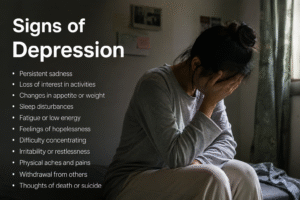
Common Signs of Depression
The signs of depression don’t look the same for everyone. Some people show visible emotional distress, while others mask it well behind a “normal” routine. Here are the most common signs of depression to watch out for:
11-signs-of-depression
1. Persistent Sadness or Low Mood
A continuous feeling of sadness, emptiness, or hopelessness that lasts for most of the day, nearly every day, for two weeks or longer.
2. Loss of Interest in Activities
Losing interest or pleasure in hobbies, work, socialising, or activities that were once enjoyable — often referred to as “anhedonia.”
3. Fatigue and Low Energy
Feeling constantly tired, drained, or physically heavy, even after adequate rest or sleep.
4. Changes in Sleep Patterns
This can go either way — difficulty falling or staying asleep (insomnia), or sleeping far more than usual (hypersomnia).
5. Changes in Appetite or Weight
Noticeable increase or decrease in appetite, leading to unintended weight gain or weight loss.
6. Difficulty Concentrating
Trouble focusing, making decisions, or remembering things — often affecting work performance or daily tasks.
7. Feelings of Worthlessness or Guilt
Persistent negative self-talk, excessive guilt over past mistakes, or a deep sense of not being “good enough.”
8. Irritability or Restlessness
Depression doesn’t always look like sadness — it can also show up as irritability, frustration, or restlessness, especially in men and younger individuals.
9. Withdrawal from Social Life
Pulling away from family, friends, or social commitments, and preferring isolation over connection.
10. Physical Symptoms Without a Clear Cause
Unexplained headaches, body aches, digestive issues, or other physical complaints that don’t respond to typical treatment.
11. Thoughts of Death or Self-Harm
In more severe cases, individuals may experience persistent thoughts about death, dying, or self-harm. This is a sign that requires immediate professional attention.
Why Early Recognition Matters
Depression tends to worsen without support. What starts as mild low mood can, over time, affect relationships, career performance, physical health, and overall well-being. Learning to spot the signs of depression early allows for timely intervention — through therapy, lifestyle changes, and professional guidance — which greatly improves outcomes.
When Should You Seek Help?
If you or someone you know has been experiencing several signs of depression for two weeks or more, and they are affecting daily functioning, it’s time to consult a mental health professional. Depression is not a sign of weakness — it is a medical condition, and like any other health issue, it responds well to appropriate care and support.
Expert Insight
Dr. Sugandha Gupta notes: “In clinical practice, one of the most overlooked signs of depression is a change in a person’s baseline energy and motivation. Patients often describe it as ‘just feeling off’ for weeks, without realising it’s a pattern worth addressing. Early conversations — even before a formal diagnosis — can make treatment far more effective.”
Dr. Paramjeet Singh adds: “Depression frequently presents differently across age groups and genders. In my experience, irritability and physical complaints are common presentations that get dismissed as ‘stress’ rather than recognised as signs of depression. A thorough evaluation helps rule out other causes and ensures the right course of care.”
Depression can be invisible to the outside world, but its impact is very real. Understanding the signs of depression — in yourself or a loved one — is a powerful first step toward getting the right support. You don’t have to navigate it alone.
At Delhi Mind Clinic, our team of experienced mental health professionals is here to help you understand what you’re going through and guide you toward a path of recovery, with compassion and confidentiality at every step.
If you recognise these signs in yourself or someone close to you, reaching out for professional support is a sign of strength, not weakness.
Every year, as temperatures drop and Diwali smoke settles over the city, Delhi’s air turns from bad to hazardous. Most of the conversation focuses on coughs, sore throats, and burning eyes.
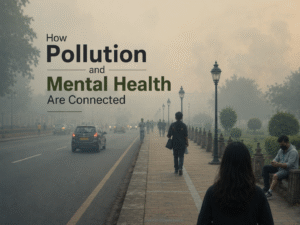
But there’s a quieter crisis happening at the same time. The link between pollution and mental health is real, and it’s affecting how Delhiites feel, not just how they breathe.
At Delhi Mind Clinic, we’re seeing this pattern every winter — patients whose anxiety, low mood, and fatigue spike right alongside the AQI. Here’s what’s actually going on with pollution and mental health, and what you can do about it.
Why Winter Makes Pollution and Mental Health Symptoms Worse
Pollution in Delhi is a year-round issue, but winter makes it far more dangerous. Cold, still air traps particulate matter closer to the ground instead of letting it disperse.
So pollution lingers in the air for much longer during the colder months. Combined with crop-burning smoke and Diwali firecrackers, this creates the thick winter smog Delhi has become known for — and it’s exactly this seasonal spike that makes the connection between pollution and mental health so noticeable each year.
how-pollution-and-mental-health
The Science: How Pollution Affects Mental Health and the Brain
This isn’t just “in your head” — there’s a real biological pathway connecting pollution and mental health:
Inflammation reaches the brain. Fine particulate matter (PM2.5) triggers inflammation throughout the body. Research shows this inflammatory response can disrupt neurotransmitters like serotonin and dopamine — the same chemicals responsible for regulating mood, motivation, and emotional balance.
Oxidative stress damages brain cells. Long-term pollution exposure has been linked to oxidative stress that affects cognitive function, memory, and focus.
A growing body of research backs this up. An Oxford University review of multiple research papers found evidence that both indoor and outdoor air pollution can contribute to serious mental illnesses.
Local data confirms it. A Delhi-NCR based study specifically examined the connection between AQI levels and depression, anxiety, and general well-being in city residents, given how far local pollution levels exceed WHO safety guidelines.
7 Proven Effects Linking Pollution and Mental Health
People living in high-pollution cities often report psychological changes that are easy to dismiss as “just a bad mood” or ordinary stress. Research increasingly shows these changes are connected to air quality. Here are seven of the most well-documented effects.
1. Increased Anxiety
Long-term exposure to poor air quality has been associated with heightened anxiety symptoms, including restlessness, racing thoughts, and a persistent sense of unease. If anxiety feels like it’s becoming harder to manage, our [INTERNAL LINK: Anxiety Treatment] page outlines the support options available at Delhi Mind Clinic.
2. Low Mood and Depressive Symptoms
Several studies have found a correlation between elevated pollution levels and higher rates of depressive symptoms, particularly in urban populations exposed to chronic smog. The American Psychiatric Association notes that people who breathe polluted air show changes in brain regions that regulate emotion, which may raise the likelihood of developing anxiety and depression over time.
3. Irritability and Mood Swings
Many people notice they feel more short-tempered or emotionally reactive on high-pollution days — a pattern that lines up with pollution’s effect on the body’s stress response.
4. Brain Fog and Poor Concentration
Reduced oxygen efficiency and inflammation can make it harder to focus, retain information, or think clearly, especially during prolonged smog episodes.
5. Fatigue and Low Motivation
Poor air quality is linked to disrupted sleep and lower energy levels, both of which can leave people feeling mentally drained and unmotivated.
6. Heightened Stress Response
Chronic exposure to pollution keeps the body’s stress systems mildly activated, which over time can make people more vulnerable to stress-related mental health difficulties. A recent umbrella review of global evidence, published in a peer-reviewed database, reinforces that this is an active and growing area of research.
7. Greater Risk for Existing Mental Health Conditions
For people already managing anxiety, depression, or another mental health condition, high-pollution periods can intensify symptoms and make day-to-day coping more difficult.
Why the Link Between Pollution and Mental Health Matters More in Delhi
Delhi consistently ranks among the most polluted cities in the world, particularly during the winter months when smog, stubble burning, vehicular emissions, and construction dust combine to push air quality into “severe” and “hazardous” categories.
This matters for mental health because:
Duration of exposure is longer. Unlike a single smoggy day, Delhi residents may face weeks of poor air quality every year, giving pollution more time to affect mood-regulating systems in the brain.
Indoor air isn’t always safer. Pollutants can seep indoors, meaning exposure often continues even when people stay inside.
Compounding stressors. Traffic, noise, and visibly poor air quality can add a layer of everyday psychological stress on top of the biological effects of pollution.
Vulnerable groups face greater risk. Children, older adults, and individuals already managing a mental health condition may experience more pronounced emotional effects.
How to Protect Your Mental Health During High-Pollution Days
While we can’t control outdoor air quality, there are meaningful steps that can help protect emotional wellbeing:
Track the Air Quality Index (AQI) and plan outdoor activities for times when pollution levels are comparatively lower.
Create a clean-air space at home using air purifiers and by keeping windows closed during peak pollution hours.
Prioritize sleep hygiene, since good sleep helps buffer against pollution-related mood disturbances.
Stay physically active indoors — gentle movement, stretching, or yoga can support mood even when outdoor exercise isn’t advisable.
Practice stress-reduction techniques such as mindfulness, deep breathing, or journaling to help regulate the nervous system. Our [INTERNAL LINK: Stress Management / Therapy Services] page has more on building these skills with professional guidance.
Stay connected with others. Social support is a strong protective factor against pollution-related stress and low mood.
Limit prolonged outdoor exposure, especially during early mornings when pollution levels tend to peak.
Seek professional support if you notice persistent changes in mood, anxiety, sleep, or concentration — especially during high-pollution seasons.
When to Reach Out for Support
If pollution season consistently affects your mood, sleep, energy, or ability to function — year after year — that’s not something to just push through. At Delhi Mind Clinic, we help patients recognize these seasonal patterns and build a plan that addresses both the environmental trigger and the underlying mental health impact. Our team, led by Dr. Sugandha Gupta (Founder & Director, with over a decade of experience treating anxiety and depression) and Dr. Paramjeet Singh (Senior Consultant Neuropsychiatrist and Joint Secretary of the Delhi Psychiatric Society), offers a combined medical and therapeutic approach to help you manage seasonal mental health dips.
Struggling with anxiety, low mood, or brain fog this pollution season? and let’s talk about it.