For general questions, please send us a message and we’ll get right back to you. You can also call us directly to speak with a member of our service team or insurance expert.
If you’ve ever driven an electric vehicle and found yourself glancing nervously at the battery percentage, calculating whether you’ll make it to the next charging point, you’ve experienced range anxiety. It’s a term that started in the world of electric cars, but at its core, it describes something much more universal — the very human fear of running out of resources before reaching safety.
As more people in Delhi and across India switch to electric vehicles, range anxiety is becoming a common, everyday experience. But what’s actually happening in the mind when this worry sets in? And why does something as practical as a battery gauge trigger such a strong emotional response?
What Is Range Anxiety, Really?
On the surface, range anxiety refers to the worry that an electric vehicle won’t have enough charge to reach its destination or the nearest charging station. But psychologically, it’s not really about the car at all — it’s about uncertainty, control, and consequence.
Our minds are wired to scan for threats and plan for worst-case scenarios. When we can’t be fully certain that our resources (in this case, battery charge) will get us where we need to go, the brain treats this ambiguity as a potential danger — even if the actual risk is small. This is the same mental circuitry that once helped our ancestors ration food, water, or firewood.
range-anxiety
The Psychology Behind the Worry
1. Fear of the Unknown
Humans generally feel more comfortable with certainty, even negative certainty, than with the unknown. Not knowing exactly how far your vehicle can travel creates a mental gap that the brain tries to fill — often with worst-case predictions.
2. Loss of Control
Range anxiety often intensifies in situations where control feels limited — unfamiliar routes, unpredictable traffic, or a shortage of charging infrastructure nearby. When people feel they can’t influence the outcome, anxiety naturally rises.
3. Anticipatory Anxiety
This is anxiety about a future event that hasn’t happened yet. The mind starts rehearsing “what if” scenarios — What if I get stranded? What if there’s no charging station nearby? — well before any real problem occurs. This kind of forward-looking worry is a hallmark of anticipatory anxiety and is common in many everyday situations, not just driving.
4. Negativity Bias
Our brains are naturally more attuned to potential negative outcomes than positive ones. So even when the odds of running out of charge are low, the mind gives disproportionate weight to that small possibility, making the anxiety feel bigger than the actual risk.
Why Range Anxiety Feels So Personal
Interestingly, range anxiety doesn’t affect everyone equally. People who generally tend toward anxious thinking patterns, perfectionism, or a strong need for control often experience it more intensely. For them, the ambiguity of “will I make it or not” can feel less like a minor inconvenience and more like a genuine threat.
This is a useful reminder: range anxiety is less about electric vehicles and more about how an individual’s mind processes uncertainty in general. The same person who worries intensely about battery percentage may also notice similar patterns of worry in other areas of life — work deadlines, health concerns, or travel planning.
“What we often see in our practice is that a specific worry, like range anxiety, is rarely isolated. It’s usually a window into how a person’s mind habitually responds to uncertainty. Someone who feels intense unease over a battery percentage may be experiencing the same underlying pattern in other parts of their life without realising it. Recognising this connection is often the first step toward meaningful change.” — Dr. Sugandha Gupta
Practical Ways to Manage Range Anxiety
The good news is that range anxiety, like most anxiety responses, can be managed with the right strategies.
Plan ahead, but don’t overplan. Knowing your route and charging options in advance reduces uncertainty, but obsessively checking and rechecking can reinforce anxious thinking rather than calm it.
Focus on what you can control. You can’t control every variable on the road, but you can control your planning, your buffer time, and your response if something unexpected happens.
Practice grounding techniques. Simple breathing exercises or mindfulness techniques can help interrupt the spiral of anticipatory “what if” thinking when it arises.
Reframe the worry. Instead of asking “What if I run out of charge?” try asking “What is the actual likelihood of this happening, and what would I realistically do if it did?” This shifts the mind from catastrophic thinking to problem-solving.
Notice the pattern, not just the trigger. If you find that this kind of anxious anticipation shows up in many parts of your life — not just driving — it may be worth exploring the underlying thought patterns with a mental health professional.
When Everyday Anxiety Becomes Something More
For most people, range anxiety is a mild, situational worry that fades once they gain more experience or confidence with their vehicle and its charging routine. But for some, this same pattern of anticipatory worry, need for control, and catastrophic thinking shows up repeatedly across different areas of life — driving, work, relationships, or health.
If you notice that anxious “what if” thinking is a frequent visitor in your daily life and is affecting your peace of mind or day-to-day functioning, it may be helpful to speak with a mental health professional. Understanding the root patterns behind your anxiety can make a meaningful difference — not just in how you handle a low battery gauge, but in how you navigate uncertainty in general.
“Anticipatory worry, like the kind people describe with range anxiety, becomes a concern when it starts to generalise — when the mind begins applying that same ‘what if something goes wrong’ lens to everyday situations that don’t warrant it. The goal isn’t to eliminate uncertainty from life, because that isn’t possible. The goal is to build a healthier relationship with it, so uncertainty doesn’t automatically translate into distress.” — Dr. Paramjeet Singh
Range anxiety is a perfect example of how modern technology can bring old psychological patterns to the surface. The fear itself isn’t really about kilometers left on a battery — it’s about our very human relationship with uncertainty, control, and the unknown.
Recognizing this can be empowering. The next time you feel that flicker of worry over a battery percentage, remember: it’s not really about the car. It’s about how your mind is wired to handle uncertainty — and that’s something you can learn to manage with awareness and the right support.
Walk into any Indian classroom, scroll through any teenager’s Instagram feed, or sit at any family dinner table, and you’ll likely find a conversation — spoken or unspoken — about how someone looks. “You’ve put on weight.” “Why are you so dark?” “Beta, eat less rice.” These comments, often meant casually, are shaping how an entire generation of Indian teenagers sees themselves.
Body image issues among Indian teens are no longer a rare concern whispered about in therapy rooms. They are becoming a widespread, everyday reality — and one that deserves far more attention than it currently gets. Understanding why body image issues among Indian teens are becoming so common is the first step toward helping the young people in our lives feel more at home in their own skin.
What Is Body Image, and Why Does It Matter So Much in the Teenage Years?
Body image refers to how a person perceives, thinks, and feels about their own body — not just how they actually look. During adolescence, the body is changing rapidly, identity is still forming, and peer approval matters intensely. This makes teenagers especially vulnerable to developing a distorted or negative view of themselves.
When body image issues take root early, they don’t just affect confidence. They can shape a teen’s relationship with food, exercise, social situations, and their own sense of self-worth for years to come. This is precisely why body image issues among Indian teens deserve early attention rather than being brushed aside as a passing phase.
Body image issues among Indian teens
Why Are Body Image Issues Rising Among Indian Teens?
Several overlapping factors are fuelling body image issues among Indian teens today:
1. Social Media and the Filtered Reality
Instagram, Snapchat, and short-video platforms expose teens to a constant stream of edited, filtered, and curated images. Many teens compare their unfiltered, everyday selves to these unrealistic standards, leading to persistent dissatisfaction with their own appearance.
2. Cultural Obsession With Fairness and “Ideal” Body Types
India’s long-standing preoccupation with fair skin, slimness for girls, and muscularity for boys sends a strong, often unspoken message: your worth is tied to your appearance. Advertisements, matrimonial preferences, and even well-meaning relatives reinforce these narrow ideals.
3. Family Comments and “Casual” Body Shaming
Comments about weight, height, skin tone, or eating habits made by parents, grandparents, or relatives — often without any harmful intent — can leave lasting emotional marks. Many Indian teens report that some of the most hurtful body-related remarks come from within their own homes.
4. Academic and Social Pressure
Board exams, competitive coaching classes, and packed schedules leave little room for physical activity, rest, or emotional processing. This pressure often gets tangled up with body image, especially when appearance becomes another area where teens feel they must “perform.”
5. Peer Comparison and Bullying
Nicknames based on weight or complexion, teasing in school WhatsApp groups, or exclusion based on appearance can quietly erode a teenager’s self-esteem over time.
Signs a Teen May Be Struggling With Body Image
Recognising body image issues among Indian teens early can make a real difference. Parents, teachers, and caregivers can watch for signs such as:
Frequently criticizing their own appearance or comparing themselves to others
Avoiding mirrors, photos, or social gatherings
Sudden changes in eating patterns or excessive focus on food and exercise
Wearing baggy clothes to “hide” their body, or the opposite — becoming preoccupied with certain outfits
Withdrawing from friends, sports, or activities they once enjoyed
Increased irritability, anxiety, or low mood, especially around appearance-related topics
Seeking constant reassurance about how they look
It’s important to note that occasional self-consciousness is a normal part of growing up. The concern arises when these thoughts and behaviours become persistent, distressing, or start affecting daily functioning.
The Emotional and Mental Health Impact
Left unaddressed, body image issues among Indian teens can contribute to:
Chronic low self-esteem and self-worth tied entirely to appearance
Social withdrawal and isolation
Anxiety and depressive symptoms
Unhealthy relationships with food and exercise
Difficulty forming secure, confident identities into adulthood
This is why body image struggles should never be dismissed as “just a phase” or vanity. For many teens, this is a genuine emotional burden that shapes how they experience the world.
How Parents Can Support a Teen Struggling With Body Image
Addressing body image issues among Indian teens often starts at home. Here’s how parents can help:
Watch your own language. Avoid commenting on your teen’s body, weight, or food choices — even in jest. Model body-neutral or body-positive language at home.
Create space for open conversation. Let your teen know they can talk about how they feel about their appearance without judgment or immediate advice-giving.
Focus on what the body can do, not just how it looks. Encourage strength, energy, and capability rather than appearance-based praise.
Limit appearance-focused comparisons within the family, including comparing siblings or cousins.
Be mindful of social media use and have honest conversations about filters, editing, and curated content — without shaming your teen for using these platforms.
Notice, don’t ignore. If you observe persistent distress, withdrawal, or changes in eating or mood, take it seriously rather than assuming it will pass.
How Teens Can Build a Healthier Relationship With Their Body
Teens themselves can also take small, meaningful steps to work through body image issues:
Curate your social media feed — unfollow accounts that consistently make you feel inadequate.
Practice noticing when you’re engaging in negative self-talk, and gently challenge it.
Spend time with people who make you feel accepted as you are.
Engage in movement or activities you genuinely enjoy, rather than ones focused purely on changing your appearance.
Remember that photos and reels rarely reflect real, everyday life.
When to Seek Professional Support
If body image concerns are affecting your teen’s mood, relationships, eating habits, school performance, or overall sense of self, it may be time to consult a mental health professional. Early support can make a significant difference — helping teens build resilience, self-compassion, and a healthier sense of identity before these patterns become deeply entrenched.
At Delhi Mind Clinic, our team works closely with adolescents and families across Delhi to address body image issues among Indian teens with sensitivity, evidence-based approaches, and a non-judgmental space where teens feel truly heard.
Expert Insights on Body Image Issues Among Indian Teens
“In my practice, I’ve noticed that Indian teens rarely talk about body image in isolation — it’s usually tangled up with academic pressure, family expectations, and how they’re perceived by peers. What helps most is when parents shift the conversation from ‘how do you look’ to ‘how do you feel,’ and when teens learn that their worth was never meant to be measured by a mirror.” — Dr. Sugandha Gupta
“One pattern I see often is that teens who struggle with body image stay silent for a long time before anyone notices. Families sometimes mistake withdrawal or irritability for ‘typical teenage moodiness.’ My advice to parents is simple: don’t wait for a crisis to start the conversation. Early, non-judgmental support changes outcomes significantly.” — Dr. Paramjeet Singh
Frequently Asked Questions
Q1: At what age do body image issues among Indian teens typically begin? Body image concerns often start emerging around early adolescence (ages 11–14), as physical changes, peer comparison, and social media exposure increase, though they can appear earlier or later depending on the individual.
Q2: Are boys also affected by body image issues, or is it mainly girls? While much of the conversation focuses on girls, boys are increasingly affected too — often around muscularity, height, and body shape — though they may be less likely to talk about it openly.
Q3: How is body image different from an eating disorder? Body image concerns relate to how a person perceives and feels about their appearance. Eating disorders are diagnosable mental health conditions involving disordered eating patterns. Not everyone with body image issues develops an eating disorder, but body image struggles are often an early risk factor — professional evaluation is important if eating patterns change significantly.
Q4: How can schools help address body image issues among Indian teens? Schools can play a big role through awareness sessions, training teachers to avoid appearance-based comments, encouraging media literacy, and creating safe spaces for students to discuss self-esteem and mental health.
Body image issues among Indian teens are shaped by a complex mix of culture, family, social media, and academic pressure. But with awareness, open conversation, and timely support, teens can be guided toward a healthier, more compassionate relationship with themselves. Addressing body image issues among Indian teens isn’t about a single conversation — it’s an ongoing, everyday practice of empathy at home and, when needed, professional guidance.
If you’re concerned about your teen’s emotional wellbeing or relationship with their body image, reaching out to a qualified mental health professional can be a meaningful first step. Tackling body image issues among Indian teens early — with empathy at home and expert support when needed — can help the next generation grow up feeling truly comfortable in their own skin.
You got the promotion. You landed the big client. Your manager praised your presentation in front of the whole team.
And yet, somewhere in the back of your mind, a voice whispers: “They’re going to find out I don’t actually know what I’m doing.”
If this sounds familiar, you’re not alone — and you’re not broken. What you’re experiencing has a name: imposter syndrome at work. It’s one of the most common, most misunderstood experiences among high-achieving professionals, and it affects everyone from fresh graduates to seasoned CEOs.
In this article, we’ll break down what imposter syndrome really is, why it shows up specifically in the workplace, and — most importantly — what you can actually do about it.
What Is Imposter Syndrome?
Imposter syndrome is the persistent feeling that your achievements are due to luck, timing, or deception rather than your actual skill or effort — despite clear evidence that you’re competent. People dealing with imposter syndrome at work often feel like a “fraud” who is one mistake away from being “found out.”
imposter-syndrome-at-work
It’s not a formal diagnosis, but a well-documented psychological pattern that affects an estimated 70% of people at some point in their careers, according to research published in the International Journal of Behavioral Science.
Why Does Imposter Syndrome at Work Feel So Intense?
The workplace is often where imposter syndrome hits hardest, because it’s a space defined by constant evaluation, comparison, and visibility. A few common triggers include:
1. Starting a New Job or Role
New responsibilities mean unfamiliar territory — and unfamiliar territory makes the “I don’t belong here” feeling louder.
2. Being the Only One in the Room
Whether it’s being the youngest, the newest, the only woman, or the only person from your background in a leadership meeting, standing out can amplify self-doubt.
3. High-Achieving or Perfectionist Tendencies
Ironically, the more capable and driven someone is, the more likely they are to hold themselves to impossible standards — and feel like they’re falling short.
4. Rapid Career Growth
A fast promotion can feel exciting on the outside, but internally trigger the thought: “I haven’t earned this yet.”
5. Comparison Culture
Constant exposure to others’ LinkedIn wins, polished presentations, and confident colleagues can make your own behind-the-scenes struggles feel abnormal — when in reality, everyone has them.
Common Signs of Imposter Syndrome at Work
Recognizing imposter syndrome at work is the first step to managing it. Watch out for these common signs:
Attributing your success to luck, timing, or other people rather than your own skill
Overworking to “prove” you deserve your position
Fear of being exposed as “not good enough”
Difficulty accepting compliments or praise
Downplaying your achievements in conversations
Avoiding new opportunities out of fear of failure
Constantly comparing yourself to more “confident” colleagues
Feeling anxious before performance reviews, even with a strong track record
If several of these resonate with you, it doesn’t mean something is wrong with you — it means you’re dealing with a very common, very human pattern.
“In my practice, I meet so many high-performing professionals — team leads, doctors, engineers, founders — who are convinced they’re ‘faking it.’ The irony is that the more competent and conscientious someone is, the more likely they are to doubt themselves this way. Imposter syndrome isn’t a sign of weakness; it’s often a sign of high standards colliding with an overly critical inner voice.” — Dr. Sugandha Gupta
Is Imposter Syndrome the Same as Low Self-Esteem?
Not exactly. Many people experiencing imposter syndrome at work are objectively skilled and successful — the issue isn’t a lack of ability, but a distorted way of interpreting that ability. It’s less about “I’m not good” and more about “I’m not as good as everyone thinks I am, and eventually they’ll notice.”
Understanding this distinction is important: imposter syndrome is about perception, not performance.
How to Overcome Imposter Syndrome at Work
1. Name It When It Happens
Simply recognizing the thought — “This is imposter syndrome talking, not reality” — creates distance between you and the feeling. It stops being an unquestionable truth and becomes just a thought.
2. Keep a “Wins” Record
Imposter syndrome thrives on selective memory — it highlights mistakes and conveniently forgets successes. Keep a running list of positive feedback, completed projects, and milestones. Revisit it when self-doubt creeps in.
3. Separate Feelings from Facts
Feeling unqualified is not the same as being unqualified. Ask yourself: “What is the actual evidence for and against this thought?” Often, the evidence tells a very different story than the anxiety does.
4. Talk About It
Imposter syndrome grows in silence, because it convinces you that you’re the only one who feels this way. Talking to trusted colleagues, mentors, or friends often reveals that even the people you admire most have felt exactly the same.
5. Redefine What Competence Looks Like
Nobody knows everything. Asking questions, needing help, or making mistakes are not signs of fraudulence — they’re signs of being human and still learning, which every professional is, at every level.
6. Set Realistic, Not Perfect, Standards
Perfectionism and imposter syndrome often feed each other. Aiming for “good and complete” instead of “flawless” reduces the pressure that fuels self-doubt.
7. Seek Professional Support When It Persists
If imposter syndrome is significantly affecting your confidence, decision-making, sleep, or overall wellbeing, speaking with a mental health professional can help you understand the root of these thought patterns and build long-term strategies to manage them.
“What people often don’t realise is that imposter syndrome tends to get worse when it’s left unaddressed — it can quietly shape career decisions, like turning down a promotion or avoiding visibility at work, without the person even realising why. Therapy isn’t about ‘fixing’ someone who is flawed; it’s about helping a capable person see their own competence clearly again.” — Dr. Paramjeet Singh
When Should You Seek Help?
While mild self-doubt is a normal part of professional growth, unmanaged imposter syndrome at work may be worth addressing with support if you notice:
Persistent anxiety or dread related to work performance
Avoidance of promotions, projects, or opportunities out of fear
Difficulty functioning due to constant self-criticism
Imposter feelings affecting your sleep, relationships, or physical health
A qualified therapist or counsellor can help you identify the underlying patterns driving these feelings and work with you to build genuine, lasting confidence — not just temporary reassurance.
Imposter syndrome at work doesn’t mean you’re unqualified — often, it means quite the opposite. The very fact that you care deeply about doing well is usually a sign of competence, not incompetence.
You don’t have to “fix” yourself to belong in the room. You’re already there because you’ve earned it — even on the days it doesn’t feel that way.
If imposter syndrome is affecting your confidence, career decisions, or day-to-day wellbeing, the team at Delhi Mind Clinic is here to help you work through it with compassionate, professional support.
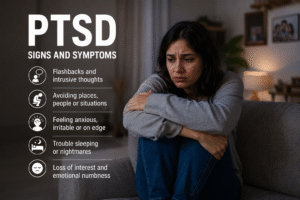
Recognising PTSD signs and symptoms early can make a significant difference in getting the right support at the right time. Living through a deeply distressing or life-threatening event can leave more than just physical scars. For many people, the emotional aftermath lingers long after the danger has passed — showing up as unwanted memories, sleepless nights, or a sense of being constantly on edge. This is often the reality of Post-Traumatic Stress Disorder (PTSD), a mental health condition that can develop after exposure to trauma.
In this guide, we walk through the most common PTSD signs and symptoms, explain why they occur, and outline when it’s time to seek professional help.
At Delhi Mind Clinic, we regularly meet individuals who have been struggling with these symptoms for months or even years without realizing that what they’re experiencing has a name — and that it’s treatable. In this article, we break down the key signs and symptoms of PTSD so you can better understand what to look for, whether in yourself or a loved one.
What Is PTSD?
PTSD-signs-and-symptoms
PTSD is a mental health condition triggered by experiencing or witnessing a traumatic event — such as an accident, natural disaster, physical or sexual assault, combat exposure, childhood abuse, or the sudden loss of a loved one. While it’s natural to feel fear, sadness, or anxiety after such events, PTSD occurs when these reactions persist, intensify, or interfere with daily life well beyond what would be expected.
Not everyone who experiences trauma develops PTSD, and symptoms can appear immediately or emerge weeks, months, or even years later.
“One of the most common misconceptions we see in clinical practice is that PTSD only affects people who have been through combat or catastrophic accidents. In reality, we treat patients whose trauma stems from road accidents, domestic abuse, medical emergencies, or even prolonged workplace stress. The nature of the event matters less than how the mind processes and stores that experience,” says Dr. Sugandha Gupta.
The 7 Most Common PTSD Signs and Symptoms
Mental health professionals typically group PTSD signs and symptoms into four broad clinical categories, covering seven core patterns you’re likely to notice in daily life. Understanding these PTSD signs and symptoms can help you recognize patterns that might otherwise seem unrelated.
1. Intrusive Memories and Flashbacks
Among the most recognizable PTSD signs and symptoms are recurrent, unwanted distressing memories of the traumatic event that intrude without warning, and flashbacks — feeling as though the trauma is happening all over again.
2. Trauma-Related Nightmares
Disturbing dreams tied directly or indirectly to the traumatic event are a common PTSD symptom, often disrupting sleep quality and leaving a person anxious about going to bed.
3. Intense Distress at Reminders of the Trauma
This PTSD sign includes intense emotional distress and physical reactions — such as a racing heart, sweating, or trembling — when reminded of the event by a sound, smell, place, or anniversary date.
4. Avoidance of People, Places, or Conversations
People with PTSD often go out of their way to avoid anything associated with the trauma, including people, places, activities, or conversations that bring back memories of the event. While avoidance may feel like a coping mechanism in the short term, it often reinforces fear and prevents emotional healing over time.
5. Negative Changes in Thinking and Mood
Trauma can significantly alter how a person views themselves, others, and the world. This group of PTSD signs and symptoms includes persistent negative beliefs (“I am broken,” “No one can be trusted”), ongoing guilt or shame, loss of interest in once-enjoyable activities, emotional numbness, and difficulty experiencing positive emotions such as happiness or love.
6. Hypervigilance and Being Easily Startled
Constantly feeling “on guard,” watchful for danger, or easily startled reflects a nervous system stuck in high-alert mode — one of the more physically exhausting PTSD symptoms to live with day to day.
“Patients often describe feeling like their body is stuck in ‘alarm mode’ long after the actual danger has passed. This isn’t a sign of weakness or overreaction — it’s the nervous system’s natural, biological response to overwhelming stress. Understanding this helps reduce the shame many patients feel about their symptoms, which is often the first step toward seeking help,” explains Dr. Paramjeet Singh.
7. Irritability, Anger, and Sleep Difficulties
Rounding out the common PTSD signs and symptoms are irritability, angry outbursts, difficulty concentrating, trouble falling or staying asleep, and — in some cases — engaging in risky or reckless behaviour.
How Long Do Symptoms Need to Last?
For a formal diagnosis, these symptoms typically need to persist for more than one month and cause significant distress or difficulty functioning in daily life — at work, in relationships, or in routine activities. If symptoms appear soon after the trauma but resolve within a few weeks, it may be a different, shorter-term stress reaction rather than PTSD.
PTSD in Children and Teens
PTSD doesn’t only affect adults. In younger children, symptoms may look different and can include:
Re-enacting the traumatic event through play
Frightening dreams that may not have clear content
Increased clinginess or separation anxiety
Regression in behaviour, such as bedwetting after being previously toilet-trained
Parents and caregivers should watch for sudden behavioural changes following a distressing experience.
Why Early Recognition Matters
PTSD symptoms can affect every area of life — relationships, work performance, physical health, and overall quality of life. Left unaddressed, they can also contribute to other concerns such as chronic anxiety, low mood, or difficulty maintaining close relationships.
The encouraging news is that PTSD is a well-researched and highly treatable condition. With the right therapeutic support — such as trauma-focused psychotherapy, counselling, and structured coping strategies — most people experience significant improvement in their symptoms and overall wellbeing.
When Should You Seek Professional Help?
Consider reaching out to a mental health professional if you or someone you know:
Has been experiencing the symptoms above for more than a month
Finds daily functioning, work, or relationships increasingly difficult
Feels persistently on edge, numb, or disconnected since a traumatic event
Is using avoidance, isolation, or other coping patterns that seem to be worsening over time
Reaching out for support is not a sign of weakness — it’s often the first and most important step toward recovery
PTSD can feel isolating, but no one has to navigate it alone. Recognising the PTSD signs and symptoms covered above — intrusive memories, avoidance, negative shifts in mood and thinking, and heightened arousal — is the first step toward understanding what you or a loved one may be going through.
At Delhi Mind Clinic, our team of experienced mental health professionals — including Dr. Sugandha Gupta and Dr. Paramjeet Singh — is here to help you understand your symptoms, explore compassionate treatment options, and work toward lasting recovery. If you recognise these signs in yourself or someone close to you, we encourage you to reach out and start the conversation.
Life rarely moves in a straight line. A job loss, the end of a relationship, a health scare, or the death of someone close to us can shake our world overnight. For many people, these experiences bring on a heavy, persistent sadness that goes far beyond an “off day.” This is often what mental health professionals refer to as situational depression.
At Delhi Mind Clinic, we regularly meet people struggling to understand why a difficult event has left them feeling stuck, low, and unable to bounce back the way they expected to. If this sounds familiar, you are not alone — and understanding situational depression is the first step toward healing.
What Is Situational Depression?
Situational depression, also known as an adjustment disorder with depressed mood, is a short-term form of depression that develops in response to a specific stressful event or major life change. Unlike depression that seems to arise without any clear external cause, situational depression is directly linked to an identifiable trigger.
situational-depression
Common triggers include:
Loss of a loved one
Divorce or relationship breakdown
Job loss or major career setbacks
Financial difficulties
Serious illness or injury (personal or of a loved one)
Moving to a new city or country
Retirement
Academic pressure or exam failure
Becoming a new parent
Any sudden, unexpected life disruption
The key feature of situational depression is that it is a reaction to a real, specific circumstance — and it typically emerges within about three months of the triggering event.
Situational Depression vs. Clinical Depression: What’s the Difference?
Many people use the terms “depression” and “situational depression” interchangeably, but there are important distinctions:
Situational Depression
Clinical (Major) Depression
Triggered by a specific event or stressor
May occur without any obvious cause
Symptoms often improve once the stressor is resolved or the person adapts
Symptoms can persist regardless of external circumstances
Generally shorter in duration
Often lasts longer and may recur
Tied closely to the intensity of the triggering event
Rooted in a combination of biological, psychological, and environmental factors
While situational depression tends to be temporary, it should never be dismissed as “just stress.” Left unaddressed, it can sometimes evolve into a more prolonged depressive episode, which is why timely support matters.
Common Symptoms of Situational Depression
The symptoms of situational depression can look similar to other forms of depression, though they are usually tied closely to the triggering event. These may include:
Persistent sadness, hopelessness, or tearfulness
Difficulty concentrating or making decisions
Withdrawing from friends, family, or social activities
Loss of interest in activities once enjoyed
Changes in appetite (eating more or less than usual)
Sleep disturbances — insomnia or oversleeping
Fatigue and low energy
Irritability or frequent mood swings
Feelings of being overwhelmed or unable to cope
Physical symptoms such as headaches or stomach discomfort
In some cases, thoughts of not wanting to be around
If these symptoms are interfering with your daily functioning — work, relationships, self-care — it is worth reaching out to a mental health professional for support.
Why Do Some People Develop Situational Depression While Others Don’t?
Not everyone who faces a stressful life event develops situational depression. Several factors can influence a person’s vulnerability, including:
Prior mental health history — a previous episode of anxiety or depression can increase sensitivity to new stressors
Coping style — how a person typically processes stress and adversity
Social support — the presence (or absence) of a strong support system
Multiple stressors occurring together — facing several difficult events at once
Personality traits — such as a tendency toward perfectionism or high self-criticism
Lack of prior exposure to similar stress — a completely unfamiliar or unexpected disruption can feel more destabilising
Understanding these factors isn’t about assigning blame — it’s about recognising that situational depression is a normal, human response to abnormal or overwhelming circumstances.
Healthy Ways to Cope with Situational Depression
The encouraging news is that situational depression is highly responsive to support and self-care. Here are some approaches that can help:
1. Acknowledge What You’re Feeling
Suppressing emotions often makes them heavier. Give yourself permission to feel sad, angry, or confused — these are valid responses to a difficult situation.
2. Maintain a Routine
Even small, consistent daily habits — waking up at a set time, eating regular meals, light physical activity — can provide a sense of stability when everything else feels uncertain.
3. Stay Connected
Isolation tends to deepen low mood. Reach out to trusted friends or family members, even if it’s just to talk or sit together in silence.
4. Practice Gentle Physical Activity
A short walk, light stretching, or yoga can help regulate mood and reduce stress hormones, even when motivation feels low.
5. Limit Major Decisions
During an emotionally heavy period, avoid making large life decisions if possible. Give yourself time to process before committing to big changes.
6. Practice Mindfulness or Relaxation Techniques
Breathing exercises, meditation, or journaling can help create space between you and overwhelming emotions.
7. Seek Professional Support
A trained therapist or counsellor can help you process the triggering event, build coping strategies, and prevent the low mood from deepening into a longer-term condition.
When Should You See a Mental Health Professional?
While mild situational sadness often eases with time and self-care, it’s important to seek professional help if:
Symptoms last longer than a few weeks and don’t seem to be improving
You’re struggling to function at work, school, or home
You’re withdrawing significantly from people you care about
You notice a loss of interest in almost everything
You experience thoughts of hopelessness or self-harm
There is no need to wait until things feel unbearable. Early support often leads to faster, smoother recovery.
How Delhi Mind Clinic Can Help
At Delhi Mind Clinic, our experienced mental health professionals — including Dr. Sugandha Gupta and Dr. Paramajeet Singh — understand that every individual’s journey through a difficult life event is unique. We offer a compassionate, confidential space to help you:
Understand what you’re experiencing
Process the event or transition that triggered your low mood
Build practical coping strategies tailored to your life
Rebuild a sense of stability, resilience, and hope
You don’t have to navigate this alone. Reaching out for support is a sign of strength, not weakness.
Situational depression reminds us that our mental health is deeply connected to our life experiences. A painful event doesn’t just pass through us — it can leave a real emotional imprint. But with the right support, understanding, and coping strategies, it is entirely possible to move through this chapter and come out the other side steadier and stronger.
If you or someone you know is going through a difficult life transition and struggling to cope, Delhi Mind Clinic is here to help. Book a consultation with Dr. Sugandha Gupta or Dr. Paramajeet Singhtoday.
Frequently Asked Questions (FAQs)
1. How long does situational depression usually last? It varies by individual, but situational depression often improves within a few weeks to a few months, especially with support and healthy coping strategies. If symptoms persist beyond this, professional evaluation is recommended.
2. Can situational depression turn into long-term depression? Yes, in some cases, if left unaddressed, situational depression can develop into a more prolonged depressive episode. This is why early intervention and support are important.
3. Is situational depression a “real” mental health condition? Yes. It is a recognised clinical condition (often classified as an adjustment disorder with depressed mood) and deserves the same care and attention as other forms of depression.
4. Can children and teenagers experience situational depression? Absolutely. Children and teens can develop situational depression in response to events like parental divorce, bullying, academic pressure, or moving to a new school or city.
5. Do I need therapy for situational depression, or will it go away on its own? Mild cases may improve with time, self-care, and social support. However, if symptoms are significant, persistent, or interfering with daily life, speaking with a mental health professional can make recovery faster and more manageable.
Losing sleep over rumours of layoffs. Checking your email at midnight, dreading a message from HR. Feeling like your worth as a person is tied to whether your job survives the next round of “restructuring.” If any of this sounds familiar, you’re not alone — and you’re not overreacting.
Job insecurity and mental health are more closely connected than most workplaces are willing to admit. In today’s fast-changing economy — marked by layoffs, contract-based roles, automation, and constant “restructuring” — job insecurity has quietly become one of the biggest, most under-discussed threats to emotional wellbeing.
The connection between job insecurity and mental health isn’t just anecdotal — it’s backed by growing psychological research. In this article, we’ll explore what job insecurity really is, how the link between job insecurity and mental health shows up in daily life, and 7 practical, healthy ways to protect your mental health while navigating an unpredictable career.
Job Insecurity and Mental Health: What Does It Really Mean?
job-insecurity-and-mental-health
Job insecurity isn’t just about actually losing a job — it’s the fear and uncertainty around the possibility of losing one. To understand the link between job insecurity and mental health, it helps to first recognise what job insecurity actually looks like. It can show up as:
Working on short-term contracts with no clarity on renewal
Constant rumours of layoffs or company downsizing
Fear of being replaced by automation or AI
Unstable income in freelance or gig-based work
Feeling replaceable or undervalued at work
Lack of clear communication from leadership about the company’s future
Interestingly, research shows that perceived job insecurity can be just as psychologically damaging as actual job loss. This is one of the clearest signs of how closely job insecurity and mental health are linked — the mind often struggles more with prolonged uncertainty than with a definite, known outcome, because uncertainty keeps the stress response switched on, with no resolution in sight.
How Job Insecurity Affects Mental Health
The relationship between job insecurity and mental health plays out in several distinct ways — some emotional, some physical, and some relational. Here’s how job insecurity and mental health commonly intersect:
1. Chronic Anxiety and Overthinking
When your income and identity feel like they’re hanging by a thread, your mind stays on high alert. This can lead to constant worry, racing thoughts, and difficulty relaxing — even outside work hours.
2. Sleep Disturbances
Many people with job insecurity report lying awake at night, replaying conversations with managers or imagining worst-case scenarios. Poor sleep, in turn, worsens mood, concentration, and emotional resilience — creating a difficult cycle.
3. Lowered Self-Esteem
In many cultures, especially in India, a person’s job is closely tied to their sense of identity and self-worth. Job insecurity can make people feel “not good enough,” even when their performance has nothing to do with the uncertainty they’re facing.
4. Strained Relationships
The stress of job insecurity doesn’t stay confined to work. It often spills over into family life — increased irritability, emotional withdrawal, or conflict with a partner or children over financial worries.
5. Physical Symptoms
Mental health and physical health are deeply linked. Prolonged uncertainty can manifest as headaches, fatigue, muscle tension, digestive issues, and a weakened immune system.
6. Increased Risk of Burnout
Ironically, job insecurity often pushes people to overwork — taking on more tasks, saying yes to everything, and rarely switching off — in an attempt to “prove their worth.” This can accelerate burnout rather than prevent job loss.
The Psychology Behind Job Insecurity and Mental Health
Job insecurity taps into some of our most basic psychological needs: safety, stability, and belonging. When these feel threatened, our brain’s stress response activates — the same fight-or-flight system that once protected us from physical danger now reacts to an uncertain email from HR or vague comments in a team meeting.
This is why the link between job insecurity and mental health can feel so disproportionately distressing, even to people who are otherwise emotionally resilient. It isn’t a sign of weakness — it’s a natural human response to prolonged uncertainty.
Expert Insight — Dr. Sugandha Gupta “In my practice, I often see clients who are high performers but still feel constantly on edge because their job doesn’t feel secure. What’s important to understand is that this anxiety isn’t irrational — it’s the mind’s natural response to prolonged, unresolved uncertainty. The goal in therapy isn’t to eliminate the uncertainty, which is often outside anyone’s control, but to help the person build a stronger, steadier sense of self that isn’t solely dependent on their job status.”
7 Ways to Protect Your Mental Health From Job Insecurity
If you’re feeling the weight of job insecurity, these strategies can help you protect your mental health without waiting for the uncertainty to resolve on its own.
1. Separate Your Self-Worth From Your Job Title
You are not your designation. Your value as a person doesn’t shrink or grow based on your employment status. This is often easier said than done — but consciously reminding yourself of this can reduce the emotional weight of workplace uncertainty.
2. Focus on What You Can Control
You may not be able to control company decisions, but you can control how you upskill, how you manage your finances, and how you take care of your mental and physical health. Redirecting energy toward what’s within your control can reduce feelings of helplessness.
3. Build a Support System
Talking to trusted friends, family, or colleagues about your worries can ease the emotional burden. Isolation tends to amplify anxiety, while connection helps put things in perspective.
4. Practice Grounding and Relaxation Techniques
Simple practices like deep breathing, mindfulness, or short walks can help calm an overactive stress response and bring your focus back to the present moment, rather than a worst-case future.
5. Maintain a Financial Safety Net
While not always possible, having even a small emergency fund can significantly reduce the anxiety associated with job insecurity, giving you a sense of buffer and control.
6. Set Boundaries Around Work
Constantly overworking to “prove your value” often backfires, leading to burnout. Set clear boundaries around your working hours and protect time for rest and personal life.
7. Seek Professional Support When Needed
If feelings of anxiety, hopelessness, or constant worry are affecting your daily life, sleep, or relationships, it’s important to reach out to a mental health professional. Therapy can provide tools to manage stress, reframe unhelpful thought patterns, and build long-term emotional resilience.
Job Insecurity and Mental Health: When Should You Seek Help?
It’s time to consider professional support if you notice:
Persistent anxiety or dread that doesn’t ease up, even during time off
Difficulty sleeping or constant fatigue
Withdrawal from friends, family, or activities you used to enjoy
Feelings of hopelessness or worthlessness
Increased irritability or conflict in relationships
Using unhealthy habits (excessive screen time, substance use, etc.) to cope
The connection between job insecurity and mental health is a real and valid source of psychological stress — and you don’t have to navigate it alone. At Delhi Mind Clinic, our mental health professionals help individuals understand and manage the impact of job insecurity on mental health through compassionate, evidence-based care tailored to your unique situation.
Expert Insight — Dr. Paramjeet Singh “One pattern I frequently observe is that people experiencing job insecurity tend to cope by overworking, hoping it will make them indispensable. In reality, this often accelerates burnout without actually reducing the underlying uncertainty. I encourage clients to focus on sustainable habits — protecting sleep, setting boundaries, and seeking support early — rather than waiting until the stress becomes overwhelming before reaching out for help.”
Final Thoughts on Job Insecurity and Mental Health
In a world where career stability is no longer guaranteed, it’s easy to internalise job insecurity as a personal failure — but it isn’t. It’s a widespread, structural reality of the modern workplace, and the toll it takes on mental health is very real.
Recognising the link between job insecurity and mental health is the first step toward protecting your wellbeing. By building healthy coping strategies, setting boundaries, and seeking support when needed, you can navigate uncertain times without letting job insecurity define your sense of self or your mental health.
If job insecurity is affecting your mental health, reach out to Delhi Mind Clinic. Our team is here to support you through it.