For general questions, please send us a message and we’ll get right back to you. You can also call us directly to speak with a member of our service team or insurance expert.
This World Mental Health Day (10 October), Dr Paramjeet Singh explains why more young people are forming emotional bonds with AI, and where the risks begin.
It’s 3 a.m. Sleep won’t come, your mind is racing, and nobody is awake to talk to. So you open a chatbot. It replies instantly, it doesn’t judge, and it never gets tired of you.
For many people, this is now a nightly habit. As AI and mental health increasingly overlap, a bigger question follows: when does a helpful conversation become emotional dependence?
Dr Paramjeet Singh Insights
On World Mental Health Day, Dr Paramjeet Singh, Consultant Psychiatrist at PSRI Hospital, shared his insights in a Hindustan Times feature. Here is what every parent, student and young professional should know about AI and emotional wellbeing.
Why Chatbots Are on the Agenda This World Mental Health Day
World Mental Health Day (October 10) aims to raise awareness of mental health worldwide. This year’s theme, “Lived experiences heard: real voices, real change,” is a timely reminder that real voices matter, and that no chatbot can fully replace the human ones around us.
An “Alarming Rise” in Youngsters Bonding With AI
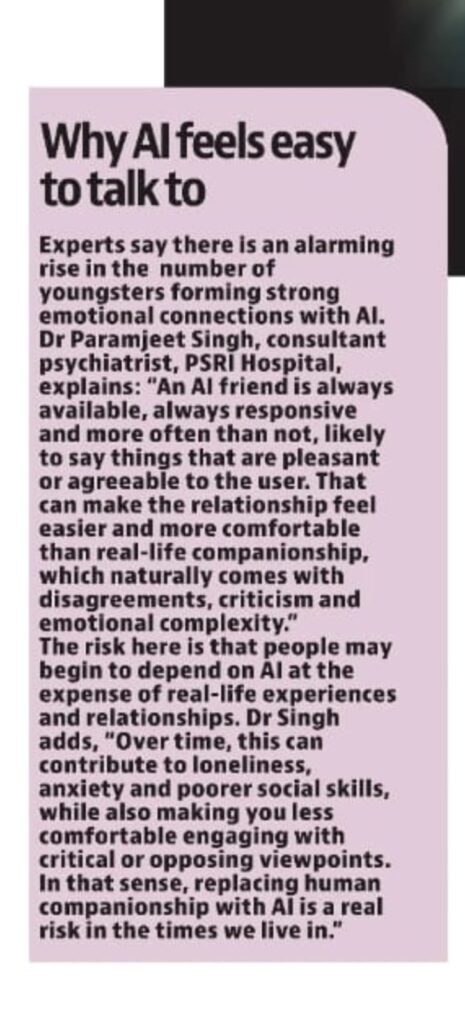
Experts are seeing a worrying trend: more and more young people are forming strong emotional connections with AI. What began as a tool for answers is becoming a companion for feelings.
Why AI Feels So Easy to Talk To
According to Dr Singh, a chatbot companion has three qualities that make it so comfortable:
Always available. There are no appointments, no waiting and no “I’m busy right now.”
Always responsive. It replies instantly, every time.
Usually agreeable. More often than not, it says things the user finds pleasant.
Real relationships work differently. Friendships, family and partnerships naturally involve disagreements, criticism and emotional complexity. Next to a chatbot that always accommodates you, human connection can start to feel like too much effort. That contrast is the heart of the problem.
The Real Risk: Choosing AI Over Real Life
The concern is not that people use these tools. It is that they may begin to depend on them at the expense of real-life experiences and relationships.
Dr Singh warns that over time this can contribute to:
Loneliness, because a screen cannot fully replace human presence.
Anxiety, especially around real-world interactions.
Poorer social skills, because less practice makes conversation harder.
Discomfort with opposing views, since constant agreement makes disagreement feel threatening.
In his view, replacing human companionship with AI is a real risk in the times we live in.
5 Warning Signs of Unhealthy Chatbot Reliance
Watch for these patterns in yourself, your child or a family member:
Withdrawing from family, friends and everyday activities
Spending far more time with a chatbot than with people
Feeling anxious, low or upset when unable to access it
Skipping school, work, sleep, hobbies or social plans to keep chatting
Preferring chatbot conversations because real ones feel “too difficult”
One or two of these signs doesn’t mean there is a disorder, but a persistent pattern deserves attention.
AI Is Not a Substitute for Mental Health Care
A chatbot can help someone put their thoughts into words, and that has value. But it cannot replace the clinical judgement, empathy and human connection that matter most when someone is in serious distress. A screen can respond to words. A trained professional can recognise the pain behind them, ask the difficult questions and stay present when it matters most.
If you or someone you know is experiencing severe low mood, hopelessness or thoughts of self-harm, please reach out to a mental health professional or a trusted person immediately. In India you can also call the Tele-MANAS helpline at 14416.
How to Use AI Healthily: Practical Tips
Set time limits, especially at night.
Treat chatbots as a tool, not a confidant for your deepest struggles.
Reach out to one real person each day, even briefly.
Practise disagreement. Healthy relationships include difficult conversations.
Parents: stay engaged. Talk openly with your children instead of leaving hard conversations to technology.
Seek help early if screen time is affecting sleep, studies, work or relationships.
When to Consult a Psychiatrist for Mental Health Concerns
Consider professional support if you notice persistent anxiety, loneliness, mood changes, sleep problems or increasing withdrawal from people. Early support makes a real difference, and talking to a real person is a strong first step.
This World Mental Health Day, take that step. At Delhi Mind Clinic, our team provides confidential, compassionate care for anxiety, depression, stress, sleep problems and emotional wellbeing.