For general questions, please send us a message and we’ll get right back to you. You can also call us directly to speak with a member of our service team or insurance expert.
Attention-Deficit/Hyperactivity Disorder (ADHD) is one of the most common neurodevelopmental conditions, yet it’s also one of the most misunderstood. Many people picture ADHD as simply “a child who can’t sit still,” but the reality is far more nuanced. ADHD symptoms can look very different depending on a person’s age, gender, and the type of ADHD they have.
If you’ve been searching for clarity on ADHD symptoms — whether for yourself, your child, or a loved one — here are 10 essential signs to watch for, along with guidance on when it might be time to seek professional support.
What Is ADHD?
ADHD is a neurodevelopmental condition that affects how the brain regulates attention, impulse control, and activity levels. It’s not caused by poor parenting, laziness, or a lack of discipline — it stems from differences in brain development and functioning. ADHD typically begins in childhood, but for many people, it goes unrecognised until adolescence or adulthood, especially in those who don’t fit the “hyperactive” stereotype.
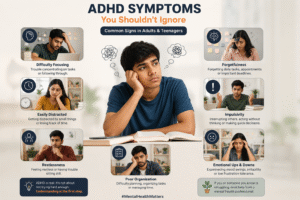
Below are the 10 most common ADHD symptoms seen in both children and adults.
ADHD-SYMPTOMS.
1. Difficulty Sustaining Attention
Trouble staying focused on tasks, conversations, lessons, or reading — especially when the activity isn’t inherently stimulating. This can look like zoning out mid-conversation or losing track of what’s being read.
2. Frequent Forgetfulness
Regularly misplacing items like keys, phones, or documents, and forgetting appointments, deadlines, or daily responsibilities, even when they matter.
3. Trouble Following Through on Tasks
Starting projects with enthusiasm but struggling to finish them. Instructions may be forgotten partway through, or attention shifts before a task is complete.
4. Easily Distracted by Surroundings or Thoughts
Unrelated noises, thoughts, or stimuli frequently pull focus away from the task at hand, making sustained concentration difficult.
5. Difficulty with Organisation and Time Management
Struggling to plan ahead, prioritise tasks, or estimate how long something will take. This often results in last-minute scrambling or missed deadlines.
6. Restlessness or Fidgeting
In children, this often looks like an inability to stay seated, excessive running, or climbing in inappropriate settings. In adults, it’s more often an inner restlessness — a constant urge to move, tap, or stay busy.
7. Excessive Talking or Interrupting
Talking more than the situation calls for, blurting out answers before a question is finished, or interrupting others mid-conversation.
8. Impulsivity in Decisions or Actions
Acting without fully thinking through consequences — this can show up as impulsive spending, rash decisions, or risky behaviour.
9. Difficulty Waiting or Taking Turns
Struggling with patience in queues, conversations, or group settings, often accompanied by a sense of urgency or frustration while waiting.
10. Emotional Sensitivity and Low Frustration Tolerance
Difficulty regulating emotional responses — quick frustration, irritability, or feeling overwhelmed more easily than others in similar situations.
Expert Insight: “A large number of adults who visit us for anxiety, low mood, or relationship stress are actually dealing with undiagnosed ADHD underneath it all. Once we look closely at their history — chronic procrastination, restlessness, difficulty organising their day — the pattern becomes clear. It’s never too late to understand your mind better and build strategies that genuinely work for you.” —Dr. Sugandha Gupta
How These Symptoms Differ Between Children and Adults
In children, ADHD symptoms tend to be more visible — difficulty sitting still, trouble following classroom instructions, frequent daydreaming, and struggles with peer relationships due to impulsivity. Teachers are often the first to notice these patterns, since classroom settings demand sustained attention and self-regulation.
In adults, symptoms often look less like hyperactivity and more like chronic disorganisation, procrastination, missed deadlines, and difficulty managing emotions. Many adults describe feeling like they’re “trying harder than everyone else just to keep up,” which can quietly affect self-esteem, careers, and relationships over time.
ADHD Symptoms Can Look Different in Women
Research shows that ADHD often presents differently in women and girls, who are more likely to show inattentive symptoms rather than visible hyperactivity. This can include internalised restlessness, difficulty with emotional regulation, and perfectionism paired with disorganisation. Because of this, many women are diagnosed later in life — sometimes only after a family member, often a child, receives a diagnosis first.
Why Recognising These Symptoms Matters
Unrecognised ADHD can affect nearly every area of life — academic performance, career growth, relationships, and emotional well-being. Many individuals with undiagnosed ADHD experience chronic feelings of underachievement, anxiety linked to ongoing struggles, strained relationships, and low self-confidence from repeated setbacks.
The encouraging news is that with the right support, understanding, and strategies, people with ADHD can build effective systems to manage symptoms and thrive in their personal and professional lives.
When Should You Seek Professional Guidance?
While occasional forgetfulness or restlessness is completely normal, it may be worth speaking to a mental health professional if these patterns:
Persist over a long period of time (six months or more)
Appear across multiple settings — home, school, or work
Significantly interfere with daily functioning
Cause distress to you or those around you
A qualified psychiatrist or psychologist can conduct a thorough evaluation, which usually involves a detailed history, standardised questionnaires, and sometimes input from family members or teachers, to understand whether ADHD or another condition might be contributing to these symptoms.
Expert Insight: “Parents often ask us how to tell the difference between normal childhood energy and something that needs attention. The key is looking at consistency and impact — if the restlessness or inattention shows up across home, school, and social settings, and it’s genuinely affecting the child’s confidence or learning, that’s when a proper evaluation is worthwhile. Early recognition makes a real difference in how a child experiences school and friendships.” — Dr. Paramjeet Singh
ADHD is a highly individual condition — no two people experience it in exactly the same way. Recognising these 10 essential symptoms early, whether in a child or an adult, is the first step toward better understanding, self-compassion, and effective management strategies.
If you or someone you love is showing signs of ADHD, know that support is available. A proper evaluation can offer clarity and open the door to strategies that make daily life more manageable.
At Delhi Mind Clinic, our specialists — including Dr. Sugandha Gupta and Dr. Paramjeet Singh — offer comprehensive ADHD evaluations for both children and adults. If you have questions or would like to schedule a consultation, feel free to reach out to us — understanding your mind is the first step toward supporting it better.