For general questions, please send us a message and we’ll get right back to you. You can also call us directly to speak with a member of our service team or insurance expert.
Schizophrenia is a serious but treatable mental health condition that affects how a person thinks, feels and behaves. Searches for schizophrenia have been rising lately, partly because more people are talking openly about mental health and partly because families are noticing changes in loved ones and want answers.
If you or someone close to you has been acting differently, this guide will help. It explains the early signs, the causes, the treatment options, and when to see a specialist.
What Is Schizophrenia?
Schizophrenia is a long-term brain condition that changes how a person perceives reality. The World Health Organization estimates that it affects around 1 in 300 people worldwide.
It usually begins in the late teens to early thirties. It can look different from person to person, which is why it is often missed in the early stages.
Schizophrenia is not a “split personality.” It is also not caused by weak willpower, bad parenting or black magic. It is a medical condition, and it responds to proper care.
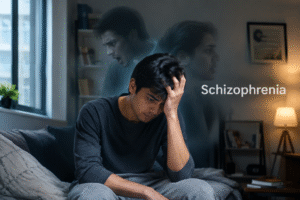
Schizophrenia
7 Warning Signs of Schizophrenia
Not everyone shows all of these. Several signs together, lasting for weeks, are a reason to seek help.
1. Hearing or Seeing Things Others Do Not
Hearing voices that nobody else hears is one of the best-known signs of schizophrenia. Some people also see things that are not there.
2. Strong False Beliefs (Delusions)
The person may believe they are being watched, followed or harmed, or that they have special powers. Logical explanations do not change these beliefs.
3. Confused or Disorganised Speech
Sentences may jump from topic to topic or make little sense. Following a conversation becomes hard.
4. Withdrawal From Family and Friends
Someone who used to be social may start staying alone, skipping meals and avoiding contact. Families often mistake this for laziness or a phase.
5. Drop in Study or Work Performance
A sudden fall in grades, focus or job performance can be an early signal of schizophrenia, especially in young adults.
6. Flat or Unusual Emotions
The person may seem emotionless, laugh at odd moments, or react in ways that do not match the situation.
7. Neglecting Self-Care
Poor hygiene, disturbed sleep and loss of daily routine are common as the condition progresses.
What Causes Schizophrenia?
There is no single cause. Research points to a mix of factors:
Genetics: A family history raises the risk.
Brain chemistry and development: Differences in how brain circuits work play a role.
Stress and trauma: Severe stress can trigger symptoms in someone who is already vulnerable.
Substance use: Cannabis and other drugs can increase the risk or bring on an early episode.
Having one of these risk factors does not mean a person will develop schizophrenia.
Common Myths About Schizophrenia
Myth: People with schizophrenia are violent. Fact: Most are not. They are far more likely to be harmed than to harm others.
Myth: It cannot be treated. Fact: With the right care, many people live stable, productive lives.
Myth: It is caused by a curse or lack of discipline. Fact: It is a medical condition.
Stigma often delays treatment by years. Early help leads to better outcomes.
How Is Schizophrenia Treated?
Treatment works best when it combines several approaches, guided by a qualified psychiatrist:
Medical treatment prescribed and monitored by a psychiatrist to reduce symptoms.
Psychotherapy, such as cognitive behavioural therapy, to manage thoughts and stress.
Family education and support, so loved ones understand the condition and can help.
Rehabilitation and skills training to rebuild routine, work and social confidence.
Healthy lifestyle habits, including regular sleep, exercise and avoiding alcohol and drugs.
Please never stop or change treatment without your doctor’s advice.
“Families often wait until the situation becomes severe before seeking help. With schizophrenia, the early months matter a great deal. If someone shows sudden withdrawal, unusual beliefs or disturbed sleep, please consult a mental health professional early. Timely care can change the course of the illness.”
“Schizophrenia is a medical condition, not a personal failing. Recovery is possible when treatment is continued regularly and the family stays involved. Patience, understanding and a non-judgmental attitude at home are as important as clinical care.”
When Should You See a Doctor?
Consult a psychiatrist if you notice:
Hearing voices or seeing things others do not
Strong, fixed suspicions or fears without basis
Sudden withdrawal and a decline in daily functioning
Talk of self-harm or harming others (seek urgent help immediately)
How to Support Someone With Schizophrenia
Listen calmly without arguing about their beliefs.
Avoid blame, labels and ridicule.
Encourage regular treatment and follow-ups.
Learn about the condition so you can respond with confidence.
Look after your own wellbeing as a caregiver too.
Frequently Asked Questions About Schizophrenia
Can schizophrenia be cured?
Schizophrenia is a long-term condition, but symptoms can be well controlled with consistent treatment, and many people lead fulfilling lives.
At what age does schizophrenia start?
Usually between the late teens and early thirties, though it can appear at other ages.
Is schizophrenia hereditary?
Family history increases the risk, but most people with a relative who has schizophrenia never develop it.
Can stress cause schizophrenia?
Stress alone does not cause it, but it can trigger symptoms in people who are already vulnerable.
Final Thoughts
Schizophrenia is not the end of a person’s story. Understanding the signs, ending the stigma and seeking help early make a real difference.
Concerned about schizophrenia in yourself or a loved one? Book a confidential consultation with the specialists at Delhi Mind Clinic today. Support is available, and recovery is possible.