For general questions, please send us a message and we’ll get right back to you. You can also call us directly to speak with a member of our service team or insurance expert.
If you’re searching for a famous person with anxiety, you’re not alone in looking — and you’re definitely not alone in feeling anxious. Anxiety doesn’t check your bank balance, your fame, or your follower count before it shows up. Some of the world’s most recognizable actors, musicians, and athletes have spoken publicly about living with anxiety, proving that success and struggle can, and often do, coexist. In this article, we look at ten well-documented examples of a famous person with anxiety, explore the signs and symptoms they’ve described, and share what their stories can teach the rest of us about seeking support.
What It Means to Be a Famous Person With Anxiety
Being a famous person with anxiety often means living with the same racing thoughts, physical tension, and worry that anyone else with anxiety experiences — except under constant public observation. For many celebrities, the pressure of interviews, live performances, red carpets, and social media scrutiny can intensify existing anxiety or bring it to the surface for the first time. That’s part of why hearing a famous person with anxiety describe their experience so openly resonates with so many fans: it shows that anxiety isn’t something reserved for people going through obviously difficult circumstances — it can affect anyone, at any stage of life, regardless of outward success.
Why a Famous Person With Anxiety Speaking Up Matters
When a well-known figure opens up about a mental health condition, it does two important things: it reduces the stigma that keeps ordinary people silent, and it reminds us that anxiety isn’t a personal failing — it’s a common, treatable human experience. Every famous person with anxiety mentioned on this list has, in their own way, helped normalize the conversation around mental health, making it easier for fans to recognize their own symptoms and consider reaching out for help.
Top 10 Examples of a Famous Person With Anxiety
1. Ryan Reynolds
ryan-renlonds
The actor known for his sharp on-screen humor has said he has had anxiety for as long as he can remember, linking it partly to a demanding upbringing. He has spoken about the importance of talking openly about mental health rather than hiding it, making him one of the most quoted examples of a famous person with anxiety in Hollywood. Reynolds has described feeling intense nervousness before live television appearances, a symptom many people with anxiety will recognize.
2. Adele
adele
The multi-Grammy-winning singer has spoken about how anxiety attacks have affected her ability to perform in front of very large crowds, showing that even seasoned performers can struggle with stage-related anxiety. Her openness about panic before shows has made her one of the most relatable examples of a famous person with anxiety in the music industry.
3. Lady Gaga
Lady Gaga
A vocal mental health advocate, Lady Gaga has described living with depression and anxiety for essentially her entire life, and has used her platform to encourage fans to seek help without shame. Through her foundation and public appearances, she has become one of the most outspoken voices representing a famous person with anxiety who actively works to destigmatize the condition.
4. Emma Stone
Emma Stone
The Oscar-winning actress has shared that she began attending therapy at a very young age after experiencing frequent panic attacks, and has credited counseling with helping her manage her anxiety significantly over the years. Stone often speaks about how early intervention made a meaningful difference in her ability to cope.
5. Michael Phelps
Michael Phelps
The most decorated Olympian in history has spoken about struggling with depression and anxiety at various points in his career, and has emphasized how difficult it can be to reach out for support — even for someone who appears to have it all together. Phelps has become an example of a famous person with anxiety whose story challenges the idea that peak physical achievement guarantees mental wellness.
6. Zayn Malik
Zayn Malik
The singer has publicly discussed canceling performances due to overwhelming anxiety, choosing to be honest about it rather than hide behind a manufactured excuse — a decision he described as freeing. His willingness to be transparent has made him a widely cited example of a famous person with anxiety in the pop music world.
7. Kristen Bell
Kristen Bell
Known for her upbeat on-screen persona, Kristen Bell has been open about doing consistent inner work to manage her anxiety, and has credited her mother’s early encouragement to seek professional support as a turning point. Bell often notes that appearing cheerful publicly doesn’t mean anxiety isn’t present privately.
8. Jennifer Lawrence
Jennifer Lawrence
Lawrence has spoken about experiencing social anxiety from the time she started school, describing it as something she has carried with her long before fame ever entered the picture. Her story is a reminder that a famous person with anxiety often dealt with symptoms long before stepping into the public eye.
9. Lizzo
Lizzo
The singer and rapper has spoken about how anxiety and depression didn’t disappear once she became famous, emphasizing that mental health struggles don’t care about outward success. Lizzo has said that talking to a mental health professional has been an important part of how she takes care of herself.
10. Big Sean
Big Sean
The rapper stepped away from the public eye for roughly a year while dealing with anxiety, later speaking openly about the experience once he felt ready to share it. His decision to prioritize his mental health over his career, even temporarily, reflects a pattern seen in many stories of a famous person with anxiety choosing to step back and heal.
Common Signs of Anxiety Even a Famous Person With Anxiety Experiences
Across these stories, several recurring signs and symptoms appear again and again:
Persistent worry or racing thoughts, even during moments of outward success
Physical symptoms like a racing heart, nausea, or tension before public appearances
Panic attacks, sometimes triggered by crowds, cameras, or performance pressure
Avoidance of certain situations, such as canceling events or stepping back from public life
Difficulty recognizing or admitting the anxiety to themselves before eventually seeking help
Recognizing these patterns in a famous person with anxiety can help everyday readers identify similar signs in themselves or people they care about.
How Fans and Family Can Support a Famous Person With Anxiety — and Loved Ones With Anxiety
While most of us will never personally know a famous person with anxiety, the lessons from these stories apply directly to supporting friends and family who may be struggling. Listening without judgment, encouraging professional support rather than offering unsolicited advice, and being patient with someone’s pace of opening up are all things fans have praised these celebrities’ own support systems for providing.
What Every Famous Person With Anxiety on This List Has in Common
Anxiety doesn’t discriminate. It affects people across every industry, age group, and level of achievement.
Professional support helps. Nearly every famous person with anxiety on this list has spoken about the role therapy or counseling played in helping them cope.
Speaking up reduces shame. Each of these individuals chose to share their story publicly, which has helped fans feel less isolated in their own struggles.
Anxiety and depression often overlap. Many have described experiencing both conditions together, which mirrors what mental health professionals commonly observe in the general population.
Frequently Asked Questions About a Famous Person With Anxiety
Is it common for a famous person to have anxiety?
Yes. Anxiety disorders affect a significant portion of the general population, and public figures are no exception. Fame and success don’t offer protection from anxiety — in some cases, the pressure of public life can add to it, which is why so many stories of a famous person with anxiety involve performance-related triggers.
Why do so many celebrities talk about therapy?
Many have found that professional support — such as therapy or counseling — helps them manage symptoms and build coping strategies, which is why so many choose to mention it when discussing their mental health journeys.
Can anxiety go away completely?
Anxiety is highly manageable with the right support, though experiences vary from person to person. Many people learn to significantly reduce their symptoms and lead full, fulfilling lives with consistent professional guidance — a journey reflected in nearly every story of a famous person with anxiety on this list.
Where can I get help for anxiety in Delhi?
Delhi Mind Clinic offers professional mental health support to help you understand your symptoms and build a personalized path forward. Reaching out is a strong, proactive step — not a weakness.
Final Thoughts on Being a Famous Person With Anxiety
If reading these stories feels familiar — if you experience persistent worry, racing thoughts, physical tension, or panic that interferes with daily life — it may be worth speaking with a mental health professional. You don’t need to be a famous person with anxiety to deserve support; anxiety disorders are highly treatable, and no one has to manage them alone.
At Delhi Mind Clinic, our team can help you understand your symptoms and build a personalized path toward feeling more in control. Reaching out is not a sign of weakness — as every famous person with anxiety on this list has shown, it’s often the first step toward genuine relief.
Book a consultation with Delhi Mind Clinic to speak with a mental health professional.
If you’re searching for mental retardation Delhi, you’re likely looking for answers about a child’s development, behaviour, or learning difficulties — and you probably have a lot of questions and, understandably, some worry too. We want to start by saying: you’re not alone, and clear information combined with the right support can make a real difference.
Before we go further, it’s worth knowing that “mental retardation” is an older medical term that is no longer used by doctors, psychologists, or disability rights organisations. The current, respectful, and medically accurate term is intellectual disability. You’ll notice we use both terms in this article — the older one because it’s still commonly searched online, and the correct one because it reflects how the condition is understood and discussed today.
What Is Intellectual Disability?
When people search mental retardation Delhi, they are usually asking about a condition now correctly known as intellectual disability. It refers to a condition where a person experiences significant limitations in two key areas:
Intellectual functioning — such as reasoning, problem-solving, planning, and learning
Adaptive behaviour — everyday practical, social, and conceptual skills needed for independent living
These limitations typically appear before the age of 18 and can range from mild to severe. Importantly, intellectual disability is not a mental illness, and it is not something a child “grows out of” — but with the right support, therapy, and environment, individuals with intellectual disability can learn, grow, build skills, and lead meaningful, dignified lives.
Expert Insight — Dr. Sugandha Gupta:“One of the most common misconceptions I encounter from families is that intellectual disability is the same as a mental illness, or that it reflects something a parent did wrong. Neither is true. Early, accurate assessment allows us to build a support plan around what a child can do, rather than focusing only on the challenges.”
Common Early Signs Parents Notice
Parents researching mental retardation Delhi often start here — with a list of everyday signs. Every child develops at their own pace, but the following signs — especially when several appear together — may prompt a parent to seek a professional evaluation:
Delayed milestones such as sitting, walking, or talking later than expected
Difficulty remembering things or connecting cause and effect
Trouble following simple instructions or routines
Delayed speech and language development
Difficulty with problem-solving or understanding consequences
Challenges with social skills or age-appropriate independence (dressing, eating, toileting)
Struggles that become more apparent once formal schooling begins
It’s important to remember that these signs alone don’t confirm anything — only a proper developmental and psychological assessment by qualified professionals can provide a diagnosis. This is exactly why so many parents begin their mental retardation Delhi search at this stage, looking for clarity before jumping to conclusions.
What Causes Intellectual Disability?
There isn’t always a single identifiable cause behind a mental retardation Delhi search, but known contributing factors include:
Genetic conditions (such as chromosomal differences)
Complications during pregnancy (infections, exposure to toxins, malnutrition)
Birth-related complications, including oxygen deprivation or premature birth
Early childhood illnesses or infections affecting brain development
Severe neglect or lack of stimulation in early childhood, in some cases
In many cases, no clear cause is found — and that’s okay. For families running a mental retardation Delhi search, the focus is best placed on assessment, early intervention, and building a support plan around the child’s individual needs.
Getting a Mental Retardation Delhi Assessment: Where to Start
Delhi has a growing network of child psychologists, developmental paediatricians, special educators, and psychiatric clinics equipped to assess developmental concerns. A typical evaluation process may include:
Developmental history review — understanding milestones, family history, and pregnancy/birth details
Standardised psychological and IQ testing conducted by a qualified clinical psychologist
Assessment of adaptive functioning — how the child manages daily life skills
Multi-disciplinary input, sometimes involving speech therapists, occupational therapists, or paediatric neurologists
Expert Insight — Dr. Paramjeet Singh:“Parents in Delhi often wait longer than necessary before seeking an evaluation, usually out of fear or uncertainty about what a diagnosis might mean. In my experience, the earlier a family comes in for assessment, the more options we have for early intervention — and the better the long-term outcomes tend to be for the child.”
Early assessment matters. The sooner a child’s needs are understood, the sooner the right support systems — special education, therapy, and structured routines — can be put in place.
mental retardation delhi
Support and Intervention Options
Families exploring mental retardation Delhi resources will find that every child’s care plan looks different, but common non-pharmacological approaches used in supporting individuals with intellectual disability include:
Special education programs tailored to the child’s learning pace and style
Speech and language therapy for communication difficulties
Occupational therapy to build motor skills and daily-living independence
Behavioural therapy to support social skills and manage challenging behaviours
Family counselling and parent training, helping families build consistent, supportive home routines
Vocational training for older children and young adults, to build independence and life skills
A qualified mental health professional can help design a personalised plan based on the child’s specific strengths and challenges — one of the most valuable outcomes of a well-informed mental retardation Delhi search.
Supporting Your Child — and Yourself
Many families who start with a mental retardation Delhi search quickly realise the journey involves supporting themselves too. Raising a child with intellectual disability comes with unique emotional, financial, and logistical challenges. A few reminders that often help families:
You don’t have to have all the answers right away. Understanding develops in stages, alongside your child.
Connect with other parents. Support groups — online or in Delhi-based communities — can offer both practical advice and emotional relief.
Celebrate small milestones. Progress may look different than it does for other children, and that’s completely valid.
Take care of your own mental health too. Caregiver stress is real, and seeking support for yourself is not selfish — it helps your whole family.
When Should You Seek Professional Help?
If your mental retardation Delhi search was prompted by real concerns — consistent developmental delays, learning difficulties, or social/behavioural challenges in your child, especially if these are affecting daily functioning at home or school — it’s worth consulting a qualified child psychologist or developmental specialist for a proper evaluation. Early support leads to better long-term outcomes.
Final Thoughts
Searching mental retardation Delhi often comes from a place of concern and love for a child who may be struggling. We hope this article has offered clarity — not just on terminology, but on the practical next steps available to you. Intellectual disability is a lifelong condition, but it is also a manageable one, with the right diagnosis, therapy, and family support system in place.
If you have concerns about your child’s development, reaching out to a qualified mental health professional is a strong, proactive first step.
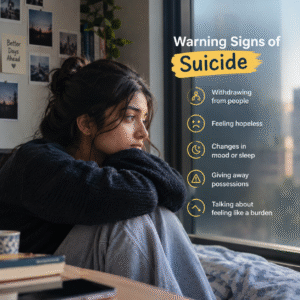
The warning signs of suicide are often visible well before a crisis happens — but they are easy to miss unless you know what to look for. Most people who consider suicide communicate their pain in some way, whether through words, behaviour, or mood changes, before ever taking action. Learning to recognize the warning signs of suicide early can make the difference between a life lost and a life saved.
At Delhi Mind Clinic, we believe awareness is the first step toward prevention. This article explains the most common warning signs of suicide, the risk factors behind them, and what you can do if you notice them in yourself or someone you love.
Why Recognizing the Warning Signs of Suicide Matters
Suicide is rarely a sudden, unexplained decision. In most cases, it is the final point of a long build-up of emotional pain, hopelessness, or an untreated mental health condition. Family members, friends, teachers, and colleagues are often the first line of defence — not because they are trained professionals, but because they are present in someone’s daily life.
Knowing the warning signs of suicide empowers you to act early, start a caring conversation, and guide someone toward professional support before a crisis develops.
Expert Insight:“In my clinical experience, the warning signs of suicide are almost always present in some form — a comment, a withdrawal, a change in routine — but they’re often dismissed as ‘just a phase’ or ‘stress.’ The earlier a family notices and responds to these signs, the better the outcome tends to be. Never wait for a crisis to take the first step,” says Dr. Sugandha Gupta, mental health expert at Delhi Mind Clinic.
warning signs of suicide
Common Warning Signs of Suicide to Watch For
Warning signs can appear as changes in speech, behaviour, mood, or daily routine. No single sign confirms suicidal intent, but the presence of several signs together — especially if they are new, have increased, or seem tied to a painful event — should always be taken seriously.
1. Talking About Wanting to Die or Disappear
This is one of the clearest warning signs of suicide. It may sound direct, such as expressing a wish to die, or indirect, such as saying “everyone would be better off without me” or “I just want the pain to stop.”
2. Feelings of Hopelessness or Being Trapped
A person may express that things will never get better or that there is no way out of their situation. This sense of being “trapped” with no solution is one of the strongest emotional red flags among the warning signs of suicide.
3. Withdrawing from Family, Friends, and Activities
Pulling away from social circles, cancelling plans repeatedly, losing interest in hobbies, or isolating oneself for long periods can indicate deep emotional distress.
4. Sudden Mood Changes
Watch for extreme mood swings — periods of severe sadness, anxiety, irritability, or agitation, followed suddenly by an unusual sense of calm. This apparent calm can sometimes mean a person has already decided on a plan, which can feel like relief to them.
5. Giving Away Possessions or Saying Goodbye
Handing out valued belongings, settling personal or financial matters, writing letters, or reaching out to say goodbye to people are behavioural warning signs of suicide that often precede an attempt.
6. Increased Use of Alcohol or Substance Use
A noticeable rise in drinking, substance use, or reckless behaviour can be a way of numbing emotional pain and is closely linked with higher suicide risk.
7. Changes in Sleep and Appetite
Sleeping far more or far less than usual, along with major changes in appetite or weight, often accompanies the emotional exhaustion that can precede a crisis.
8. Talking About Being a Burden
Statements like “I’m just a burden to everyone” or “things would be easier if I weren’t here” reflect a painful belief that one’s absence would benefit others — a well-documented risk factor.
9. Researching Methods or Making a Plan
Searching online for information related to self-harm, acquiring means, or making specific arrangements is among the most serious warning signs of suicide and requires immediate attention.
10. Loss of Interest in the Future
A person at risk may stop making plans, express no interest in upcoming events, or seem indifferent about their education, career, relationships, or long-term goals.
Risk Factors That Can Increase Vulnerability
While the warning signs of suicide point to an immediate concern, certain underlying factors can increase a person’s overall risk over time. These include:
A history of depression, anxiety, or other mental health conditions
Previous suicide attempts
A family history of suicide
Recent loss — of a relationship, job, loved one, or financial stability
Chronic illness or ongoing physical pain
Experiences of trauma, abuse, or bullying
Social isolation or lack of support system
Major life transitions or a sense of failure
Recognizing these background factors alongside the warning signs above gives a fuller picture of someone’s mental state.
What to Do If You Notice Warning Signs of Suicide
If you notice any of these warning signs in yourself or someone else, here are steps that can help:
1. Start the conversation. Asking someone directly whether they are thinking about suicide does not “plant the idea” — research consistently shows the opposite. A caring, non-judgmental question can open the door to honest conversation.
2. Listen without judgment. Let the person share what they’re feeling without rushing to give advice, minimise their pain, or offer quick fixes.
3. Avoid leaving them alone in a crisis. If someone is in immediate danger, do not leave them unattended. Remove access to means of self-harm where possible.
4. Encourage professional help. Reassure the person that support is available and that reaching out to a mental health professional is a sign of strength, not weakness.
5. Follow up. Recovery isn’t a single conversation — checking in regularly shows the person they are not alone.
6. Take care of yourself too. Supporting someone through a mental health crisis can be emotionally demanding. Don’t hesitate to seek guidance for yourself as well.
Expert Insight:“Families often ask me if talking about suicide will make things worse. It won’t. Asking someone directly and calmly about their feelings shows them they are seen and cared for. What truly makes a difference is combining that support with timely professional guidance — recognizing warning signs of suicide is only the first step; acting on them is what saves lives,” says Dr. Paramjeet Singh, mental health expert at Delhi Mind Clinic.
How Delhi Mind Clinic Can Help
At Delhi Mind Clinic, our team of experienced mental health professionals provides compassionate, confidential support for individuals experiencing suicidal thoughts, depression, anxiety, and other emotional struggles. We offer a safe space to talk, professional assessment, and personalised care plans built around each person’s needs.
If you or someone you know is showing warning signs of suicide, please don’t wait for things to get worse. Reaching out early can change the course of a person’s life.
You Are Not Alone
If you are having thoughts of suicide right now, please reach out for help immediately:
Honey trapping psychological warfare is a growing concern that Dr. Paramjeet Singh recently discussed with News Nation, describing how this manipulation tactic has moved far beyond espionage and intelligence circles into everyday life. What was once a tool used against soldiers, diplomats, and officials is now increasingly deployed against ordinary individuals, professionals, and even organisations — making honey trapping psychological warfare a threat almost anyone can encounter.
This blog breaks down what honey trapping psychological warfare really means, how it unfolds on social media, who is most at risk, and — most importantly — how you can protect yourself and the people around you.
What Is Honey Trapping Psychological Warfare?
At its core, honey trapping psychological warfare involves using emotional or romantic attraction to manipulate a person into giving up something valuable — information, money, access, or influence. The manipulation rarely feels like manipulation while it’s happening. It often begins as a seemingly genuine connection: someone who appears interested, attentive, and emotionally available.
honey-trapping-psychological-warfare
What makes this form of manipulation so effective is that it doesn’t target weaknesses in technology or security systems. It targets trust, loneliness, and the basic human need to feel valued — making honey trapping psychological warfare a psychological strategy long before it becomes a financial or security one.
How Social Media Fuels Honey Trapping Psychological Warfare
Social media has made honey trapping psychological warfare easier to execute and harder to detect. A few common patterns include:
Fake or curated profiles designed to appear attractive, credible, and relatable
Flattering photographs used to quickly capture attention and build initial interest
Emotionally engaging conversations that escalate quickly, creating a false sense of intimacy
Gradual trust-building, followed by requests for private photos, sensitive information, financial help, or access to confidential data
Because these interactions often move fast and feel personal, victims may not recognise the pattern until sensitive information has already been shared.
The Psychological and Personal Impact
The consequences of honey trapping psychological warfare go far beyond financial loss. People targeted often experience:
Anxiety and persistent worry
Shame or self-blame, even though they were deliberately deceived
Fear related to blackmail or threats of exposure
Damage to personal reputation and relationships
Professional setbacks, especially if sensitive workplace information was involved
These emotional effects can linger long after the incident itself, often affecting a person’s ability to trust others or feel safe online.
Why Honey Trapping Psychological Warfare Is a Bigger Issue Than It Seems
While it may appear to be a personal or individual problem, honey trapping psychological warfare has much wider implications, touching on:
Personal safety — emotional and sometimes physical risk
Cybersecurity — leaked passwords, private data, or financial details
Workplace confidentiality — sensitive business or government information at risk
Mental health — long-term anxiety, trust issues, and emotional distress
National security — in cases involving defence, law enforcement, or government personnel
This is precisely why Dr. Paramjeet Singh emphasised, in his discussion with News Nation, that honey trapping psychological warfare should be treated as a serious form of manipulation — not dismissed as a personal lapse in judgment.
Understanding the Model of Vulnerability
Honey trapping psychological warfare doesn’t succeed because people are careless. It succeeds because it targets very human, very normal emotional states, including:
Loneliness or a desire for connection
Unmet emotional needs
Curiosity about a new or exciting interaction
A natural inclination to trust
A desire for recognition, validation, or admiration
Limited awareness of digital safety practices
Recognising these vulnerabilities isn’t about self-criticism — it’s about understanding the psychological entry points manipulators rely on, so they can be identified and interrupted early.
7 Ways to Prevent Honey Trapping Psychological Warfare
Awareness is the first and most powerful line of defence. Practical habits that reduce risk include:
Verify identities before trusting someone met online — reverse image searches and cross-checking profiles can help.
Limit personal sharing, especially details related to your workplace, finances, or location, in early conversations.
Be cautious with unknown links or requests, particularly ones that ask for money, private photos, or sensitive documents.
Enable two-factor authentication on all important accounts to reduce the damage even if credentials are compromised.
Report suspicious behaviour to the relevant platform or authorities rather than trying to handle it alone.
Slow down emotionally charged interactions — manipulators often rely on urgency and intensity to bypass careful thinking.
Talk to someone you trust before acting on requests involving money, private images, or confidential information.
Final Thoughts
Honey trapping psychological warfare is not simply a cybersecurity issue — it is a psychological one. As Dr. Paramjeet Singh highlighted in his discussion with News Nation, understanding the emotional mechanics behind these tactics is essential to preventing them. By recognising the warning signs, staying mindful of emotional vulnerabilities, and practising basic digital caution, individuals can protect not only their information but also their mental and emotional wellbeing.
If you or someone you know is struggling with anxiety, shame, or emotional distress after an experience like this, seeking professional support can make a meaningful difference in processing and moving forward from it.
When most people hear the word ADHD (Attention-Deficit/Hyperactivity Disorder), they picture a restless child struggling to sit still in a classroom. But ADHD doesn’t disappear with age — and it certainly doesn’t stop people from achieving greatness.
In fact, some of the world’s most successful athletes, musicians, actors, and entrepreneurs have openly spoken about living with ADHD. Their stories prove an important point: ADHD isn’t a flaw in character or intelligence — it’s simply a different way the brain processes focus, energy, and creativity.
In this article, we’ll explore:
What ADHD actually is and how it shows up in daily life
Ten inspiring, real-life stories of famous people with ADHD
The common strengths that often come with an ADHD brain
How to recognize the signs in yourself or a loved one
When and how to seek professional support
At Delhi Mind Clinic, we believe awareness is the first step toward acceptance. Let’s dive in.
What Is ADHD, Really?
ADHD is a neurodevelopmental condition that affects how the brain regulates attention, impulse control, and activity levels. It typically shows up in one (or a combination) of three patterns:
Inattentive type — difficulty focusing, forgetfulness, losing track of tasks, being easily distracted
Hyperactive-impulsive type — restlessness, fidgeting, interrupting others, acting without thinking things through
Combined type — a mix of both inattentive and hyperactive-impulsive traits
ADHD is not caused by laziness, poor parenting, or lack of discipline. It’s a difference in brain wiring — particularly in areas that regulate dopamine, motivation, and executive function. This is exactly why so many high-achievers with ADHD describe their minds as “racing,” “hyperfocused,” or “wired differently,” rather than simply “unfocused.”
Many people aren’t diagnosed until adulthood, often after years of feeling like they were “trying harder than everyone else just to keep up.” Recognizing ADHD — at any age — can be genuinely life-changing.
10 Famous People With ADHD
1. Michael Phelps — The Most Decorated Olympian in History
michael phelps
Michael Phelps, the swimmer with 28 Olympic medals (23 of them gold), was diagnosed with ADHD at age nine. As a child, he was constantly in trouble at school for being unable to sit still, and a teacher reportedly told his mother he would “never be able to focus on anything.”
His mother, Debbie Phelps, channeled his restless energy into swimming — a sport that rewarded intensity, repetition, and hyperfocus. Phelps has since spoken about how the structure and physical outlet of swimming gave his ADHD brain exactly what it needed to thrive, turning what once looked like a weakness into the foundation of Olympic history.
2. Simone Biles — The Greatest Gymnast of All Time
Simone bills
Simone Biles, widely regarded as the greatest gymnast in history, has been open about her ADHD diagnosis and her use of a prescribed treatment plan to manage it (a fact that became public during a major doping-related controversy, when it was confirmed she had a legitimate, medically approved exemption).
Biles has spoken about refusing to feel shame about her diagnosis, using her platform to normalize ADHD treatment and reduce the stigma athletes often face when disclosing mental health conditions.
3. Justin Timberlake — Singer, Actor, and Producer
Justin timberlake
Justin Timberlake has shared in interviews that he lives with both ADHD and OCD (Obsessive-Compulsive Disorder). Rather than letting either condition limit him, he has built a multi-decade career spanning music, film, television, and business ventures.
Timberlake has described his mind as constantly generating ideas and connections — a trait common among people with ADHD who often excel in creative, fast-paced environments where rapid idea generation is an asset rather than a distraction.
4. Emma Watson — Actress, Activist, and UN Goodwill Ambassador
Emma watson
Best known for playing Hermione Granger in the Harry Potter film series, Emma Watson has spoken about experiencing attention difficulties, particularly while balancing her acting career with her studies at Brown University.
Watson has discussed developing strong personal systems and routines to manage her focus, showing that even amid a demanding filming schedule and academic workload, structure and self-awareness can help an ADHD brain perform at a high level.
5. Adam Levine — Maroon 5 Frontman
Adam Levine
Adam Levine was diagnosed with ADHD as a teenager, and has spoken candidly about how the diagnosis helped him make sense of struggles he faced growing up — including difficulty concentrating in school and channeling restless energy.
He has credited music as an outlet that gave his hyperactive, idea-driven mind a productive direction, eventually leading to a career as one of pop-rock’s most recognizable voices.
6. Justin Bieber — Global Pop Icon
Justin Bieber
Justin Bieber has discussed his ADHD diagnosis publicly on multiple occasions, describing how it shaped his behavior and focus levels growing up in the spotlight from a very young age.
Understanding his ADHD has been part of his broader, well-documented journey toward mental health awareness — using his massive platform to encourage young fans to seek help and understand their own minds rather than feel isolated by their diagnosis.
7. Howie Mandel — Comedian, Actor, and TV Host
Howie Mandel
Howie Mandel, known for hosting Deal or No Deal and judging on America’s Got Talent, has been one of the most vocal celebrity advocates for ADHD and OCD awareness for over a decade.
Mandel has spoken about not being diagnosed until later in life, and how understanding his ADHD helped him finally make sense of behaviors he’d struggled to explain since childhood — turning his personal experience into a public mission of awareness and destigmatization.
8. Solange Knowles — Singer-Songwriter and Visual Artist
Solange Knowles
Solange Knowles has spoken about her ADHD diagnosis and how it intersects with her creative process as a musician and artist. She has described experiencing intense periods of hyperfocus that fuel her songwriting, production, and visual art projects.
Her openness reflects a broader theme among creative professionals with ADHD: while the condition can make routine tasks challenging, it can also produce bursts of exceptional creative output during periods of hyperfocus.
9. Terry Bradshaw — NFL Hall of Famer
Terry Bradshaw
Terry Bradshaw, a four-time Super Bowl champion and NFL Hall of Fame quarterback, has discussed being diagnosed with ADHD as an adult, well after his playing career. Reflecting on his life, he has described how the diagnosis reframed struggles he faced both on the football field and in his personal life.
His story is a powerful reminder that ADHD often goes undiagnosed for decades, particularly in people who found ways to compensate through sheer talent, drive, or intensity — as Bradshaw did throughout his football career.
10. will.i.am — Musician, Producer, and Entrepreneur
will.i.am
The Black Eyed Peas frontman and tech entrepreneur will.i.am has spoken about growing up with undiagnosed ADHD, and how understanding it later in life helped him make sense of his rapid-fire thinking style.
Rather than seeing his racing mind as a hindrance, he has used it to build a career spanning music, technology startups, and philanthropy — describing his ADHD-driven creativity as a core part of his success across multiple industries.
What These Stories Teach Us About ADHD
Looking across these ten stories, a few common threads emerge:
High energy and drive that, when channeled into the right outlet, becomes a powerful engine for achievement
Creative and out-of-the-box thinking, often producing ideas or connections others might miss
Hyperfocus — the ability to become intensely absorbed in tasks that genuinely interest them, sometimes for hours at a stretch
Resilience, built from years of learning to navigate school, work, and social environments that weren’t designed with their brain type in mind
The power of structure and support — whether it was a sport, a creative outlet, or a strong support system, each of these individuals found an environment where their traits became assets
The common thread across every story? Early awareness, the right support system, and genuine self-understanding made a measurable difference in each person’s journey — regardless of when in life the diagnosis came.
Common Signs of ADHD (In Children and Adults)
While only a qualified professional can diagnose ADHD, here are some commonly recognized signs to be aware of:
In children:
Difficulty staying focused on schoolwork or homework
Frequently losing things (books, toys, assignments)
Constant fidgeting or difficulty staying seated
Interrupting conversations or struggling to wait their turn
Appearing to “not listen” even when spoken to directly
In adults:
Chronic disorganization or difficulty managing time
Frequently missing deadlines or forgetting appointments
Restlessness or an inner sense of being “on edge”
Difficulty sustaining attention during long meetings or reading
Impulsive decision-making, especially under stress
Alternating between intense focus (hyperfocus) and complete disengagement
If several of these patterns sound familiar and are affecting daily functioning — at school, at work, or in relationships — it may be worth speaking with a mental health professional for a proper evaluation.
When to Seek Professional Help
ADHD is highly manageable with the right combination of support, including:
Professional evaluation by a psychiatrist or clinical psychologist
Behavioral strategies and coping techniques tailored to the individual
Structured routines and environmental adjustments at home, school, or work
Family, school, and workplace support to create an environment where the person can thrive
Ongoing follow-up care to adjust strategies as life circumstances change
Early diagnosis can make a world of difference — just as it did for many of the icons mentioned above, some of whom weren’t diagnosed until well into adulthood.
Final Thoughts
ADHD doesn’t define a person’s potential — it simply describes how their brain works. As these celebrities show us, with the right support, self-awareness, and strategies, individuals with ADHD can go on to achieve extraordinary things in sports, music, film, and beyond.
If you suspect you or a loved one may have ADHD, Delhi Mind Clinic is here to help with compassionate, professional evaluation and personalized support — because understanding your mind is the first step toward unlocking its full potential.
Book a consultation with Delhi Mind Clinic today and take the first step toward understanding your mind better.
When we talk about health, the mind is often the last thing that comes to mind — and that’s exactly the gap Dr. Paramjeet Singh has spent his career trying to close. As a Consultant Psychiatrist at PSRI Hospital, Co-Founder & Senior Consultant at Delhi Mind Clinic, and General Secretary of the Delhi Psychiatric Society, Dr. Paramjeet Singh has become one of Delhi’s most trusted voices in mental health — someone who believes that emotional well-being deserves the same attention, respect, and care as physical health.
Taking Mental Health Beyond the Clinic
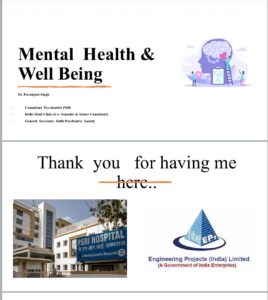
While consulting rooms remain at the heart of his practice, Dr. Paramjeet Singh strongly believes that real change happens when mental health conversations move beyond hospital walls — into workplaces, communities, and everyday life. That belief was on full display during his recent session on “Mental Health & Well-Being”, delivered to employees at Engineering Projects (India) Limited (EPI), a Government of India Enterprise.
The session focused on a topic that touches almost every working professional today: corporate and employee mental health.
Why Work-Life Balance Isn’t Just a Buzzword
Standing before a room full of employees, Dr. Paramjeet Singh opened with a simple but powerful reminder:
“Work-life balance is an integral part of management.”
It’s a line many people hear often — but rarely reflect on deeply. In the session, Dr. Singh unpacked why this idea matters more than ever in modern corporate culture:
Unmanaged stress quietly erodes productivity. What starts as a few tense days at work can, over time, affect focus, decision-making, and overall performance.
Silence is often the biggest barrier. Many employees privately wonder whether they should open up about what they’re going through, but hold back — unsure how colleagues or managers will react.
Not all stress is “bad” stress. One of the more thought-provoking points from the session was the idea that a certain kind of pressure, when understood and managed well, can actually fuel growth rather than hinder it.
By addressing these questions directly, Dr. Paramjeet Singh helped create a space where mental health wasn’t treated as a taboo subject, but as a normal, necessary part of workplace conversations.
Why Corporate Mental Health Deserves More Attention
India’s corporate landscape has changed dramatically in the last decade — longer hours, higher targets, and constant connectivity have blurred the line between professional and personal life. Yet, mental well-being at the workplace is still often overlooked until it becomes a crisis.
Dr. Paramjeet Singh’s work — through sessions like the one at EPI, his clinical practice, and his role with the Delhi Psychiatric Society — consistently pushes back against this neglect. His approach is not about offering quick fixes, but about building awareness, empathy, and open dialogue within organizations, so that employees feel safe acknowledging stress before it turns into burnout.
This is a philosophy that also shapes the work at Delhi Mind Clinic, where Dr. Singh and his team focus on creating a supportive, non-judgmental environment for anyone navigating emotional or psychological challenges — whether they’re a student, a working professional, a parent, or a senior citizen.
A Voice That Bridges Clinical Expertise and Public Awareness
What makes Dr. Paramjeet Singh’s contribution unique is the range of his engagement with mental health:
As a Consultant Psychiatrist at PSRI Hospital, he brings deep clinical expertise to complex cases.
As Co-Founder & Senior Consultant at Delhi Mind Clinic, he helps shape a practice built on accessibility and compassionate care.
As General Secretary of the Delhi Psychiatric Society, he plays an active role in advancing mental health awareness and professional standards across the city.
And through corporate sessions like the one at EPI, he takes psychiatric insight out of the clinic and into everyday spaces where people spend most of their waking hours — their workplaces.
This blend of clinical depth and public engagement is exactly what mental health advocacy in India needs today: experts who are willing to step outside traditional settings and meet people where they are.
The Bigger Picture: Normalizing Mental Health Conversations
Sessions like the one Dr. Paramjeet Singh conducted at EPI are more than one-off events — they’re part of a larger, necessary shift. As organizations across India begin to recognize that employee well-being directly impacts performance, retention, and culture, the demand for credible, compassionate mental health guidance will only grow.
Dr. Paramjeet Singh’s continued work — in hospitals, in clinics, in professional associations, and now in corporate boardrooms — reflects a simple but important message: mental health is not a side conversation. It’s central to how we live, work, and grow.