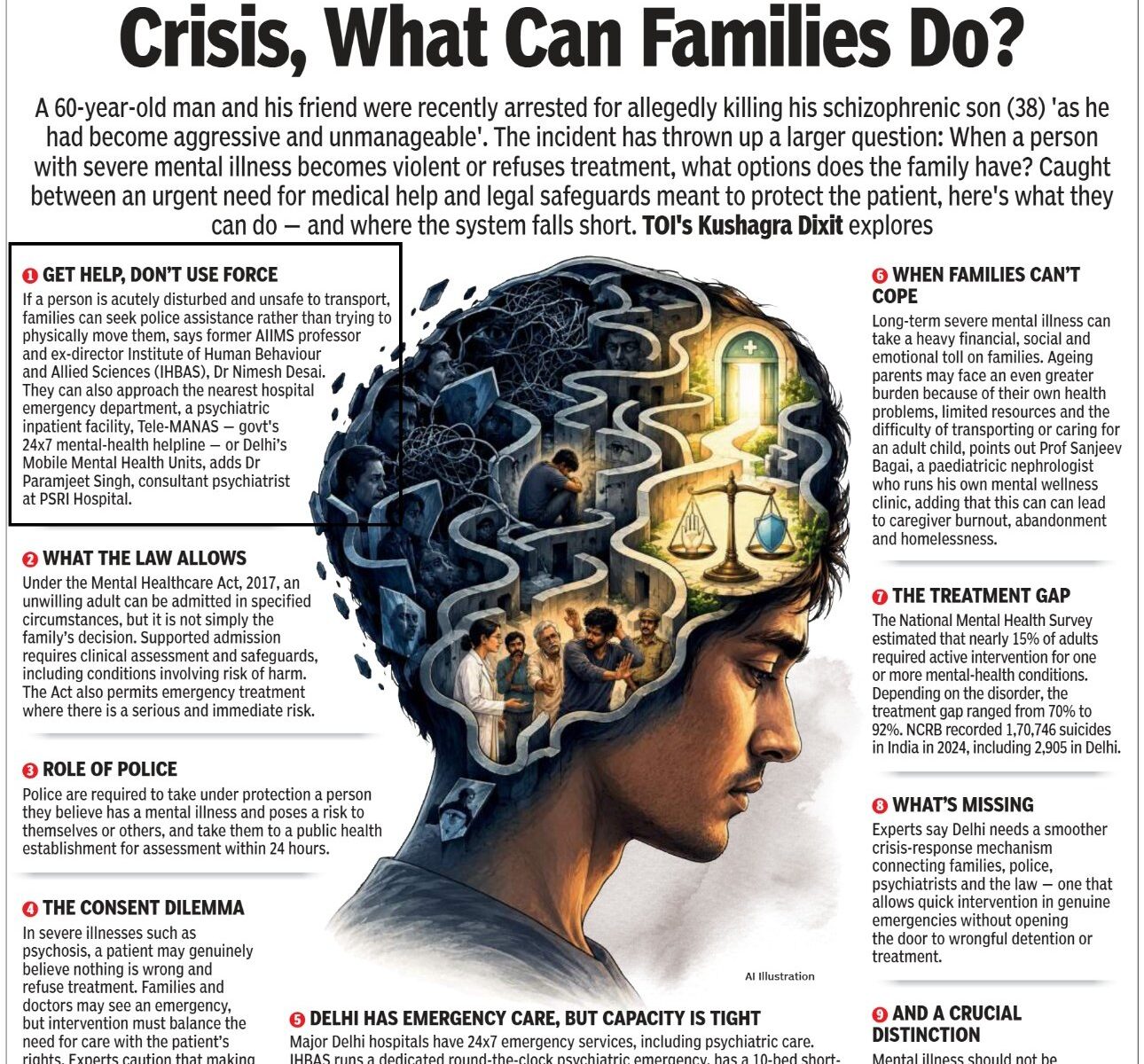
Dr. Paramjeet Singh, Consultant Psychiatrist, features in The Times of India on how families can respond when a loved one’s mental illness escalates into an emergency.
Mental illness rarely announces itself with a single dramatic moment. More often, it builds quietly — mood changes, withdrawal, disrupted sleep — until, for some families, it reaches a point where a loved one becomes acutely disturbed, aggressive, or unable to recognise that they need help at all. When that happens, families are often left asking the same painful question: what do we do now?
This question was at the heart of a recent feature in The Times of India (Times City, September 5, 2026), titled “When Mental Illness Turns Into Crisis, What Can Families Do?” The article was prompted by a deeply troubling case — a father and his friend allegedly killed his 38-year-old son, who was living with schizophrenia, after describing him as having become “aggressive and unmanageable.” It’s an extreme and tragic outcome, but it highlights something many families quietly struggle with: the gap between recognising a mental health emergency and knowing how to respond to it safely and lawfully.
Get Help, Don’t Use Force
Among the experts consulted for the piece was Dr. Paramjeet Singh, Consultant Psychiatrist, who offered a piece of guidance that deserves to be repeated often: when a person is acutely disturbed and unsafe to move, families should never attempt to physically restrain or transport them on their own.
Instead, Dr. Singh pointed families toward the support systems that already exist and are built for exactly this kind of moment:
- The emergency department of the nearest hospital
- A psychiatric inpatient facility
- Tele-MANAS, the government’s round-the-clock mental health helpline
- Delhi’s Mobile Mental Health Units, which can respond directly where the person is
This advice matters because in a crisis, panic often pushes families toward action that feels urgent but is actually unsafe — for the patient and for themselves. Knowing which door to knock on first can change the entire outcome of that day.
Why Families Feel Stuck: The Legal and Emotional Reality
The Times of India feature also unpacked why this issue is so complicated in the first place. Under the Mental Healthcare Act, 2017, an unwilling adult can be admitted for treatment only under specific, safeguarded circumstances — it isn’t simply a decision the family gets to make. This exists to protect patients from misuse, since allegations of mental illness have, unfortunately, been weaponised in disputes over marriage, dowry, or property in the past.
At the same time, severe conditions like psychosis can make it genuinely impossible for a patient to recognise that anything is wrong. Families and doctors may clearly see an emergency unfolding, while the patient sees no reason to seek care at all. Balancing a patient’s rights with a family’s need to act quickly is one of the hardest parts of mental healthcare — and one of the least talked about.
The article also cited sobering figures: an estimated treatment gap of 70–92% for various mental health conditions in India, and over 1.7 lakh reported suicides nationally in 2024, including thousands in Delhi alone. These numbers point to a system that is still catching up to the scale of the need — even as good emergency infrastructure, like round-the-clock psychiatric care at hospitals such as IHBAS, does exist.
What This Means for Families in Delhi
If there’s one message worth taking away from this feature, it’s this: a mental health crisis is a medical emergency, not a private failure to manage on your own. Families don’t need to have all the answers, and they certainly don’t need to face it alone or by force. What they need is to know where to turn — and to turn there early, before a situation escalates.
A few practical takeaways for families supporting a loved one with severe mental illness:
- Recognise early warning signs of increasing agitation, disorientation, or risk — before a full crisis develops.
- Keep helpline and hospital information handy in advance, not just when a crisis is already underway.
- Don’t attempt physical intervention with someone who is acutely disturbed; seek professional or police assistance instead.
- Understand that mental illness does not equal violence. As the article rightly notes, people living with mental illness are far more likely to face neglect, stigma, and inappropriate care than to pose a danger to others.
- Look after the caregivers too. Long-term illness takes a real emotional and financial toll on families, particularly ageing parents.
Compassionate, Professional Care Starts with the Right Conversation
Being featured in a national publication for this kind of expert commentary reflects the broader work Dr. Paramjeet Singh and the team continue to do — helping families navigate not just crisis moments, but the everyday realities of living with and supporting someone through mental illness.
At Delhi Mind Clinic, we believe families deserve clear guidance long before things reach a breaking point. Whether you’re noticing early changes in a loved one’s behaviour or facing a situation that already feels overwhelming, professional support can make the difference between a manageable moment and a full-blown crisis.
If you or someone you love needs guidance, don’t wait for things to escalate. Reach out to Delhi Mind Clinic to speak with an experienced mental health professional and find the right path forward — for your loved one, and for your whole family.