For general questions, please send us a message and we’ll get right back to you. You can also call us directly to speak with a member of our service team or insurance expert.
We live in a world where connecting with someone is easier than ever.
A message can reach someone instantly. A video call can bring two people together across thousands of kilometres. Social media can give us hundreds or even thousands of contacts, followers and online communities.
Yet, despite all this connectivity, many people still experience a deep sense of loneliness.
This raises an important question:
Social-Media-Loneliness
Has social media actually brought us closer, or has it sometimes made us feel more disconnected from the people around us?
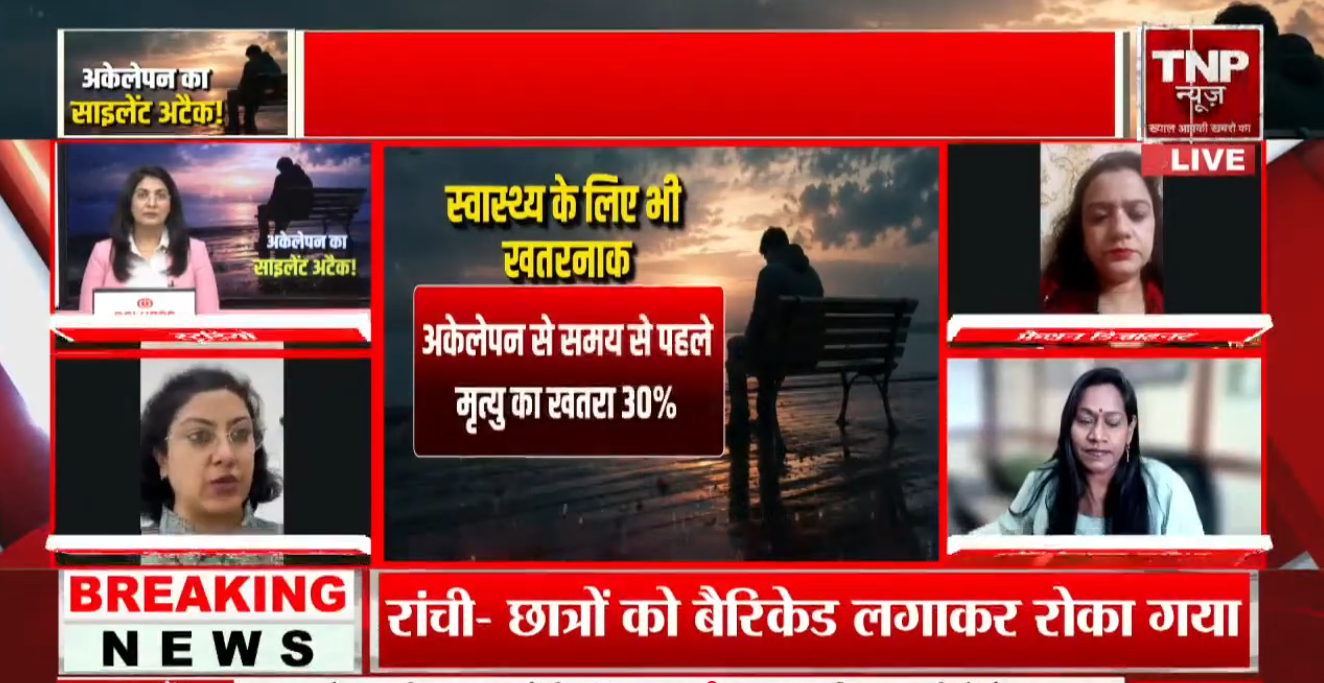
This issue was recently discussed in a television news programme featuring Dr. Sugandha Gupta, Senior Psychiatrist and Founder & Director of Delhi Mind Clinic, along with other speakers. The discussion explored why people can feel lonely despite being constantly connected online, how excessive digital engagement can affect relationships, and what families and communities can do to rebuild meaningful connections.
What Is Social Media Loneliness?
Social media loneliness refers to the feeling of emotional disconnection that can exist despite having frequent online interactions.
A person may receive messages throughout the day, have hundreds of followers and regularly interact with people online, yet still feel that there is nobody with whom they can genuinely share their worries, fears or difficult experiences.
This is an important distinction.
Being digitally connected is not always the same as feeling emotionally connected.
A like, comment, emoji or short message can provide momentary interaction. However, meaningful relationships usually require time, trust, understanding and genuine presence.
The World Health Organization has identified loneliness and social isolation as important public health concerns. Its 2025 Commission on Social Connection reported that approximately one in six people worldwide experience loneliness, with younger people among the groups experiencing particularly high levels.
Why Are People Feeling Lonely Despite Having So Many Online Connections?
There is no single reason behind loneliness. Social media may be one factor among several, including changes in family life, work patterns, urban lifestyles, relationship difficulties and reduced face-to-face interaction.
The television discussion highlighted several possible contributors.
1. Online interaction can replace real-world interaction
When much of our free time is spent scrolling, messaging or watching content, there may be less time available for conversations with family members, friends and neighbours.
A person can spend hours interacting with people online without having a meaningful face-to-face conversation during the entire day.
Over time, this can create an unusual situation:
More communication, but less emotional connection.
2. The pressure to appear happy online
Social media often presents carefully selected versions of people’s lives.
People usually share achievements, celebrations, holidays, attractive photographs and positive experiences. Difficult moments may remain private.
As a result, someone scrolling through social media may begin comparing their ordinary life with other people’s carefully presented highlights.
This can create thoughts such as:
“Everyone else is happier than me.”
“Everyone has more friends than I do.”
“Why am I not living like this?”
“Something must be wrong with my life.”
Such comparisons can make existing feelings of loneliness more noticeable.
3. The need for constant validation
Likes, comments, followers and messages can sometimes become a source of validation.
The problem begins when a person’s sense of self-worth becomes strongly dependent on online reactions.
If a post receives less attention than expected, the person may feel rejected or ignored. If it receives attention, the positive feeling may be temporary, creating a desire for more validation.
This can turn social media into a cycle of checking, comparing and seeking approval.
4. Fear of rejection in real life
The discussion also touched upon an important psychological issue: people may sometimes find online interaction easier than real-world relationships because face-to-face relationships involve vulnerability and the possibility of rejection.
Online platforms can provide a controlled environment where people can choose what to share, whom to follow and how they want to present themselves.
But real relationships require us to deal with disagreement, disappointment, misunderstanding and vulnerability.
Avoiding these experiences completely may make genuine relationships harder to build.
Dr. Sugandha Gupta on the Growing Digital Disconnect
Social-Media-Awareness
During the discussion, Dr. Sugandha Gupta highlighted that technology has gradually become an ordinary part of modern life. From radio and television to mobile phones and social media, every technological development has changed how people communicate.
The challenge, she explained, is not simply the existence of technology but how much and how intensely we use it.
She also pointed to the changes that occurred during the COVID-19 period, when social restrictions made digital communication one of the primary ways people stayed connected. For many people, those digital habits continued even after normal social interaction returned.
Her comments highlight an important principle:
The goal should not necessarily be to eliminate technology. The goal is to learn where to draw the line.
This is particularly important for young people, who have grown up surrounded by smartphones, online entertainment and social platforms.
Is Social Media Always Bad for Mental Health?
No.
Social media can provide genuine benefits.
It can help people:
Stay connected with relatives living far away
Maintain friendships
Find communities with similar interests
Access educational information
Discover opportunities
Express creativity
Receive social support
Communicate during difficult circumstances
For someone living away from family, a video call can be extremely meaningful.
The concern is therefore not simply social media use, but unhealthy or excessive patterns of use that begin interfering with sleep, relationships, responsibilities, physical activity or emotional well-being.
WHO similarly emphasizes that digital tools should be used wisely to enhance rather than replace human relationships.
Young People May Be Particularly Vulnerable
Young people are among the groups that deserve particular attention.
Adolescence and early adulthood are periods when identity, friendships, confidence and social skills are developing.
If much of a young person’s social experience takes place through screens, opportunities for face-to-face interaction may decrease.
The discussion highlighted concerns around children receiving smartphones at very young ages, increasing screen exposure and parents sometimes using phones as an easy way to keep children occupied.
This does not mean that parents should completely isolate children from technology.
Instead, families can create healthier boundaries around its use.
What Can Families Do?
Parents often tell children to reduce their screen time while spending much of their own time on their phones.
This can create resistance.
A healthier approach is to make digital boundaries a family habit rather than a punishment for children.
For example:
Create a phone-free family meal
Choose one meal each day when everyone keeps their phones away.
The objective is simple: eat together, talk and listen.
Create a technology-free hour
Families can experiment with one hour without unnecessary screen use.
That hour can be used for conversation, walking, games, hobbies, music or simply spending time together.
The discussion specifically emphasized the importance of families sitting together and creating periods without technology.
Parents should lead by example
Children notice what adults do.
If parents constantly check notifications while asking children to put their phones away, the message becomes confusing.
Healthy digital habits should therefore begin with adults as well.
Encourage offline activities
Sports, hobbies, music, community events, festivals, exercise and social activities can create opportunities for genuine interaction.
The television discussion also highlighted schools, colleges and residential communities as places where more in-person activities can help people reconnect.
How Can You Reduce Social Media Loneliness?
You don’t necessarily have to delete every social media application.
Instead, start by examining your relationship with technology.
Ask yourself:
Do I use social media because I genuinely want to connect, or because I feel uncomfortable being alone?
Do I feel better after using it, or more anxious and dissatisfied?
Am I spending more time online than I spend talking to people around me?
Do I check my phone automatically whenever I have nothing to do?
Have I stopped participating in activities that I previously enjoyed?
Your answers can help you identify whether your digital habits are supporting your well-being or interfering with it.