For general questions, please send us a message and we’ll get right back to you. You can also call us directly to speak with a member of our service team or insurance expert.
Psychological trauma after sexual assault is far more complex, and far more lasting, than most people realize. A recent case out of Delhi — where a young girl endured a harrowing 47-kilometre ordeal aboard a moving bus — has once again forced the country to confront uncomfortable questions. Why do such crimes keep happening? Why does the fear never seem to leave? And why, despite decades of reform since the Nirbhaya case, does a woman still not feel fully safe travelling alone at night?
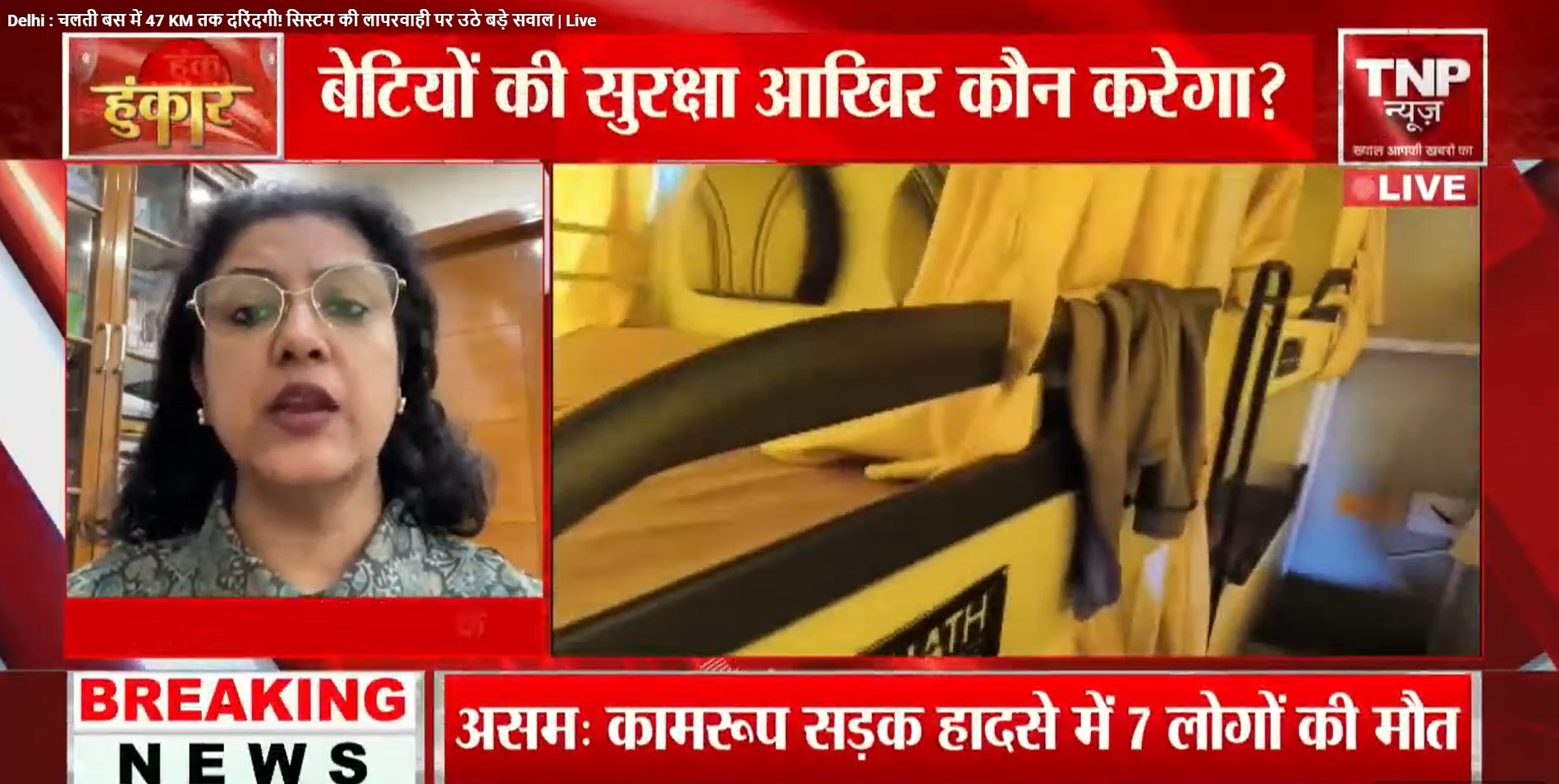
In a recent televised discussion, Dr. Sugandha Gupta, a leading psychologist at Delhi Mind Clinic, was invited to unpack the psychological trauma after sexual assault cases like this one — not just what happened, but why it happened, and what it does to the mind of a survivor, a family, and a society. Below are five key insights from her conversation.
psychological trauma after sexual assault
1. “Mental Illness” Is Not the Same as “Mindset” — And the Difference Matters
One of the most important clarifications Dr. Gupta made was around a common misconception: that people who commit such crimes must be “mentally ill,” and that psychological trauma after sexual assault can somehow be prevented simply by treating an underlying illness in offenders.
She was clear: this is not accurate.
What we are often looking at is not a mental illness, but a mindset — a set of learned beliefs and attitudes, absorbed from one’s surroundings over years. When boys grow up watching women being dominated, dismissed, or treated as objects rather than individuals, that observation quietly becomes internalised belief. Aggression gets rewarded with the label “masculine.” Boundary-crossing gets excused as “boys being boys.” Over time, this mindset hardens into a dangerous sense of entitlement — the belief that one has the right to take what they want, without consequence or guilt.
Alongside this, Dr. Gupta pointed to something else: a profound lack of empathy in individuals who commit such acts — an inability to register another person’s pain as real. This absence of empathy is what allows such crimes to be repeated without remorse, sometimes even years later, as seen in documented interviews of past offenders who showed no accountability even facing the harshest consequences.
2. Psychological Trauma After Sexual Assault Can Last a Lifetime
Perhaps the most sobering part of Dr. Gupta’s commentary was on the lasting nature of psychological trauma after sexual assault.
She noted that survivors — many of whom experience this trauma as teenagers — often carry it for the rest of their lives. It’s not something that fades neatly with time. Even women well into their middle age, she observed, continue to be affected by something that happened to them decades earlier, at 15 or 16 years old. That trauma doesn’t just shape how they see the world — it often shapes how they raise their own daughters, colouring their fears and their sense of safety passed on to the next generation.
This is a critical point for families and communities to internalise: healing from psychological trauma after sexual assault is not a linear or quick process, and survivors deserve patience, support, and access to spaces where they can process what they’ve experienced without judgment.
3. Victim Blaming Deepens Psychological Trauma After Sexual Assault
Dr. Gupta also addressed a pattern that surfaces after nearly every such case — the tendency of society to question the survivor rather than the perpetrator. Why was she out at night? Why did she board an empty bus?
These questions, however well-intentioned some may seem, add a second wound on top of psychological trauma after sexual assault. They compound the original experience with shame, self-doubt, and isolation — feelings that can be just as damaging as the incident itself, and that often prevent survivors from seeking help or speaking up at all.
Dr. Gupta was unambiguous: this pattern of victim-blaming stems from a deep-rooted patriarchal mindset in society — one that seeks to control and dominate, and that reduces women to objects rather than recognising them as individuals with full agency.
4. Systemic Delays Make the Trauma Worse
The conversation didn’t stop at diagnosis — it moved toward responsibility and accountability. Dr. Gupta emphasised a few key points that directly affect how psychological trauma after sexual assault is experienced and processed:
Accountability is collective. No single institution — police, government, or society — can address this alone.
Sensitisation is missing at every level — from how FIRs are registered, to how survivors are treated by law enforcement, to how cases are handled in courts.
Delayed justice deepens psychological harm. When consequences take seven or eight years to materialise, survivors are left carrying unresolved trauma for far longer, with little sense of closure or safety.
5. Healing Requires More Than Conversation — It Requires Support
Conversations like this one matter — but as Dr. Gupta pointed out, discussion alone cannot heal a survivor’s wounds. Addressing psychological trauma after sexual assault requires access to compassionate, professional psychological support: a space to process trauma, rebuild a sense of safety, and work through fear, grief, or anxiety at one’s own pace.
At Delhi Mind Clinic, our approach centers on providing exactly this — a safe, non-judgmental environment where individuals affected by trauma, whether recent or from years past, can find support tailored to their experience. Whether it’s a survivor, a parent, or anyone carrying the weight of fear after such news, professional guidance can make a meaningful difference in the healing journey.
If you or someone you know is struggling with psychological trauma after sexual assault, reaching out for support is not a sign of weakness — it’s often the first step toward reclaiming a sense of safety and control.