For general questions, please send us a message and we’ll get right back to you. You can also call us directly to speak with a member of our service team or insurance expert.
The warning signs of suicide are often visible well before a crisis happens — but they are easy to miss unless you know what to look for. Most people who consider suicide communicate their pain in some way, whether through words, behaviour, or mood changes, before ever taking action. Learning to recognize the warning signs of suicide early can make the difference between a life lost and a life saved.
At Delhi Mind Clinic, we believe awareness is the first step toward prevention. This article explains the most common warning signs of suicide, the risk factors behind them, and what you can do if you notice them in yourself or someone you love.
Why Recognizing the Warning Signs of Suicide Matters
Suicide is rarely a sudden, unexplained decision. In most cases, it is the final point of a long build-up of emotional pain, hopelessness, or an untreated mental health condition. Family members, friends, teachers, and colleagues are often the first line of defence — not because they are trained professionals, but because they are present in someone’s daily life.
Knowing the warning signs of suicide empowers you to act early, start a caring conversation, and guide someone toward professional support before a crisis develops.
Expert Insight:“In my clinical experience, the warning signs of suicide are almost always present in some form — a comment, a withdrawal, a change in routine — but they’re often dismissed as ‘just a phase’ or ‘stress.’ The earlier a family notices and responds to these signs, the better the outcome tends to be. Never wait for a crisis to take the first step,” says Dr. Sugandha Gupta, mental health expert at Delhi Mind Clinic.
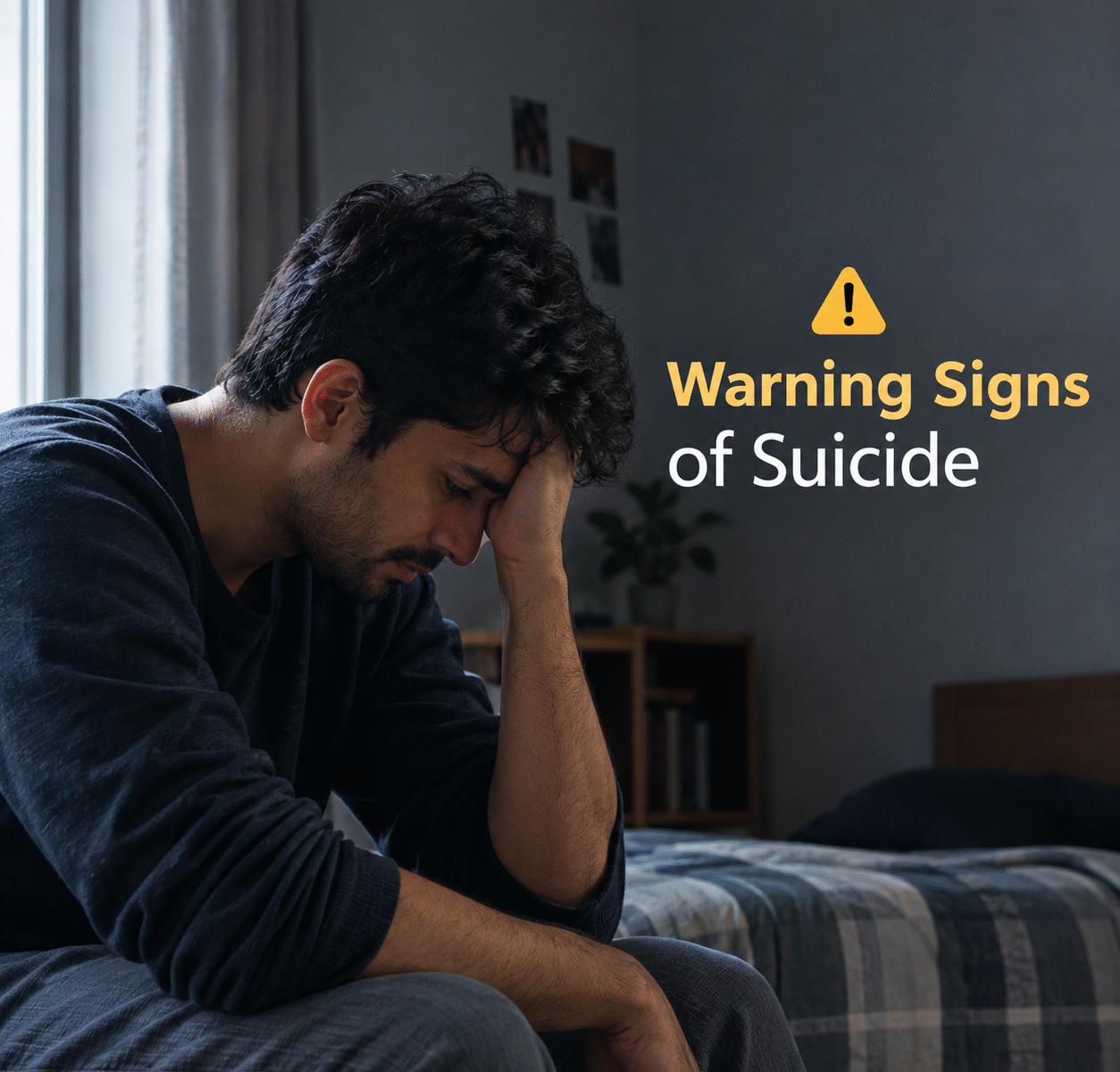
warning signs of suicide
Common Warning Signs of Suicide to Watch For
Warning signs can appear as changes in speech, behaviour, mood, or daily routine. No single sign confirms suicidal intent, but the presence of several signs together — especially if they are new, have increased, or seem tied to a painful event — should always be taken seriously.
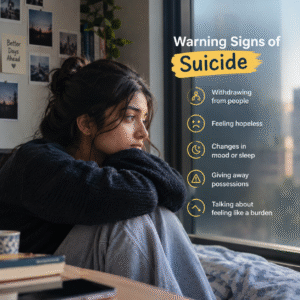
1. Talking About Wanting to Die or Disappear
This is one of the clearest warning signs of suicide. It may sound direct, such as expressing a wish to die, or indirect, such as saying “everyone would be better off without me” or “I just want the pain to stop.”
2. Feelings of Hopelessness or Being Trapped
A person may express that things will never get better or that there is no way out of their situation. This sense of being “trapped” with no solution is one of the strongest emotional red flags among the warning signs of suicide.
3. Withdrawing from Family, Friends, and Activities
Pulling away from social circles, cancelling plans repeatedly, losing interest in hobbies, or isolating oneself for long periods can indicate deep emotional distress.
4. Sudden Mood Changes
Watch for extreme mood swings — periods of severe sadness, anxiety, irritability, or agitation, followed suddenly by an unusual sense of calm. This apparent calm can sometimes mean a person has already decided on a plan, which can feel like relief to them.
5. Giving Away Possessions or Saying Goodbye
Handing out valued belongings, settling personal or financial matters, writing letters, or reaching out to say goodbye to people are behavioural warning signs of suicide that often precede an attempt.
6. Increased Use of Alcohol or Substance Use
A noticeable rise in drinking, substance use, or reckless behaviour can be a way of numbing emotional pain and is closely linked with higher suicide risk.
7. Changes in Sleep and Appetite
Sleeping far more or far less than usual, along with major changes in appetite or weight, often accompanies the emotional exhaustion that can precede a crisis.
8. Talking About Being a Burden
Statements like “I’m just a burden to everyone” or “things would be easier if I weren’t here” reflect a painful belief that one’s absence would benefit others — a well-documented risk factor.
9. Researching Methods or Making a Plan
Searching online for information related to self-harm, acquiring means, or making specific arrangements is among the most serious warning signs of suicide and requires immediate attention.
10. Loss of Interest in the Future
A person at risk may stop making plans, express no interest in upcoming events, or seem indifferent about their education, career, relationships, or long-term goals.
Risk Factors That Can Increase Vulnerability
While the warning signs of suicide point to an immediate concern, certain underlying factors can increase a person’s overall risk over time. These include:
A history of depression, anxiety, or other mental health conditions
Previous suicide attempts
A family history of suicide
Recent loss — of a relationship, job, loved one, or financial stability
Chronic illness or ongoing physical pain
Experiences of trauma, abuse, or bullying
Social isolation or lack of support system
Major life transitions or a sense of failure
Recognizing these background factors alongside the warning signs above gives a fuller picture of someone’s mental state.
What to Do If You Notice Warning Signs of Suicide
If you notice any of these warning signs in yourself or someone else, here are steps that can help:
1. Start the conversation. Asking someone directly whether they are thinking about suicide does not “plant the idea” — research consistently shows the opposite. A caring, non-judgmental question can open the door to honest conversation.
2. Listen without judgment. Let the person share what they’re feeling without rushing to give advice, minimise their pain, or offer quick fixes.
3. Avoid leaving them alone in a crisis. If someone is in immediate danger, do not leave them unattended. Remove access to means of self-harm where possible.
4. Encourage professional help. Reassure the person that support is available and that reaching out to a mental health professional is a sign of strength, not weakness.
5. Follow up. Recovery isn’t a single conversation — checking in regularly shows the person they are not alone.
6. Take care of yourself too. Supporting someone through a mental health crisis can be emotionally demanding. Don’t hesitate to seek guidance for yourself as well.
Expert Insight:“Families often ask me if talking about suicide will make things worse. It won’t. Asking someone directly and calmly about their feelings shows them they are seen and cared for. What truly makes a difference is combining that support with timely professional guidance — recognizing warning signs of suicide is only the first step; acting on them is what saves lives,” says Dr. Paramjeet Singh, mental health expert at Delhi Mind Clinic.
How Delhi Mind Clinic Can Help
At Delhi Mind Clinic, our team of experienced mental health professionals provides compassionate, confidential support for individuals experiencing suicidal thoughts, depression, anxiety, and other emotional struggles. We offer a safe space to talk, professional assessment, and personalised care plans built around each person’s needs.
If you or someone you know is showing warning signs of suicide, please don’t wait for things to get worse. Reaching out early can change the course of a person’s life.
You Are Not Alone
If you are having thoughts of suicide right now, please reach out for help immediately: