For general questions, please send us a message and we’ll get right back to you. You can also call us directly to speak with a member of our service team or insurance expert.
Digital mental health refers to the use of technology to support emotional wellbeing, prevent mental health difficulties and deliver care. It includes video and phone consultations with professionals, online counselling, self-help apps, guided meditation tools, mood trackers, and online support communities.
A few years ago, getting help for stress, anxiety, low mood or relationship difficulties usually meant travelling to a clinic, finding time off work and sitting in a waiting room. Today, a qualified professional can be a few taps away. For many people in Delhi and across India, digital mental health has turned “I’ll think about it later” into “I can start today.”
Why Digital Mental Health Matters Now
The need for mental health support has grown steadily, while access has not always kept pace. Long commutes, busy schedules, limited specialists in smaller cities, and the lingering stigma around seeking help all create barriers.
Digital mental health helps remove several of these barriers at once:
Convenience: Attend a session from home, the office or while travelling.
Privacy: Many people feel more comfortable starting their journey from a familiar, private space.
Reach: People in areas with few specialists can connect with experienced professionals.
Continuity: Regular follow-ups are easier when you don’t have to travel.
Time-saving: No commute means fewer excuses to postpone care.
Types of Digital Mental Health Services
1. Online Therapy and Counselling
Video, audio or chat-based sessions with a trained psychologist or counsellor. Talk-based approaches such as cognitive behavioural therapy can often be delivered effectively online for concerns like stress, anxiety, low mood, and relationship issues.
2. Tele-Psychiatry and Virtual Consultations
An online consultation with a psychiatrist allows for assessment, diagnosis, and ongoing review of treatment plans without in-person visits. Your doctor will tell you if an in-person evaluation is needed.
3. Mental Health Apps
Apps can offer mood journaling, breathing exercises, sleep support, mindfulness practice and guided self-help programmes. They work best as a supplement to professional care, not a replacement for it.
4. Wearables and Self-Tracking Tools
Sleep trackers, activity monitors and mood diaries can help you notice patterns in your energy, sleep and emotions, and give you useful information to share with your clinician.
5. Online Support Groups and Psychoeducation
Webinars, moderated communities and educational content help people understand their condition and feel less alone.
Quiet Screens at Twilight
7 Key Benefits of Digital Mental Health Care
Lower barriers to getting started. Many people delay seeking help for months or even years. A simple online booking can make that first step feel less daunting.
Greater flexibility. Evening or weekend sessions suit working professionals, students, parents and caregivers.
Comfort and openness. Some individuals, especially teenagers and young adults, find it easier to open up from their own space.
Consistent follow-up. Regular check-ins support progress and help your clinician adjust your plan in good time.
Better for ongoing wellbeing. Between sessions, digital tools can help you practise skills such as relaxation, journaling and sleep routines.
Cost and time savings. Skipping the commute saves time and travel costs, which makes regular care easier to sustain.
More choice of specialists. Digital mental health services let you connect with experienced professionals who may not be based near you.
Limitations You Should Know About
Digital mental health is powerful, but it isn’t right for every situation.
Emergencies: Online services are not designed for crisis situations. If you or someone you know is at immediate risk, contact local emergency services or a crisis helpline right away. In India, Tele-MANAS (14416) offers free mental health support.
Complex or severe conditions: Some difficulties need in-person assessment and closer monitoring.
Technology barriers: A weak internet connection or lack of a private space can affect the quality of a session.
Quality varies: Not every app or website is evidence-based or run by qualified professionals.
“Digital mental health has helped many people take a step they were hesitating to take. When support is easy to reach, people seek help earlier, and early support often makes the journey smoother. Online care works best when it is personalised and followed up regularly.”
“Digital mental health is a valuable bridge to care, but it is not one-size-fits-all. A proper assessment helps decide whether online sessions, in-person visits or a mix of both suits you. Apps and online tools can support treatment, but they should never replace an evaluation by a qualified professional.”
How to Choose a Safe and Trusted Digital Mental Health Service
Before you share personal details online, check the following:
Qualified professionals. Look for clear information about the credentials and experience of the clinicians.
Privacy and confidentiality. The service should explain how your data is stored and protected.
Transparent process. You should know what to expect: session length, fees, and follow-up.
Evidence-based methods. Reputable providers use approaches backed by research.
Clear emergency guidance. A responsible service tells you what to do if you need urgent help.
Real reviews and a real address. A physical clinic presence is often a good sign of accountability.
Tips to Get the Most from Online Sessions
Choose a quiet, private spot and use headphones.
Test your internet connection and device a few minutes early.
Write down your concerns and questions before the session.
Be honest, even about things that feel uncomfortable.
Practise the exercises suggested between sessions.
Keep a simple diary of mood, sleep and triggers to share with your clinician.
Who Can Benefit from Digital Mental Health?
Digital mental health support can be helpful for people experiencing:
Ongoing stress, burnout or work pressure
Anxiety, worry or panic
Low mood or loss of interest
Sleep difficulties
Relationship or family concerns
Exam stress and academic pressure
Adjustment difficulties after major life changes
A wish to build emotional resilience and healthy habits
The Future of Digital Mental Health in India
As internet access spreads and awareness grows, digital mental health is expected to become a regular part of healthcare. Hybrid care, where online sessions and in-person visits work together, is emerging as a practical and effective model. The goal isn’t to replace human connection, but to make professional support easier to reach, easier to continue and easier to talk about.
Frequently Asked Questions
What is digital mental health?
Digital mental health is the use of technology, such as video consultations, apps and online tools, to support emotional wellbeing and deliver mental health care.
Is online therapy as effective as in-person therapy?
For many common concerns, research suggests online therapy can be comparable to face-to-face sessions. The right choice depends on your needs and the advice of your clinician.
Are online mental health consultations confidential?
Reputable providers follow strict confidentiality practices. Always ask how your information is stored and who can access it.
Can a mental health app replace a therapist?
No. Apps are useful for daily support and self-help, but they do not replace assessment and treatment by a qualified professional.
Is digital mental health suitable for teenagers?
Often, yes, with parental involvement where appropriate. A clinician can advise whether online sessions suit your child’s needs.
What should I do in a mental health emergency?
Contact emergency services or a crisis helpline immediately. Do not wait for an online appointment.
Take the First Step with Delhi Mind Clinic
You don’t have to wait until things feel unbearable to ask for support. Whether you are curious about online counselling, need guidance about your mental wellbeing or want to talk to an experienced professional, the team at Delhi Mind Clinic is here to help.
Book your consultation today and take the first step toward feeling better.
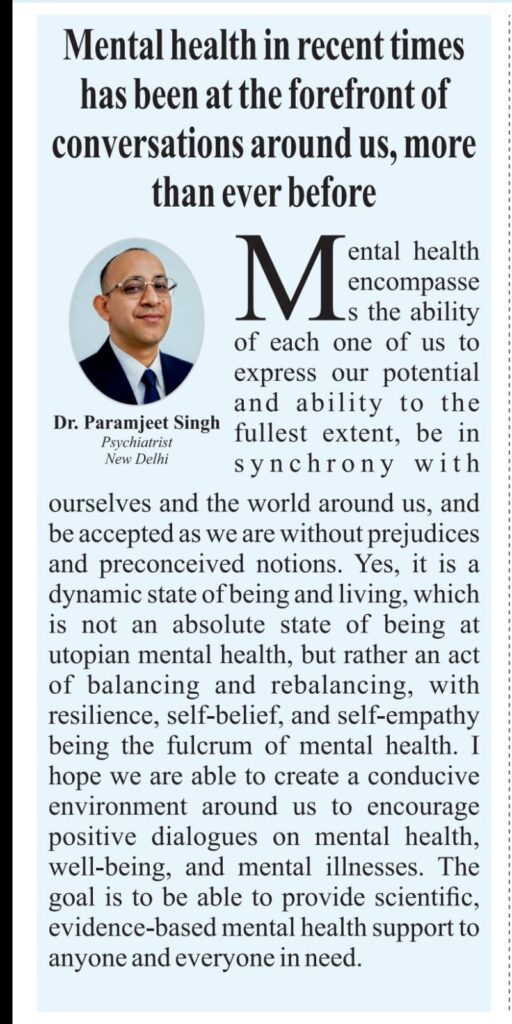
Conversations about mental health are everywhere today. Families, workplaces, schools and social media are talking about emotional well-being more openly than ever before.
Dr. Paramjeet Singh, Psychiatrist at Delhi Mind Clinic, New Delhi, shares his perspective on this shift. Here are five powerful insights from his thoughts on why this topic matters now and how each of us can contribute.
Insight 1: Well-Being Means Expressing Your Full Potential
According to Dr. Singh, mental health is the ability of each one of us to:
Express our potential and abilities to the fullest extent
Stay in synchrony with ourselves and the world around us
Be accepted as we are, without prejudice or preconceived notions
It is far more than the absence of illness. It is about how we think, feel, relate to others and handle the demands of daily life.
Insight 2: Well-Being Is a Dynamic State, Not a Destination
Dr. Singh describes emotional wellness as a dynamic state of being and living. It is not a perfect, utopian condition that we reach once and keep forever.
Instead, it is an act of balancing and rebalancing. Life brings stress, change, loss and uncertainty, and healing means finding our footing again each time. A difficult season does not mean you have failed. It means you are human.
Insight 3: Resilience, Self-Belief and Self-Empathy Are the Fulcrum
Dr. Singh calls these three qualities the fulcrum of mental health, the point on which everything else balances:
Resilience: the capacity to recover and adapt after setbacks.
Self-belief: trust in your own worth and ability to grow.
Self-empathy: treating yourself with the kindness you would offer a friend.
Small habits strengthen all three: regular routines, quality sleep, physical activity, supportive relationships and kind self-talk.
Dr. paramjeet singh on mental health
Insight 4: Why Everyone Is Talking About It More Than Ever
Emotional well-being has moved to the forefront of public conversation for several reasons:
Greater awareness: people recognize distress in themselves and others.
Fast-paced lifestyles: work pressure and constant connectivity take a toll.
Less silence: shared stories help break stigma.
Mind-body connection: emotional balance affects sleep, relationships and productivity.
Dr. Singh hopes we can create a conducive environment that encourages positive dialogue. You can help by listening without judging, avoiding stereotypes, checking in on loved ones and relying on credible information rather than myths.
Insight 5: Evidence-Based Support for Anyone in Need
Dr. Singh’s goal is to provide scientific, evidence-based mental health support to anyone and everyone in need. Asking for help is a sign of strength and self-care, not weakness.
When to Consider Professional Help
Consider consulting a psychiatrist or mental health professional if you or someone close to you experiences:
Persistent sadness, worry or irritability
Changes in sleep, appetite or energy
Difficulty concentrating or functioning at work, school or home
Withdrawal from people or activities once enjoyed
If you or someone you know is in crisis or having thoughts of self-harm, reach out immediately to a trusted person, a nearby doctor or hospital, or the national helpline Tele-MANAS (14416) in India.
Frequently Asked Questions
1. What is mental health?
Mental health is our emotional, psychological and social well-being. It shapes how we think, feel, act and relate to others, and how we handle stress and make choices.
2. Is mental health the same as mental illness?
No. Everyone has mental health, just as everyone has physical health. Mental illness refers to conditions that affect thinking, mood or behavior and may need professional care.
3. Can mental health change over time?
Yes. It is dynamic and can shift with life events, stress, relationships and support. Balancing and rebalancing is a normal part of life.
4. How can I improve my mental health?
Build resilience, self-belief and self-empathy. Maintain healthy routines, stay connected with loved ones, and seek professional guidance when needed.
5. When should I see a psychiatrist?
When emotional or behavioral difficulties persist, interfere with daily life, or feel too heavy to manage alone, it is a good time to consult a specialist.
Conclusion
Mental health is not a luxury or a trend. It is a vital part of living well. As Dr. Paramjeet Singh reminds us, it is a continuous act of balance, supported by resilience, self-belief and self-empathy, and by a society that listens without prejudice.
Need support? Book a consultation with Dr. Paramjeet Singh at Delhi Mind Clinic, New Delhi, and take the first step toward better mental health.
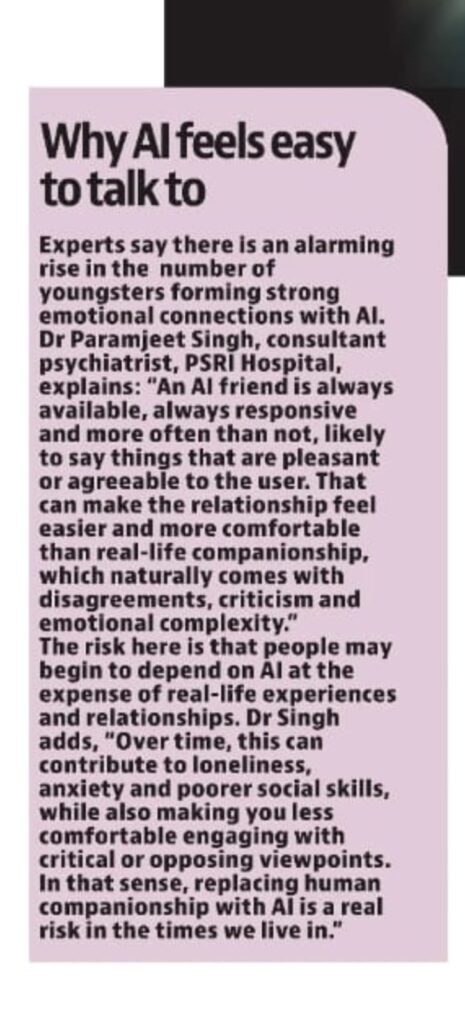
This World Mental Health Day (10 October), Dr Paramjeet Singh explains why more young people are forming emotional bonds with AI, and where the risks begin.
It’s 3 a.m. Sleep won’t come, your mind is racing, and nobody is awake to talk to. So you open a chatbot. It replies instantly, it doesn’t judge, and it never gets tired of you.
For many people, this is now a nightly habit. As AI and mental health increasingly overlap, a bigger question follows: when does a helpful conversation become emotional dependence?
Dr Paramjeet Singh Insights
On World Mental Health Day, Dr Paramjeet Singh, Consultant Psychiatrist at PSRI Hospital, shared his insights in a Hindustan Times feature. Here is what every parent, student and young professional should know about AI and emotional wellbeing.
Why Chatbots Are on the Agenda This World Mental Health Day
World Mental Health Day (October 10) aims to raise awareness of mental health worldwide. This year’s theme, “Lived experiences heard: real voices, real change,” is a timely reminder that real voices matter, and that no chatbot can fully replace the human ones around us.
An “Alarming Rise” in Youngsters Bonding With AI
Experts are seeing a worrying trend: more and more young people are forming strong emotional connections with AI. What began as a tool for answers is becoming a companion for feelings.
Why AI Feels So Easy to Talk To
According to Dr Singh, a chatbot companion has three qualities that make it so comfortable:
Always available. There are no appointments, no waiting and no “I’m busy right now.”
Always responsive. It replies instantly, every time.
Usually agreeable. More often than not, it says things the user finds pleasant.
Real relationships work differently. Friendships, family and partnerships naturally involve disagreements, criticism and emotional complexity. Next to a chatbot that always accommodates you, human connection can start to feel like too much effort. That contrast is the heart of the problem.
The Real Risk: Choosing AI Over Real Life
The concern is not that people use these tools. It is that they may begin to depend on them at the expense of real-life experiences and relationships.
Dr Singh warns that over time this can contribute to:
Loneliness, because a screen cannot fully replace human presence.
Anxiety, especially around real-world interactions.
Poorer social skills, because less practice makes conversation harder.
Discomfort with opposing views, since constant agreement makes disagreement feel threatening.
In his view, replacing human companionship with AI is a real risk in the times we live in.
5 Warning Signs of Unhealthy Chatbot Reliance
Watch for these patterns in yourself, your child or a family member:
Withdrawing from family, friends and everyday activities
Spending far more time with a chatbot than with people
Feeling anxious, low or upset when unable to access it
Skipping school, work, sleep, hobbies or social plans to keep chatting
Preferring chatbot conversations because real ones feel “too difficult”
One or two of these signs doesn’t mean there is a disorder, but a persistent pattern deserves attention.
AI Is Not a Substitute for Mental Health Care
A chatbot can help someone put their thoughts into words, and that has value. But it cannot replace the clinical judgement, empathy and human connection that matter most when someone is in serious distress. A screen can respond to words. A trained professional can recognise the pain behind them, ask the difficult questions and stay present when it matters most.
If you or someone you know is experiencing severe low mood, hopelessness or thoughts of self-harm, please reach out to a mental health professional or a trusted person immediately. In India you can also call the Tele-MANAS helpline at 14416.
How to Use AI Healthily: Practical Tips
Set time limits, especially at night.
Treat chatbots as a tool, not a confidant for your deepest struggles.
Reach out to one real person each day, even briefly.
Practise disagreement. Healthy relationships include difficult conversations.
Parents: stay engaged. Talk openly with your children instead of leaving hard conversations to technology.
Seek help early if screen time is affecting sleep, studies, work or relationships.
When to Consult a Psychiatrist for Mental Health Concerns
Consider professional support if you notice persistent anxiety, loneliness, mood changes, sleep problems or increasing withdrawal from people. Early support makes a real difference, and talking to a real person is a strong first step.
This World Mental Health Day, take that step. At Delhi Mind Clinic, our team provides confidential, compassionate care for anxiety, depression, stress, sleep problems and emotional wellbeing.
It already shapes how people find information, book appointments, and understand their wellbeing. It is also changing how future doctors and therapists learn.
In this guide, we explain what AI in mental health really means, how it supports medical education, and where human care still matters most.
What Is AI in Mental Health?
AI in mental health means using smart software to support screening, monitoring, education, and everyday wellbeing.
These tools do not think like humans. They recognise patterns in large amounts of data and offer insights that people and professionals can use.
Common examples include:
Chat-based support tools that offer guided exercises, mood check-ins, and general wellbeing information
Smart screening questionnaires that help flag possible concerns early
Pattern analysis of sleep, activity, and mood diaries to spot changes over time
Administrative automation such as appointment reminders and note summaries
Why AI in Mental Health Matters Today
Mental health needs are growing across the world, and India is no exception. The World Health Organization treats mental health as an essential part of overall health.
Yet many people still struggle to find timely, affordable, stigma-free support. Trained professionals are also too few for the population.
Digital access can help close part of this gap. India’s national tele mental health service, Tele-MANAS, shows how support can reach people at home.
7 Ways AI in Mental Health Is Helping Patients, Clinicians, and Students
1. Wider access to support
Digital tools are available at any hour. This matters for people in smaller towns, or those who cannot easily visit a clinic.
2. Less stigma around the first step
Some people find it easier to begin privately, with an online screening or a self-help exercise. That first step can lead to professional care.
3. Earlier detection of warning signs
Pattern recognition can highlight persistent low mood, disturbed sleep, or withdrawal. This prompts people to seek help sooner.
4. More time for clinicians
When routine paperwork is automated, professionals can spend more time listening to patients. Better listening often means better care.
5. Personalised learning for students
AI-based platforms adapt to a student’s pace and point out weak areas. Learners get targeted revision instead of a one-size-fits-all plan.
6. Realistic simulation and practice
Virtual patient simulations let students practise history-taking and communication safely. In mental health training, this builds empathy before real patient contact.
7. Faster knowledge and instant feedback
AI tools can summarise research and give quick feedback on case write-ups and practice questions. Output should always be checked against trusted sources.
AI in Mental Health
AI in Mental Health and Medical Education: Preparing Tomorrow’s Doctors
Tomorrow’s clinicians will work alongside AI. Medical education must therefore teach more than how to use these tools.
Students also need to question results, understand limits, and protect patient interests.
This is why AI in mental health is now a topic for classrooms as much as clinics.
Expert Views on AI in Mental Health from Delhi Mind Clinic
Technology works best when guided by experienced professionals. Here is what our doctors think about AI in mental health.
Dr. Sugandha Gupta on AI in Mental Health
“AI can make mental health support easier to reach, especially for people who hesitate to take the first step. But a screening tool is not a diagnosis. Listening, understanding, and building trust with a patient will always need a trained professional.”
Dr. Paramjeet Singh on AI in Mental Health
“For students and young doctors, AI in mental health is a useful learning aid. It can speed up revision and offer practice cases. Still, it should sharpen clinical thinking, not replace it, and patient privacy must always come first.”
Risks of AI in Mental Health You Should Know
AI is powerful, but it cannot replace a trained mental health professional.
No human empathy. Healing often begins with feeling heard by another person.
Accuracy is not guaranteed. AI can sound confident while being wrong.
Privacy and data security. Mental health information is deeply personal.
Bias in data. Tools trained on limited data may work poorly for some languages and communities.
Not for emergencies. Anyone in crisis should contact a doctor, a trusted person, or local emergency services immediately.
Over-reliance. Depending too much on technology can delay real care or weaken a student’s own thinking.
Using AI in Mental Health Responsibly
For AI in mental health to truly help, a few principles matter:
Human oversight. AI should assist clinicians, not replace their judgment.
Transparency. People should know when they are talking to a machine.
Informed consent. Patients deserve clear answers on how their data is used.
Cultural and language sensitivity. Tools should reflect India’s diversity.
Regular review. Tools should be tested and improved continuously.
Practical Tips for Using AI in Mental Health Tools
Treat AI as a starting point, not a diagnosis.
Avoid sharing sensitive details on platforms you do not trust.
Cross-check health information with qualified professionals.
If symptoms last more than two weeks or affect daily life, book a consultation.
Students should use AI to support learning, not to skip understanding.
The Future of AI in Mental Health
The coming years will likely bring better screening tools, richer training simulations, and smoother links between patients and the right professionals.
Yet the core of care will stay the same: trust, compassion, and a meaningful relationship.
The best outcomes will come from a partnership. Technology brings speed and insight. Professionals bring judgment and empathy.
Frequently Asked Questions
What is AI in mental health?
It is the use of intelligent software to support screening, monitoring, education, and wellbeing, alongside professional care and never instead of it.
Can AI replace a psychiatrist or psychologist?
No. AI can assist with information and routine tasks. Diagnosis, treatment planning, and emotional support need trained human professionals.
Is it safe to share my feelings with an AI chatbot?
It can help with general reflection. Be careful about privacy, and never rely on a chatbot in an emergency.
How is AI used in medical education?
It supports personalised learning, virtual patient simulations, quick research summaries, and instant feedback.
Final Thoughts on AI in Mental Health
AI offers real promise: wider access, earlier support, and better-trained professionals. Its value depends on using it wisely, ethically, and with human care at the centre.
If you or someone you know is struggling with stress, anxiety, low mood, or sleep problems, do not wait. Reaching out is a sign of strength.
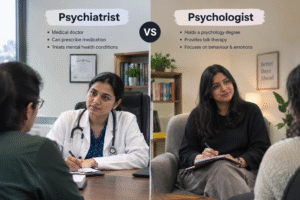
How to Know When It’s Time to See a Psychiatrist vs. a Psychologist
You’ve been feeling low, anxious, or overwhelmed for weeks. You know it’s time to get help, but then a question stops you: should I see a psychiatrist or a psychologist?
You’re not alone. The psychiatrist vs psychologist question is one of the most common ones people ask before taking their first step toward mental wellness. The two professions sound similar and often work side by side, but their training, approach, and role in your care are different.
This guide to psychiatrist vs psychologist explains the difference in simple terms. It covers 7 proven signs that point to each, shares advice from our doctors, and helps you decide which one to see first.
Psychiatrist vs Psychologist: What Is the Difference?
In short, a psychiatrist is a medical doctor who can prescribe medication, while a psychologist is a therapy expert who treats through talking and behavioural strategies. Here is a closer look at each.
What Is a Psychiatrist?
A psychiatrist is a medical doctor (MBBS followed by an MD or DNB in Psychiatry) who specialises in diagnosing and treating mental health conditions.
Because they are trained doctors, psychiatrists can:
Evaluate both the physical and psychological sides of a mental health concern
Diagnose mental health conditions
Prescribe and monitor medication when it’s needed
Order or review medical tests to rule out other health causes
Combine medical treatment with supportive counselling
Psychiatrists often treat conditions such as depression, anxiety disorders, bipolar disorder, OCD, schizophrenia, sleep disorders, and ADHD.
What Is a Psychologist?
A psychologist is a mental health professional trained in understanding human behaviour, emotions, and thinking patterns. In India, a clinical psychologist typically holds a Master’s degree and an M.Phil. in Clinical Psychology, or a Ph.D. in the field, and is registered with the Rehabilitation Council of India (RCI).
Psychologists:
Provide talk therapy (psychotherapy) and counselling
Use evidence-based approaches such as Cognitive Behavioural Therapy (CBT)
Conduct psychological assessments and testing
Help you build coping skills, healthier habits, and emotional resilience
Do not prescribe medication
Psychiatrist vs Psychologist: Key Differences at a Glance
Psychiatrist
Psychologist
Training
Medical doctor (MBBS + MD/DNB Psychiatry)
Master’s/M.Phil./Ph.D. in Psychology
Can prescribe medication?
Yes
No
Main approach
Medical diagnosis and treatment, plus therapy where appropriate
Talk therapy, behavioural strategies, assessments
Best for
Moderate to severe symptoms, or conditions with a biological component
Regular therapy sessions, often weekly or fortnightly
The two professions are not competitors. They are teammates. Many people do best with both: a psychiatrist for the medical side and a psychologist for therapy.
7 Essential Signs It’s Time to See a Psychiatrist
Consider booking a psychiatrist if you notice:
Symptoms that are severe or getting worse. Persistent sadness, intense anxiety, or panic attacks that interfere with daily life.
Changes in sleep or appetite. Long-term insomnia, sleeping far too much, or sudden changes in eating patterns, sometimes alongside unexplained physical complaints.
Mood swings or extreme highs and lows. Periods of unusually high energy followed by deep lows may need a medical evaluation.
Seeing, hearing, or believing things others don’t. Hallucinations, strong suspicions, or confused thinking need prompt medical attention.
Difficulty functioning. You struggle to work, study, or manage everyday responsibilities.
Therapy alone hasn’t been enough. You’ve tried counselling but your symptoms continue.
Thoughts of self-harm or suicide. Seek help immediately (see the note at the end of this article).
7 Essential Signs It’s Time to See a Psychologist
In the psychiatrist vs psychologist decision, a psychologist may be the right first step if you:
Feel stressed, burnt out, or emotionally drained. Work pressure, academic stress, or life changes are weighing on you.
Struggle with relationships. You face repeated conflicts or communication problems with family, friends, or a partner.
Are dealing with grief or loss. You need a safe space to process difficult emotions.
Have negative thought patterns. Constant self-criticism, overthinking, or low self-esteem keep holding you back.
Want to build healthier habits. You want better coping skills, anger management, or confidence.
Need a psychological assessment. This could be for learning difficulties, attention concerns, or personality and career guidance.
Are going through a major life transition. Examples include a new job, a move, parenthood, or divorce.
If your symptoms are mild to moderate, therapy alone often brings real relief.
Psychiatrist vs Psychologist: Which Should You See First?
When choosing between a psychiatrist vs psychologist, use these simple pointers:
Start with a psychiatrist if your symptoms are intense, long-lasting, or affecting your sleep, safety, or daily functioning.
Start with a psychologist if you’re facing emotional stress, behavioural patterns, or life challenges and want to talk things through.
Not sure? Either is a good start. Both professionals can assess your situation and refer you to each other when needed. Starting with either one is far better than waiting.
Expert Opinion: What Our Doctors Say
We asked the specialists at Delhi Mind Clinic for their views on the psychiatrist vs psychologist question.
“Many people wait months, sometimes years, because they are unsure whether their problem is ‘serious enough’ or who to approach. When patients ask me about psychiatrist vs psychologist, I tell them that if symptoms are affecting your sleep, your work, or your relationships, that is reason enough to seek help. A psychiatrist can assess whether there is a medical side to what you are experiencing and guide you on the safest and most suitable treatment plan, which does not always involve medication.”
“The most important thing is to take the first step. In the psychiatrist vs psychologist discussion, remember that they are not rivals. They work as a team, and the right combination depends on the person. Early consultation almost always makes recovery smoother, so please don’t wait for things to become a crisis before reaching out.”
Can You See Both a Psychiatrist and a Psychologist?
Yes, and for many people the best answer to psychiatrist vs psychologist is simply both. A common approach looks like this:
The psychiatrist diagnoses the condition, manages the medical side, and monitors progress.
The psychologist provides regular therapy to address thoughts, emotions, and behaviours.
Research consistently shows that for many conditions, a combination of medical treatment and psychotherapy can offer more complete and lasting improvement than either alone.
What to Expect at Your First Appointment
Whichever you choose in the psychiatrist vs psychologist debate, your first visit will be a calm, supportive conversation.
With a psychiatrist: You’ll discuss your symptoms, medical history, sleep, lifestyle, and family history. The doctor will explain a possible diagnosis and suggest a treatment plan.
With a psychologist: You’ll talk about what brought you in, your goals, and your background. Together you’ll plan how therapy will work.
In both cases, your conversation is confidential, and you won’t be judged.
Breaking the Stigma
Many people delay seeking help because of fear of judgement or the belief that “it’s not serious enough.” Don’t let stigma decide your psychiatrist vs psychologist choice. You don’t need to be in crisis to see a mental health professional. Just as you’d visit a doctor for a persistent fever, your mind deserves the same care. Early support often leads to faster and smoother recovery.
Psychiatrist-vs-Psychologist
Frequently Asked Questions
1. Psychiatrist vs psychologist: which one is better?
Neither is “better.” They have different roles. The right choice depends on your symptoms and needs.
2. Psychiatrist vs psychologist: who should I see for anxiety?
For mild to moderate anxiety, a psychologist’s therapy is often a good start. If anxiety is severe, constant, or disrupting sleep and daily life, begin with a psychiatrist.
3. Can a psychologist diagnose mental health conditions?
Clinical psychologists can assess and identify psychological conditions, but they cannot prescribe medication. A psychiatrist provides the medical diagnosis and treatment.
4. Do I need a referral to see a psychiatrist or psychologist?
In most cases, no. You can book an appointment directly.
5. Does seeing a psychiatrist mean I’ll need medication?
Not necessarily. A psychiatrist decides on treatment after a thorough evaluation. Many people are guided toward therapy, lifestyle changes, or a combination of approaches.
6. How do I find a good mental health professional in Delhi?
Look for qualified, registered professionals, read patient reviews, and choose a clinic where you feel heard and comfortable.
7. How long does therapy take?
It varies. Some people notice improvement in a few weeks, while others benefit from longer-term support.
Conclusion
The psychiatrist vs psychologist question doesn’t need to hold you back. A psychiatrist is a medical doctor who can diagnose and treat conditions, including with medication. A psychologist offers therapy and tools to change thought and behaviour patterns. If you’re unsure where to begin, the most important step is simply to reach out.
AtDelhi Mind Clinic, our team, including Dr. Sugandha Gupta and Dr. Paramjeet Singh, can help you settle the psychiatrist vs psychologist question and guide you to the right care.
If you’re searching for mental retardation Delhi, you’re likely looking for answers about a child’s development, behaviour, or learning difficulties — and you probably have a lot of questions and, understandably, some worry too. We want to start by saying: you’re not alone, and clear information combined with the right support can make a real difference.
Before we go further, it’s worth knowing that “mental retardation” is an older medical term that is no longer used by doctors, psychologists, or disability rights organisations. The current, respectful, and medically accurate term is intellectual disability. You’ll notice we use both terms in this article — the older one because it’s still commonly searched online, and the correct one because it reflects how the condition is understood and discussed today.
What Is Intellectual Disability?
When people search mental retardation Delhi, they are usually asking about a condition now correctly known as intellectual disability. It refers to a condition where a person experiences significant limitations in two key areas:
Intellectual functioning — such as reasoning, problem-solving, planning, and learning
Adaptive behaviour — everyday practical, social, and conceptual skills needed for independent living
These limitations typically appear before the age of 18 and can range from mild to severe. Importantly, intellectual disability is not a mental illness, and it is not something a child “grows out of” — but with the right support, therapy, and environment, individuals with intellectual disability can learn, grow, build skills, and lead meaningful, dignified lives.
Expert Insight — Dr. Sugandha Gupta:“One of the most common misconceptions I encounter from families is that intellectual disability is the same as a mental illness, or that it reflects something a parent did wrong. Neither is true. Early, accurate assessment allows us to build a support plan around what a child can do, rather than focusing only on the challenges.”
Common Early Signs Parents Notice
Parents researching mental retardation Delhi often start here — with a list of everyday signs. Every child develops at their own pace, but the following signs — especially when several appear together — may prompt a parent to seek a professional evaluation:
Delayed milestones such as sitting, walking, or talking later than expected
Difficulty remembering things or connecting cause and effect
Trouble following simple instructions or routines
Delayed speech and language development
Difficulty with problem-solving or understanding consequences
Challenges with social skills or age-appropriate independence (dressing, eating, toileting)
Struggles that become more apparent once formal schooling begins
It’s important to remember that these signs alone don’t confirm anything — only a proper developmental and psychological assessment by qualified professionals can provide a diagnosis. This is exactly why so many parents begin their mental retardation Delhi search at this stage, looking for clarity before jumping to conclusions.
What Causes Intellectual Disability?
There isn’t always a single identifiable cause behind a mental retardation Delhi search, but known contributing factors include:
Genetic conditions (such as chromosomal differences)
Complications during pregnancy (infections, exposure to toxins, malnutrition)
Birth-related complications, including oxygen deprivation or premature birth
Early childhood illnesses or infections affecting brain development
Severe neglect or lack of stimulation in early childhood, in some cases
In many cases, no clear cause is found — and that’s okay. For families running a mental retardation Delhi search, the focus is best placed on assessment, early intervention, and building a support plan around the child’s individual needs.
Getting a Mental Retardation Delhi Assessment: Where to Start
Delhi has a growing network of child psychologists, developmental paediatricians, special educators, and psychiatric clinics equipped to assess developmental concerns. A typical evaluation process may include:
Developmental history review — understanding milestones, family history, and pregnancy/birth details
Standardised psychological and IQ testing conducted by a qualified clinical psychologist
Assessment of adaptive functioning — how the child manages daily life skills
Multi-disciplinary input, sometimes involving speech therapists, occupational therapists, or paediatric neurologists
Expert Insight — Dr. Paramjeet Singh:“Parents in Delhi often wait longer than necessary before seeking an evaluation, usually out of fear or uncertainty about what a diagnosis might mean. In my experience, the earlier a family comes in for assessment, the more options we have for early intervention — and the better the long-term outcomes tend to be for the child.”
Early assessment matters. The sooner a child’s needs are understood, the sooner the right support systems — special education, therapy, and structured routines — can be put in place.
mental retardation delhi
Support and Intervention Options
Families exploring mental retardation Delhi resources will find that every child’s care plan looks different, but common non-pharmacological approaches used in supporting individuals with intellectual disability include:
Special education programs tailored to the child’s learning pace and style
Speech and language therapy for communication difficulties
Occupational therapy to build motor skills and daily-living independence
Behavioural therapy to support social skills and manage challenging behaviours
Family counselling and parent training, helping families build consistent, supportive home routines
Vocational training for older children and young adults, to build independence and life skills
A qualified mental health professional can help design a personalised plan based on the child’s specific strengths and challenges — one of the most valuable outcomes of a well-informed mental retardation Delhi search.
Supporting Your Child — and Yourself
Many families who start with a mental retardation Delhi search quickly realise the journey involves supporting themselves too. Raising a child with intellectual disability comes with unique emotional, financial, and logistical challenges. A few reminders that often help families:
You don’t have to have all the answers right away. Understanding develops in stages, alongside your child.
Connect with other parents. Support groups — online or in Delhi-based communities — can offer both practical advice and emotional relief.
Celebrate small milestones. Progress may look different than it does for other children, and that’s completely valid.
Take care of your own mental health too. Caregiver stress is real, and seeking support for yourself is not selfish — it helps your whole family.
When Should You Seek Professional Help?
If your mental retardation Delhi search was prompted by real concerns — consistent developmental delays, learning difficulties, or social/behavioural challenges in your child, especially if these are affecting daily functioning at home or school — it’s worth consulting a qualified child psychologist or developmental specialist for a proper evaluation. Early support leads to better long-term outcomes.
Final Thoughts
Searching mental retardation Delhi often comes from a place of concern and love for a child who may be struggling. We hope this article has offered clarity — not just on terminology, but on the practical next steps available to you. Intellectual disability is a lifelong condition, but it is also a manageable one, with the right diagnosis, therapy, and family support system in place.
If you have concerns about your child’s development, reaching out to a qualified mental health professional is a strong, proactive first step.