For general questions, please send us a message and we’ll get right back to you. You can also call us directly to speak with a member of our service team or insurance expert.
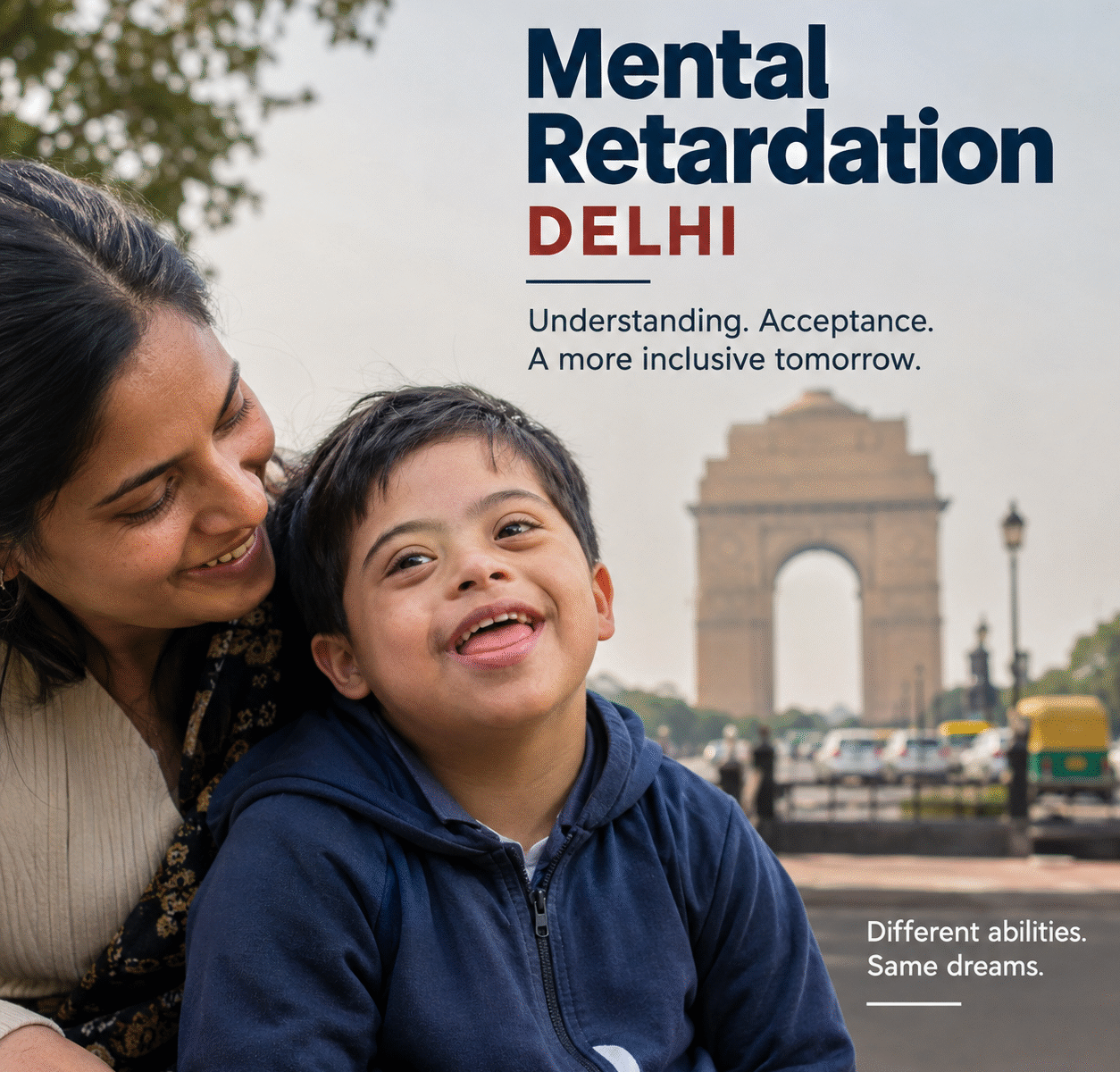
If you’re searching for mental retardation Delhi, you’re likely looking for answers about a child’s development, behaviour, or learning difficulties — and you probably have a lot of questions and, understandably, some worry too. We want to start by saying: you’re not alone, and clear information combined with the right support can make a real difference.
Before we go further, it’s worth knowing that “mental retardation” is an older medical term that is no longer used by doctors, psychologists, or disability rights organisations. The current, respectful, and medically accurate term is intellectual disability. You’ll notice we use both terms in this article — the older one because it’s still commonly searched online, and the correct one because it reflects how the condition is understood and discussed today.
What Is Intellectual Disability?
When people search mental retardation Delhi, they are usually asking about a condition now correctly known as intellectual disability. It refers to a condition where a person experiences significant limitations in two key areas:
Intellectual functioning — such as reasoning, problem-solving, planning, and learning
Adaptive behaviour — everyday practical, social, and conceptual skills needed for independent living
These limitations typically appear before the age of 18 and can range from mild to severe. Importantly, intellectual disability is not a mental illness, and it is not something a child “grows out of” — but with the right support, therapy, and environment, individuals with intellectual disability can learn, grow, build skills, and lead meaningful, dignified lives.
Expert Insight — Dr. Sugandha Gupta:“One of the most common misconceptions I encounter from families is that intellectual disability is the same as a mental illness, or that it reflects something a parent did wrong. Neither is true. Early, accurate assessment allows us to build a support plan around what a child can do, rather than focusing only on the challenges.”
Common Early Signs Parents Notice
Parents researching mental retardation Delhi often start here — with a list of everyday signs. Every child develops at their own pace, but the following signs — especially when several appear together — may prompt a parent to seek a professional evaluation:
Delayed milestones such as sitting, walking, or talking later than expected
Difficulty remembering things or connecting cause and effect
Trouble following simple instructions or routines
Delayed speech and language development
Difficulty with problem-solving or understanding consequences
Challenges with social skills or age-appropriate independence (dressing, eating, toileting)
Struggles that become more apparent once formal schooling begins
It’s important to remember that these signs alone don’t confirm anything — only a proper developmental and psychological assessment by qualified professionals can provide a diagnosis. This is exactly why so many parents begin their mental retardation Delhi search at this stage, looking for clarity before jumping to conclusions.
What Causes Intellectual Disability?
There isn’t always a single identifiable cause behind a mental retardation Delhi search, but known contributing factors include:
Genetic conditions (such as chromosomal differences)
Complications during pregnancy (infections, exposure to toxins, malnutrition)
Birth-related complications, including oxygen deprivation or premature birth
Early childhood illnesses or infections affecting brain development
Severe neglect or lack of stimulation in early childhood, in some cases
In many cases, no clear cause is found — and that’s okay. For families running a mental retardation Delhi search, the focus is best placed on assessment, early intervention, and building a support plan around the child’s individual needs.
Getting a Mental Retardation Delhi Assessment: Where to Start
Delhi has a growing network of child psychologists, developmental paediatricians, special educators, and psychiatric clinics equipped to assess developmental concerns. A typical evaluation process may include:
Developmental history review — understanding milestones, family history, and pregnancy/birth details
Standardised psychological and IQ testing conducted by a qualified clinical psychologist
Assessment of adaptive functioning — how the child manages daily life skills
Multi-disciplinary input, sometimes involving speech therapists, occupational therapists, or paediatric neurologists
Expert Insight — Dr. Paramjeet Singh:“Parents in Delhi often wait longer than necessary before seeking an evaluation, usually out of fear or uncertainty about what a diagnosis might mean. In my experience, the earlier a family comes in for assessment, the more options we have for early intervention — and the better the long-term outcomes tend to be for the child.”
Early assessment matters. The sooner a child’s needs are understood, the sooner the right support systems — special education, therapy, and structured routines — can be put in place.
mental retardation delhi
Support and Intervention Options
Families exploring mental retardation Delhi resources will find that every child’s care plan looks different, but common non-pharmacological approaches used in supporting individuals with intellectual disability include:
Special education programs tailored to the child’s learning pace and style
Speech and language therapy for communication difficulties
Occupational therapy to build motor skills and daily-living independence
Behavioural therapy to support social skills and manage challenging behaviours
Family counselling and parent training, helping families build consistent, supportive home routines
Vocational training for older children and young adults, to build independence and life skills
A qualified mental health professional can help design a personalised plan based on the child’s specific strengths and challenges — one of the most valuable outcomes of a well-informed mental retardation Delhi search.
Supporting Your Child — and Yourself
Many families who start with a mental retardation Delhi search quickly realise the journey involves supporting themselves too. Raising a child with intellectual disability comes with unique emotional, financial, and logistical challenges. A few reminders that often help families:
You don’t have to have all the answers right away. Understanding develops in stages, alongside your child.
Connect with other parents. Support groups — online or in Delhi-based communities — can offer both practical advice and emotional relief.
Celebrate small milestones. Progress may look different than it does for other children, and that’s completely valid.
Take care of your own mental health too. Caregiver stress is real, and seeking support for yourself is not selfish — it helps your whole family.
When Should You Seek Professional Help?
If your mental retardation Delhi search was prompted by real concerns — consistent developmental delays, learning difficulties, or social/behavioural challenges in your child, especially if these are affecting daily functioning at home or school — it’s worth consulting a qualified child psychologist or developmental specialist for a proper evaluation. Early support leads to better long-term outcomes.
Final Thoughts
Searching mental retardation Delhi often comes from a place of concern and love for a child who may be struggling. We hope this article has offered clarity — not just on terminology, but on the practical next steps available to you. Intellectual disability is a lifelong condition, but it is also a manageable one, with the right diagnosis, therapy, and family support system in place.
If you have concerns about your child’s development, reaching out to a qualified mental health professional is a strong, proactive first step.