For general questions, please send us a message and we’ll get right back to you. You can also call us directly to speak with a member of our service team or insurance expert.
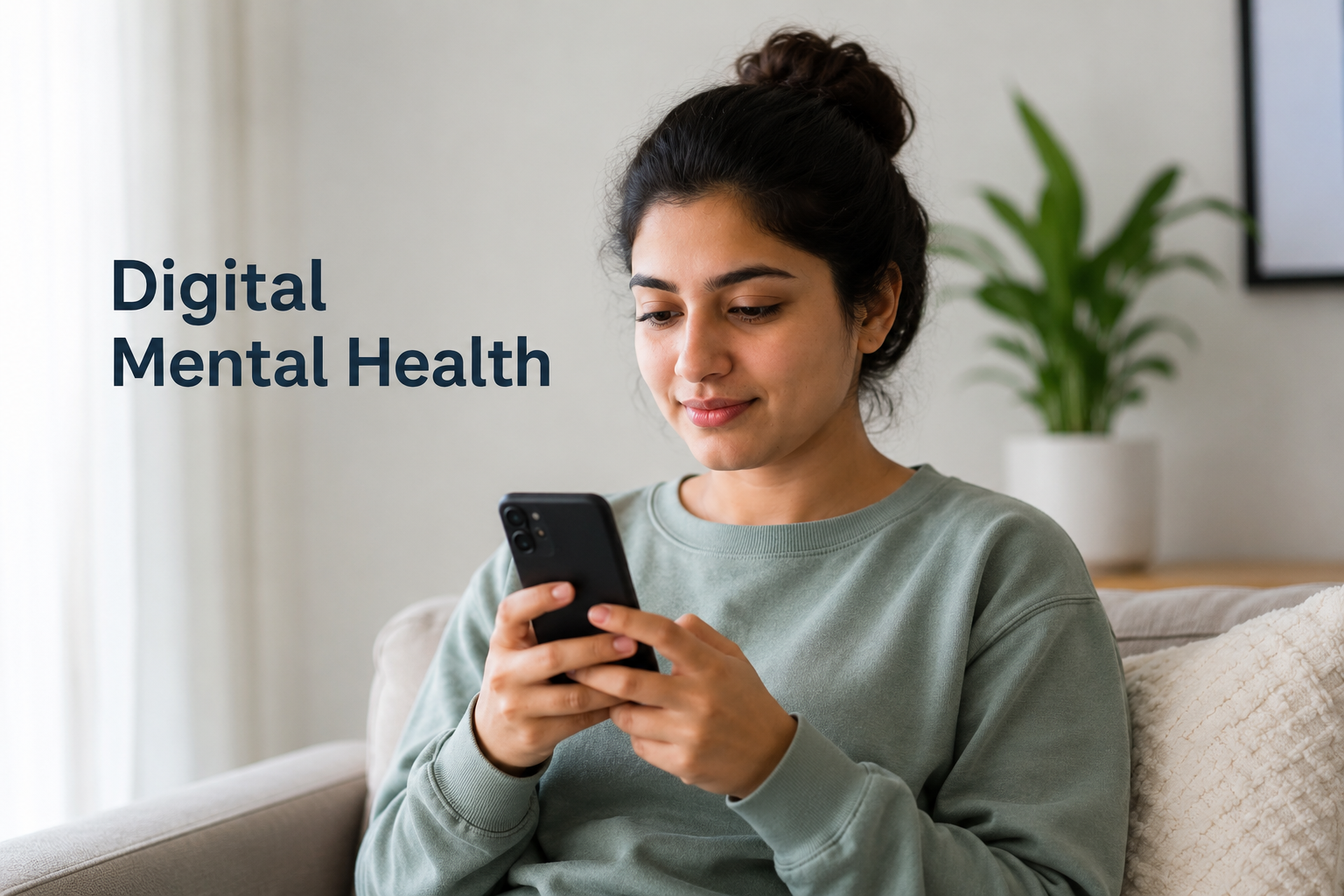
Digital mental health refers to the use of technology to support emotional wellbeing, prevent mental health difficulties and deliver care. It includes video and phone consultations with professionals, online counselling, self-help apps, guided meditation tools, mood trackers, and online support communities.
A few years ago, getting help for stress, anxiety, low mood or relationship difficulties usually meant travelling to a clinic, finding time off work and sitting in a waiting room. Today, a qualified professional can be a few taps away. For many people in Delhi and across India, digital mental health has turned “I’ll think about it later” into “I can start today.”
Why Digital Mental Health Matters Now
The need for mental health support has grown steadily, while access has not always kept pace. Long commutes, busy schedules, limited specialists in smaller cities, and the lingering stigma around seeking help all create barriers.
Digital mental health helps remove several of these barriers at once:
Convenience: Attend a session from home, the office or while travelling.
Privacy: Many people feel more comfortable starting their journey from a familiar, private space.
Reach: People in areas with few specialists can connect with experienced professionals.
Continuity: Regular follow-ups are easier when you don’t have to travel.
Time-saving: No commute means fewer excuses to postpone care.
Types of Digital Mental Health Services
1. Online Therapy and Counselling
Video, audio or chat-based sessions with a trained psychologist or counsellor. Talk-based approaches such as cognitive behavioural therapy can often be delivered effectively online for concerns like stress, anxiety, low mood, and relationship issues.
2. Tele-Psychiatry and Virtual Consultations
An online consultation with a psychiatrist allows for assessment, diagnosis, and ongoing review of treatment plans without in-person visits. Your doctor will tell you if an in-person evaluation is needed.
3. Mental Health Apps
Apps can offer mood journaling, breathing exercises, sleep support, mindfulness practice and guided self-help programmes. They work best as a supplement to professional care, not a replacement for it.
4. Wearables and Self-Tracking Tools
Sleep trackers, activity monitors and mood diaries can help you notice patterns in your energy, sleep and emotions, and give you useful information to share with your clinician.
5. Online Support Groups and Psychoeducation
Webinars, moderated communities and educational content help people understand their condition and feel less alone.
Quiet Screens at Twilight
7 Key Benefits of Digital Mental Health Care
Lower barriers to getting started. Many people delay seeking help for months or even years. A simple online booking can make that first step feel less daunting.
Greater flexibility. Evening or weekend sessions suit working professionals, students, parents and caregivers.
Comfort and openness. Some individuals, especially teenagers and young adults, find it easier to open up from their own space.
Consistent follow-up. Regular check-ins support progress and help your clinician adjust your plan in good time.
Better for ongoing wellbeing. Between sessions, digital tools can help you practise skills such as relaxation, journaling and sleep routines.
Cost and time savings. Skipping the commute saves time and travel costs, which makes regular care easier to sustain.
More choice of specialists. Digital mental health services let you connect with experienced professionals who may not be based near you.
Limitations You Should Know About
Digital mental health is powerful, but it isn’t right for every situation.
Emergencies: Online services are not designed for crisis situations. If you or someone you know is at immediate risk, contact local emergency services or a crisis helpline right away. In India, Tele-MANAS (14416) offers free mental health support.
Complex or severe conditions: Some difficulties need in-person assessment and closer monitoring.
Technology barriers: A weak internet connection or lack of a private space can affect the quality of a session.
Quality varies: Not every app or website is evidence-based or run by qualified professionals.
“Digital mental health has helped many people take a step they were hesitating to take. When support is easy to reach, people seek help earlier, and early support often makes the journey smoother. Online care works best when it is personalised and followed up regularly.”
“Digital mental health is a valuable bridge to care, but it is not one-size-fits-all. A proper assessment helps decide whether online sessions, in-person visits or a mix of both suits you. Apps and online tools can support treatment, but they should never replace an evaluation by a qualified professional.”
How to Choose a Safe and Trusted Digital Mental Health Service
Before you share personal details online, check the following:
Qualified professionals. Look for clear information about the credentials and experience of the clinicians.
Privacy and confidentiality. The service should explain how your data is stored and protected.
Transparent process. You should know what to expect: session length, fees, and follow-up.
Evidence-based methods. Reputable providers use approaches backed by research.
Clear emergency guidance. A responsible service tells you what to do if you need urgent help.
Real reviews and a real address. A physical clinic presence is often a good sign of accountability.
Tips to Get the Most from Online Sessions
Choose a quiet, private spot and use headphones.
Test your internet connection and device a few minutes early.
Write down your concerns and questions before the session.
Be honest, even about things that feel uncomfortable.
Practise the exercises suggested between sessions.
Keep a simple diary of mood, sleep and triggers to share with your clinician.
Who Can Benefit from Digital Mental Health?
Digital mental health support can be helpful for people experiencing:
Ongoing stress, burnout or work pressure
Anxiety, worry or panic
Low mood or loss of interest
Sleep difficulties
Relationship or family concerns
Exam stress and academic pressure
Adjustment difficulties after major life changes
A wish to build emotional resilience and healthy habits
The Future of Digital Mental Health in India
As internet access spreads and awareness grows, digital mental health is expected to become a regular part of healthcare. Hybrid care, where online sessions and in-person visits work together, is emerging as a practical and effective model. The goal isn’t to replace human connection, but to make professional support easier to reach, easier to continue and easier to talk about.
Frequently Asked Questions
What is digital mental health?
Digital mental health is the use of technology, such as video consultations, apps and online tools, to support emotional wellbeing and deliver mental health care.
Is online therapy as effective as in-person therapy?
For many common concerns, research suggests online therapy can be comparable to face-to-face sessions. The right choice depends on your needs and the advice of your clinician.
Are online mental health consultations confidential?
Reputable providers follow strict confidentiality practices. Always ask how your information is stored and who can access it.
Can a mental health app replace a therapist?
No. Apps are useful for daily support and self-help, but they do not replace assessment and treatment by a qualified professional.
Is digital mental health suitable for teenagers?
Often, yes, with parental involvement where appropriate. A clinician can advise whether online sessions suit your child’s needs.
What should I do in a mental health emergency?
Contact emergency services or a crisis helpline immediately. Do not wait for an online appointment.
Take the First Step with Delhi Mind Clinic
You don’t have to wait until things feel unbearable to ask for support. Whether you are curious about online counselling, need guidance about your mental wellbeing or want to talk to an experienced professional, the team at Delhi Mind Clinic is here to help.
Book your consultation today and take the first step toward feeling better.