For general questions, please send us a message and we’ll get right back to you. You can also call us directly to speak with a member of our service team or insurance expert.
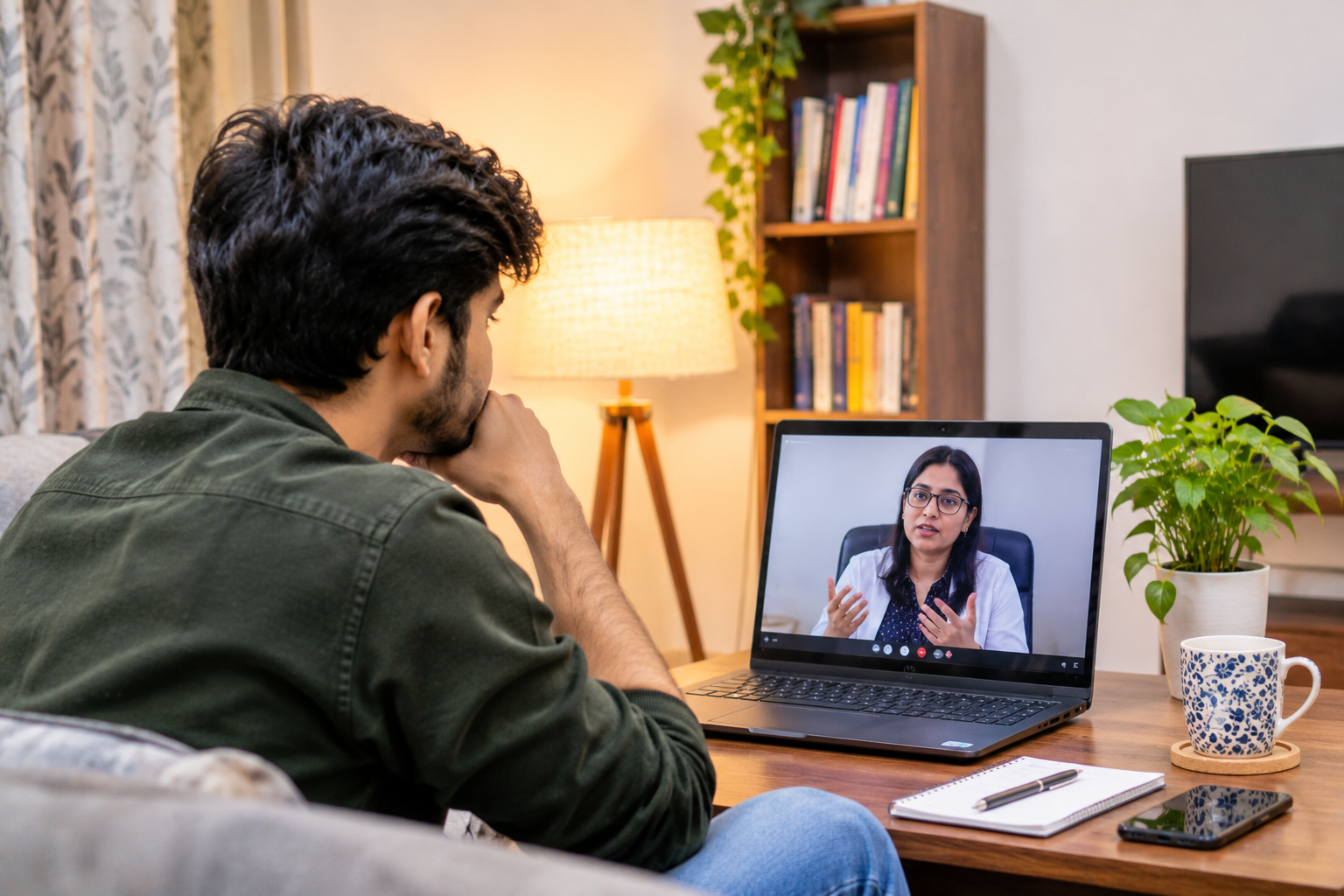
Teletherapy is simply therapy that happens over a video call, a phone call, or a secure chat instead of inside a clinic room. You speak to a trained mental health professional from your own home, your office cabin, or even a quiet corner of a café.
A few years ago, many of us would have laughed at the idea of sharing personal worries through a screen. Today, it is a normal part of how people look after their health. If you live in Delhi, you already know the reality. Two hours of traffic for a 50-minute appointment is hard to justify, and that is often where good intentions stop.
Teletherapy removes that barrier. In this guide, we explain how it works, who it suits, and how to begin. We have also included the views of two of our clinicians, Dr. Sugandha Gupta and Dr. Paramjeet Singh.
How Does Teletherapy Work?
The process is much simpler than most people expect.
Book a slot. Choose a time that suits you through our website or by phone.
Share a little about yourself. A short intake form helps us understand what you are going through.
Get your link. You receive a private joining link on your phone or email.
Meet your therapist. Join from any device with a camera, a microphone, and a steady internet connection.
Plan the next steps. Your therapist will discuss goals and how often you should meet.
That’s it. No special software knowledge is needed.
Teletherapy
7 Proven Benefits of Teletherapy
1. It saves time
No travel, no parking, no waiting room. Your session fits between meetings or after the kids are asleep.
2. It feels more private
Many people hesitate to visit a mental health clinic because they worry about being seen. With teletherapy, that worry goes away.
3. You are more relaxed at home
Sitting on your own sofa with a cup of chai often makes it easier to speak honestly.
4. It reaches more people
Students living away from home, working professionals who travel, people with limited mobility, and families abroad can all access the same care.
5. Sessions stay regular
Rain, strikes, and heavy traffic do not cancel your appointment. Regular sessions matter because progress in therapy builds slowly.
6. You can choose the right professional
You are not restricted to someone who lives nearby, so it is easier to find a therapist who suits your needs and communication style.
7. It is easier to start
For a first-timer, logging in from home feels far less intimidating than walking into a clinic.
What Can Teletherapy Help With?
People come to us with many kinds of concerns, including:
Work stress and burnout
Constant worry or anxious thoughts
Persistent low mood
Relationship and family conflicts
Grief and loss
Low confidence
Exam and career pressure
Difficulty adjusting to big life changes
You do not need to be in crisis to start. Many people come simply because they feel “not like themselves” and want to understand why.
Expert Opinion: What Our Clinicians Say About Teletherapy
“One thing I notice is that people open up faster in teletherapy than they expect. Being in a familiar space lowers their guard. They often tell me in the second or third session that they would have put off therapy for months if they had to travel for it. For a lot of my clients, the biggest hurdle was never the therapy itself. It was getting through the door.”
“Teletherapy works best when the person is willing to show up regularly and be honest. The screen is only a medium. What heals is the relationship between client and therapist. I would also say that online care is not meant for every situation. If someone is in a serious crisis, or if I feel an in-person assessment is needed, I will always recommend meeting face to face.”
Is Teletherapy as Effective as In-Person Therapy?
For many common concerns, research suggests that online therapy can work as well as sitting across from a therapist. The strongest factor is the bond you build with your therapist, along with your own consistency.
That said, teletherapy is not a perfect fit for everyone. If you are in immediate danger or facing a severe emergency, please seek in-person help right away. You can read more about mental health care on the World Health Organization’s mental health page. If you need free support in India, the government’s Tele-MANAS service offers tele-counselling across the country.
6 Simple Tips to Get the Most Out of Your Teletherapy Session
Pick a private spot. A closed room works best.
Check your connection a few minutes early.
Wear earphones. They improve audio and protect your privacy.
Keep a notebook nearby to jot down thoughts or tasks.
Be honest, even when it is awkward. Your therapist is there to help, not to judge.
Give it time. Trust builds over a few sessions, not one.
Is Teletherapy Confidential?
Yes. Confidentiality is a basic part of professional mental health care. At Delhi Mind Clinic, your personal details and session content are handled with strict care. To protect yourself further, join from a private network, not public Wi-Fi, and keep your device secure.
Who Should Try Teletherapy?
Teletherapy could suit you if you:
have a packed schedule and little time to travel,
feel more comfortable speaking from home,
live outside Delhi or travel frequently,
are a student, a working professional, or a full-time caregiver,
have wanted to try therapy but felt nervous about visiting a clinic.
Frequently Asked Questions About Teletherapy
How long does a teletherapy session last?
Most sessions run for 45 to 60 minutes.
Do I need any special equipment?
No. A phone, tablet, or laptop with a camera and a stable connection is enough.
Can I switch between online and in-clinic sessions?
In many cases, yes. Speak to our team about the options available.
Is teletherapy only for serious problems?
Not at all. Everyday stress and personal growth are good reasons to begin.
How do I know if teletherapy is right for me?
A short first conversation with a professional will help you decide.
Ready to Begin Your Teletherapy Journey?
Asking for help is not weakness. It is one of the most sensible decisions you can make for yourself. If you have been thinking about it for a while, this is a good time to start.
If you or someone you know is in immediate danger, please contact local emergency services or go to the nearest hospital. Teletherapy is not a substitute for emergency care.