For general questions, please send us a message and we’ll get right back to you. You can also call us directly to speak with a member of our service team or insurance expert.
Phone addiction is becoming one of the most common struggles in the digital age. You pick up your phone to check one notification, and twenty minutes later, you’re still scrolling — unable to remember what you were even looking for.
You’re not alone. Millions of people find themselves trapped in this same cycle every single day. What starts as a quick check-in turns into an unconscious habit that eats away at hours, focus, and peace of mind. If you’ve ever wondered whether your phone use has crossed a line, this post will help you understand why phone addiction happens and what signs to watch for.
What Is Phone Addiction?
Phone addiction refers to a pattern of compulsive phone use where a person finds it difficult to control how often or how long they use their device, even when it starts interfering with daily life. It isn’t an official clinical diagnosis in the same way as some other conditions, but it’s a widely recognized behavioral pattern that mental health professionals see more and more often. Phone addiction typically overlaps heavily with social media addiction, since apps are often the biggest driver of compulsive checking.
Why Phones Are So Hard to Put Down
Phone addiction isn’t simply about “weak willpower.” Apps are deliberately designed to keep you engaged for as long as possible. Every like, comment, and notification triggers a small reward response in the brain, similar to what happens with other habit-forming behaviors. Features like infinite scroll, autoplay videos, and unpredictable notifications are built to keep that reward cycle going — this is exactly how phone addiction develops over time, often without you noticing.
Over time, this constant stimulation can rewire your habits. Boredom, stress, or even a few seconds of silence can trigger an automatic urge to check your phone, often without you even realizing you’re doing it. This is one of the reasons phone addiction can be so hard to recognize in yourself, even when it’s obvious to people around you.
phone-addiction
Common Signs of Phone Addiction
Wondering if your relationship with your phone has become unhealthy? Here are some common signs of phone addiction to look out for:
1. You reach for your phone without thinking
Checking your phone becomes automatic, even when there’s no reason to. You might pick it up dozens of times a day out of habit rather than actual need.
2. You feel anxious or restless without it
If being away from your phone even briefly makes you feel uneasy, irritable, or like you’re missing out, that’s a sign your usage may have gone beyond casual habit.
3. You lose track of time while scrolling
Minutes turn into hours without you noticing. What felt like a quick check often ends up consuming a significant chunk of your day.
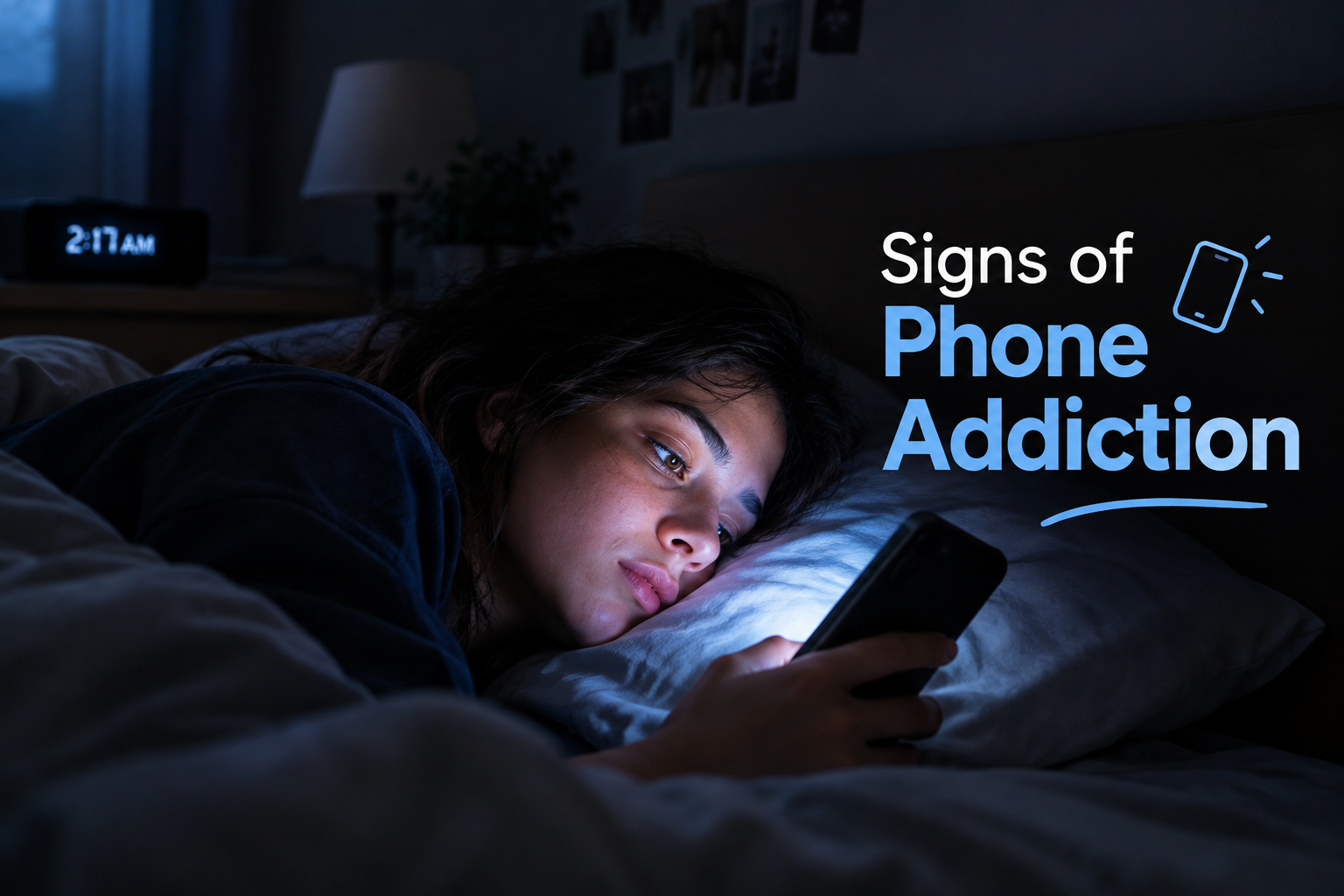
4. It affects your sleep
Scrolling late into the night, checking your phone right before bed, or waking up to check notifications can disrupt your sleep quality and leave you feeling tired the next day.
5. Your work or relationships are affected
You find yourself distracted during conversations, missing deadlines, or feeling disconnected from people around you because part of your attention is always on your phone.
6. You’ve tried to cut back but couldn’t
You’ve set limits for yourself — no phone during meals, no scrolling after 10 PM — but keep breaking them despite your best intentions.
7. You use your phone to escape emotions
Reaching for your phone whenever you feel bored, stressed, lonely, or anxious, using it as a way to avoid dealing with uncomfortable feelings.
Bonus sign: You experience “phantom vibrations” — you think your phone buzzed or lit up, but when you check, there’s nothing there. This is another common sign of phone addiction and heightened phone dependency.
The Impact of Phone Addiction on Daily Life
Recognizing the impact of phone addiction matters because it can quietly affect several areas of life:
Mental well-being: Constant comparison on social media can affect self-esteem and mood, while the endless stream of information can heighten anxiety.
Sleep quality: Blue light exposure and mental stimulation before bed can interfere with restful sleep.
Focus and productivity: Frequent notifications fragment attention, making it harder to concentrate on tasks that matter.
Relationships: Being physically present but mentally elsewhere can create distance with family and friends.
Physical health: Long hours of screen time are often linked with reduced physical activity, eye strain, and poor posture.
Left unaddressed, phone addiction can gradually chip away at a person’s overall quality of life, making it harder to be fully present in the moments that matter most.
Who Is Most at Risk of Phone Addiction?
While anyone can develop phone addiction, certain groups tend to be more vulnerable. Teenagers and young adults, who have grown up with constant connectivity, often show higher rates of compulsive phone use. People experiencing high stress, loneliness, or low self-esteem may also turn to their phones more frequently as a coping mechanism, which can deepen patterns of phone addiction over time. Recognizing these risk factors can help individuals and families stay more alert to early warning signs.
Small Steps to Overcome Phone Addiction
The good news is that awareness is the first step toward change. Some simple strategies that can help reduce phone addiction include:
Turning off non-essential notifications
Setting specific “phone-free” times, such as during meals or the first hour after waking up
Using screen time tracking features to understand your actual usage patterns
Keeping your phone out of the bedroom at night
Replacing scrolling time with an offline activity you enjoy
Being mindful of why you’re reaching for your phone in a given moment
Small, consistent changes often make a bigger difference than trying to quit “cold turkey.”
When to Seek Support for Phone Addiction
For many people, self-awareness and small lifestyle adjustments are enough to build a healthier relationship with technology. But if phone addiction is significantly affecting your daily functioning, relationships, sleep, or emotional well-being despite your efforts to cut back, it may help to talk to a mental health professional. Behavioral patterns like this are very treatable, and support can make the process of change much easier and more sustainable.
Overcoming phone addiction rarely happens overnight — it builds slowly through small, repeated habits reinforced by design choices meant to keep us engaged. Recognizing the signs is the first step toward taking back control of your time, attention, and mental peace. If any of these signs of phone addiction sound familiar, know that change is possible, and you don’t have to navigate it alone.