For general questions, please send us a message and we’ll get right back to you. You can also call us directly to speak with a member of our service team or insurance expert.
Mental illness rarely announces itself with a single dramatic moment. More often, it builds quietly — mood changes, withdrawal, disrupted sleep — until, for some families, it reaches a point where a loved one becomes acutely disturbed, aggressive, or unable to recognise that they need help at all. When that happens, families are often left asking the same painful question: what do we do now?
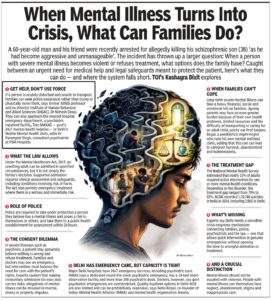
This question was at the heart of a recent feature in The Times of India (Times City, September 5, 2026), titled “When Mental Illness Turns Into Crisis, What Can Families Do?” The article was prompted by a deeply troubling case — a father and his friend allegedly killed his 38-year-old son, who was living with schizophrenia, after describing him as having become “aggressive and unmanageable.” It’s an extreme and tragic outcome, but it highlights something many families quietly struggle with: the gap between recognising a mental health emergency and knowing how to respond to it safely and lawfully.
Get Help, Don’t Use Force
Among the experts consulted for the piece was Dr. Paramjeet Singh, Consultant Psychiatrist, who offered a piece of guidance that deserves to be repeated often: when a person is acutely disturbed and unsafe to move, families should never attempt to physically restrain or transport them on their own.
Instead, Dr. Singh pointed families toward the support systems that already exist and are built for exactly this kind of moment:
The emergency department of the nearest hospital
A psychiatric inpatient facility
Tele-MANAS, the government’s round-the-clock mental health helpline
Delhi’s Mobile Mental Health Units, which can respond directly where the person is
This advice matters because in a crisis, panic often pushes families toward action that feels urgent but is actually unsafe — for the patient and for themselves. Knowing which door to knock on first can change the entire outcome of that day.
Why Families Feel Stuck: The Legal and Emotional Reality
The Times of India feature also unpacked why this issue is so complicated in the first place. Under the Mental Healthcare Act, 2017, an unwilling adult can be admitted for treatment only under specific, safeguarded circumstances — it isn’t simply a decision the family gets to make. This exists to protect patients from misuse, since allegations of mental illness have, unfortunately, been weaponised in disputes over marriage, dowry, or property in the past.
At the same time, severe conditions like psychosis can make it genuinely impossible for a patient to recognise that anything is wrong. Families and doctors may clearly see an emergency unfolding, while the patient sees no reason to seek care at all. Balancing a patient’s rights with a family’s need to act quickly is one of the hardest parts of mental healthcare — and one of the least talked about.
The article also cited sobering figures: an estimated treatment gap of 70–92% for various mental health conditions in India, and over 1.7 lakh reported suicides nationally in 2024, including thousands in Delhi alone. These numbers point to a system that is still catching up to the scale of the need — even as good emergency infrastructure, like round-the-clock psychiatric care at hospitals such as IHBAS, does exist.
What This Means for Families in Delhi
If there’s one message worth taking away from this feature, it’s this: a mental health crisis is a medical emergency, not a private failure to manage on your own. Families don’t need to have all the answers, and they certainly don’t need to face it alone or by force. What they need is to know where to turn — and to turn there early, before a situation escalates.
A few practical takeaways for families supporting a loved one with severe mental illness:
Recognise early warning signs of increasing agitation, disorientation, or risk — before a full crisis develops.
Keep helpline and hospital information handy in advance, not just when a crisis is already underway.
Don’t attempt physical intervention with someone who is acutely disturbed; seek professional or police assistance instead.
Understand that mental illness does not equal violence. As the article rightly notes, people living with mental illness are far more likely to face neglect, stigma, and inappropriate care than to pose a danger to others.
Look after the caregivers too. Long-term illness takes a real emotional and financial toll on families, particularly ageing parents.
Compassionate, Professional Care Starts with the Right Conversation
Being featured in a national publication for this kind of expert commentary reflects the broader work Dr. Paramjeet Singh and the team continue to do — helping families navigate not just crisis moments, but the everyday realities of living with and supporting someone through mental illness.
AtDelhi Mind Clinic, we believe families deserve clear guidance long before things reach a breaking point. Whether you’re noticing early changes in a loved one’s behaviour or facing a situation that already feels overwhelming, professional support can make the difference between a manageable moment and a full-blown crisis.
If you or someone you love needs guidance, don’t wait for things to escalate. Reach out to Delhi Mind Clinic to speak with an experienced mental health professional and find the right path forward — for your loved one, and for your whole family.
Psychological trauma after sexual assault is far more complex, and far more lasting, than most people realize. A recent case out of Delhi — where a young girl endured a harrowing 47-kilometre ordeal aboard a moving bus — has once again forced the country to confront uncomfortable questions. Why do such crimes keep happening? Why does the fear never seem to leave? And why, despite decades of reform since the Nirbhaya case, does a woman still not feel fully safe travelling alone at night?
In a recent televised discussion, Dr. Sugandha Gupta, a leading psychologist at Delhi Mind Clinic, was invited to unpack the psychological trauma after sexual assault cases like this one — not just what happened, but why it happened, and what it does to the mind of a survivor, a family, and a society. Below are five key insights from her conversation.
psychological trauma after sexual assault
1. “Mental Illness” Is Not the Same as “Mindset” — And the Difference Matters
One of the most important clarifications Dr. Gupta made was around a common misconception: that people who commit such crimes must be “mentally ill,” and that psychological trauma after sexual assault can somehow be prevented simply by treating an underlying illness in offenders.
She was clear: this is not accurate.
What we are often looking at is not a mental illness, but a mindset — a set of learned beliefs and attitudes, absorbed from one’s surroundings over years. When boys grow up watching women being dominated, dismissed, or treated as objects rather than individuals, that observation quietly becomes internalised belief. Aggression gets rewarded with the label “masculine.” Boundary-crossing gets excused as “boys being boys.” Over time, this mindset hardens into a dangerous sense of entitlement — the belief that one has the right to take what they want, without consequence or guilt.
Alongside this, Dr. Gupta pointed to something else: a profound lack of empathy in individuals who commit such acts — an inability to register another person’s pain as real. This absence of empathy is what allows such crimes to be repeated without remorse, sometimes even years later, as seen in documented interviews of past offenders who showed no accountability even facing the harshest consequences.
2. Psychological Trauma After Sexual Assault Can Last a Lifetime
Perhaps the most sobering part of Dr. Gupta’s commentary was on the lasting nature of psychological trauma after sexual assault.
She noted that survivors — many of whom experience this trauma as teenagers — often carry it for the rest of their lives. It’s not something that fades neatly with time. Even women well into their middle age, she observed, continue to be affected by something that happened to them decades earlier, at 15 or 16 years old. That trauma doesn’t just shape how they see the world — it often shapes how they raise their own daughters, colouring their fears and their sense of safety passed on to the next generation.
This is a critical point for families and communities to internalise: healing from psychological trauma after sexual assault is not a linear or quick process, and survivors deserve patience, support, and access to spaces where they can process what they’ve experienced without judgment.
3. Victim Blaming Deepens Psychological Trauma After Sexual Assault
Dr. Gupta also addressed a pattern that surfaces after nearly every such case — the tendency of society to question the survivor rather than the perpetrator. Why was she out at night? Why did she board an empty bus?
These questions, however well-intentioned some may seem, add a second wound on top of psychological trauma after sexual assault. They compound the original experience with shame, self-doubt, and isolation — feelings that can be just as damaging as the incident itself, and that often prevent survivors from seeking help or speaking up at all.
Dr. Gupta was unambiguous: this pattern of victim-blaming stems from a deep-rooted patriarchal mindset in society — one that seeks to control and dominate, and that reduces women to objects rather than recognising them as individuals with full agency.
4. Systemic Delays Make the Trauma Worse
The conversation didn’t stop at diagnosis — it moved toward responsibility and accountability. Dr. Gupta emphasised a few key points that directly affect how psychological trauma after sexual assault is experienced and processed:
Accountability is collective. No single institution — police, government, or society — can address this alone.
Sensitisation is missing at every level — from how FIRs are registered, to how survivors are treated by law enforcement, to how cases are handled in courts.
Delayed justice deepens psychological harm. When consequences take seven or eight years to materialise, survivors are left carrying unresolved trauma for far longer, with little sense of closure or safety.
5. Healing Requires More Than Conversation — It Requires Support
Conversations like this one matter — but as Dr. Gupta pointed out, discussion alone cannot heal a survivor’s wounds. Addressing psychological trauma after sexual assault requires access to compassionate, professional psychological support: a space to process trauma, rebuild a sense of safety, and work through fear, grief, or anxiety at one’s own pace.
At Delhi Mind Clinic, our approach centers on providing exactly this — a safe, non-judgmental environment where individuals affected by trauma, whether recent or from years past, can find support tailored to their experience. Whether it’s a survivor, a parent, or anyone carrying the weight of fear after such news, professional guidance can make a meaningful difference in the healing journey.
If you or someone you know is struggling with psychological trauma after sexual assault, reaching out for support is not a sign of weakness — it’s often the first step toward reclaiming a sense of safety and control.
We live in a world where connecting with someone is easier than ever.
A message can reach someone instantly. A video call can bring two people together across thousands of kilometres. Social media can give us hundreds or even thousands of contacts, followers and online communities.
Yet, despite all this connectivity, many people still experience a deep sense of loneliness.
This raises an important question:
Social-Media-Loneliness
Has social media actually brought us closer, or has it sometimes made us feel more disconnected from the people around us?
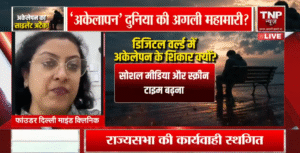
This issue was recently discussed in a television news programme featuring Dr. Sugandha Gupta, Senior Psychiatrist and Founder & Director of Delhi Mind Clinic, along with other speakers. The discussion explored why people can feel lonely despite being constantly connected online, how excessive digital engagement can affect relationships, and what families and communities can do to rebuild meaningful connections.
What Is Social Media Loneliness?
Social media loneliness refers to the feeling of emotional disconnection that can exist despite having frequent online interactions.
A person may receive messages throughout the day, have hundreds of followers and regularly interact with people online, yet still feel that there is nobody with whom they can genuinely share their worries, fears or difficult experiences.
This is an important distinction.
Being digitally connected is not always the same as feeling emotionally connected.
A like, comment, emoji or short message can provide momentary interaction. However, meaningful relationships usually require time, trust, understanding and genuine presence.
The World Health Organization has identified loneliness and social isolation as important public health concerns. Its 2025 Commission on Social Connection reported that approximately one in six people worldwide experience loneliness, with younger people among the groups experiencing particularly high levels.
Why Are People Feeling Lonely Despite Having So Many Online Connections?
There is no single reason behind loneliness. Social media may be one factor among several, including changes in family life, work patterns, urban lifestyles, relationship difficulties and reduced face-to-face interaction.
The television discussion highlighted several possible contributors.
1. Online interaction can replace real-world interaction
When much of our free time is spent scrolling, messaging or watching content, there may be less time available for conversations with family members, friends and neighbours.
A person can spend hours interacting with people online without having a meaningful face-to-face conversation during the entire day.
Over time, this can create an unusual situation:
More communication, but less emotional connection.
2. The pressure to appear happy online
Social media often presents carefully selected versions of people’s lives.
People usually share achievements, celebrations, holidays, attractive photographs and positive experiences. Difficult moments may remain private.
As a result, someone scrolling through social media may begin comparing their ordinary life with other people’s carefully presented highlights.
This can create thoughts such as:
“Everyone else is happier than me.”
“Everyone has more friends than I do.”
“Why am I not living like this?”
“Something must be wrong with my life.”
Such comparisons can make existing feelings of loneliness more noticeable.
3. The need for constant validation
Likes, comments, followers and messages can sometimes become a source of validation.
The problem begins when a person’s sense of self-worth becomes strongly dependent on online reactions.
If a post receives less attention than expected, the person may feel rejected or ignored. If it receives attention, the positive feeling may be temporary, creating a desire for more validation.
This can turn social media into a cycle of checking, comparing and seeking approval.
4. Fear of rejection in real life
The discussion also touched upon an important psychological issue: people may sometimes find online interaction easier than real-world relationships because face-to-face relationships involve vulnerability and the possibility of rejection.
Online platforms can provide a controlled environment where people can choose what to share, whom to follow and how they want to present themselves.
But real relationships require us to deal with disagreement, disappointment, misunderstanding and vulnerability.
Avoiding these experiences completely may make genuine relationships harder to build.
Dr. Sugandha Gupta on the Growing Digital Disconnect
Social-Media-Awareness
During the discussion, Dr. Sugandha Gupta highlighted that technology has gradually become an ordinary part of modern life. From radio and television to mobile phones and social media, every technological development has changed how people communicate.
The challenge, she explained, is not simply the existence of technology but how much and how intensely we use it.
She also pointed to the changes that occurred during the COVID-19 period, when social restrictions made digital communication one of the primary ways people stayed connected. For many people, those digital habits continued even after normal social interaction returned.
Her comments highlight an important principle:
The goal should not necessarily be to eliminate technology. The goal is to learn where to draw the line.
This is particularly important for young people, who have grown up surrounded by smartphones, online entertainment and social platforms.
Is Social Media Always Bad for Mental Health?
No.
Social media can provide genuine benefits.
It can help people:
Stay connected with relatives living far away
Maintain friendships
Find communities with similar interests
Access educational information
Discover opportunities
Express creativity
Receive social support
Communicate during difficult circumstances
For someone living away from family, a video call can be extremely meaningful.
The concern is therefore not simply social media use, but unhealthy or excessive patterns of use that begin interfering with sleep, relationships, responsibilities, physical activity or emotional well-being.
WHO similarly emphasizes that digital tools should be used wisely to enhance rather than replace human relationships.
Young People May Be Particularly Vulnerable
Young people are among the groups that deserve particular attention.
Adolescence and early adulthood are periods when identity, friendships, confidence and social skills are developing.
If much of a young person’s social experience takes place through screens, opportunities for face-to-face interaction may decrease.
The discussion highlighted concerns around children receiving smartphones at very young ages, increasing screen exposure and parents sometimes using phones as an easy way to keep children occupied.
This does not mean that parents should completely isolate children from technology.
Instead, families can create healthier boundaries around its use.
What Can Families Do?
Parents often tell children to reduce their screen time while spending much of their own time on their phones.
This can create resistance.
A healthier approach is to make digital boundaries a family habit rather than a punishment for children.
For example:
Create a phone-free family meal
Choose one meal each day when everyone keeps their phones away.
The objective is simple: eat together, talk and listen.
Create a technology-free hour
Families can experiment with one hour without unnecessary screen use.
That hour can be used for conversation, walking, games, hobbies, music or simply spending time together.
The discussion specifically emphasized the importance of families sitting together and creating periods without technology.
Parents should lead by example
Children notice what adults do.
If parents constantly check notifications while asking children to put their phones away, the message becomes confusing.
Healthy digital habits should therefore begin with adults as well.
Encourage offline activities
Sports, hobbies, music, community events, festivals, exercise and social activities can create opportunities for genuine interaction.
The television discussion also highlighted schools, colleges and residential communities as places where more in-person activities can help people reconnect.
How Can You Reduce Social Media Loneliness?
You don’t necessarily have to delete every social media application.
Instead, start by examining your relationship with technology.
Ask yourself:
Do I use social media because I genuinely want to connect, or because I feel uncomfortable being alone?
Do I feel better after using it, or more anxious and dissatisfied?
Am I spending more time online than I spend talking to people around me?
Do I check my phone automatically whenever I have nothing to do?
Have I stopped participating in activities that I previously enjoyed?
Your answers can help you identify whether your digital habits are supporting your well-being or interfering with it.
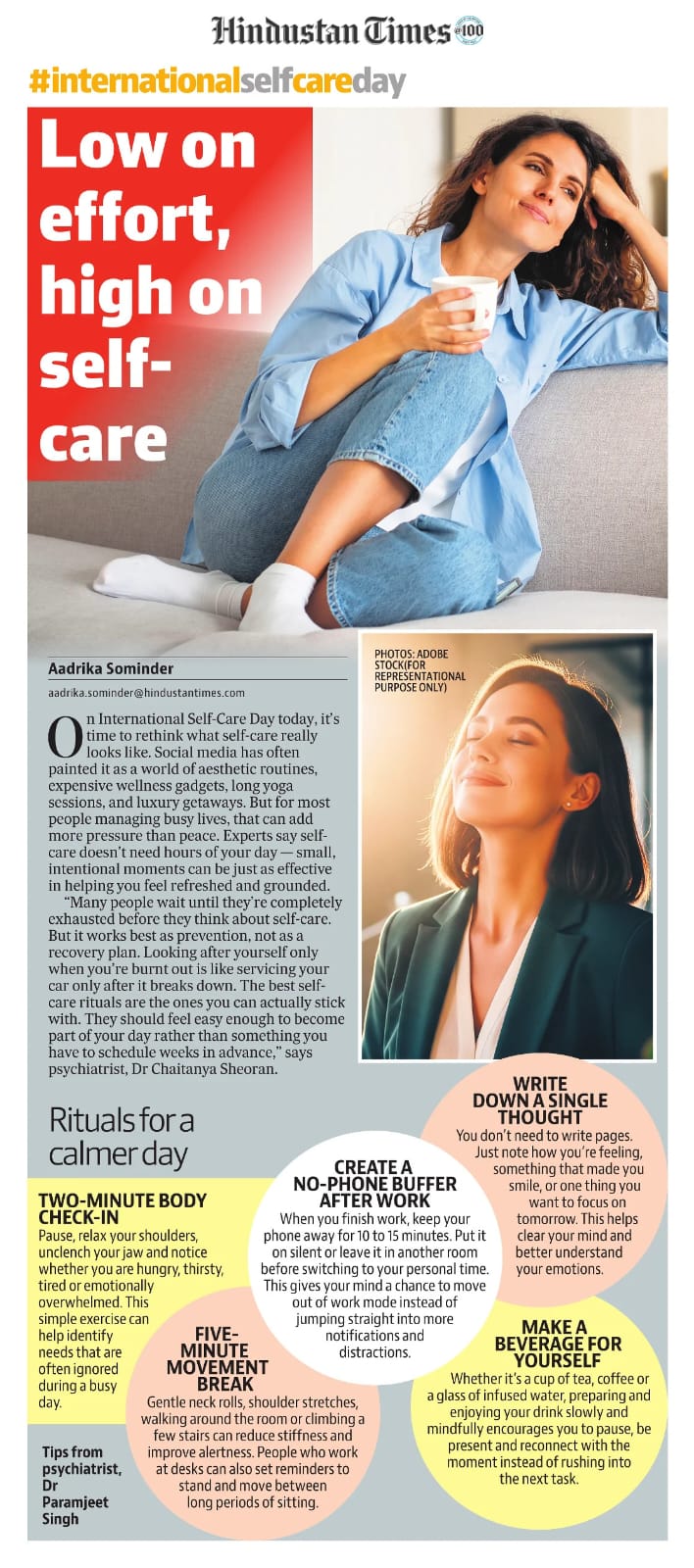
Self-care rituals don’t have to be elaborate to work. Scroll through social media and self-care can start to look like a full-time job — elaborate skincare shelves, hour-long yoga sessions, expensive retreats, and colour-coded journals. For most people juggling work, family, and everyday responsibilities, that picture doesn’t feel like relaxation. It feels like one more thing to keep up with.
self-care-rituals
The good news? Real self-care doesn’t need to be elaborate, expensive, or time-consuming. According to mental health experts, some of the most effective self-care habits take less than five minutes — and the ones that stick are usually the simplest.
In this post, we break down why small, consistent habits matter more than grand wellness gestures, and share five easy self-care rituals you can build into your day starting today.
Why “Waiting Until You’re Burnt Out” Doesn’t Work
One of the most common mistakes people make with self-care is treating it as damage control — something you turn to only after you’re exhausted, overwhelmed, or running on empty.
Mental health professionals often compare this to servicing a car only after it breaks down, instead of maintaining it regularly. Self-care works best as prevention, not recovery. The World Health Organization defines self-care as the ability of individuals to promote and maintain their own health and well-being — not just a response to illness or burnout. When self-care rituals are woven into your daily routine in small ways, they help you stay balanced before stress builds up — rather than trying to undo weeks of neglect in one go.
The rituals that actually last aren’t the ones that require a special mood, a free weekend, or a shopping list. They’re the ones that feel easy enough to become a natural part of your day. In fact, the American Psychological Association notes that even brief, consistent self-care practices can meaningfully reduce stress and improve emotional resilience over time.
5 Simple, Low-Effort Self-Care Rituals to Try Today
These self-care rituals are designed to take five minutes or less, so they’re easy to stick with even on your busiest days.
1. The Two-Minute Body Check-In
Pause for a moment. Relax your shoulders, unclench your jaw, and notice how your body actually feels — are you hungry, thirsty, tired, or emotionally overwhelmed? This quick scan helps you catch needs that often go unnoticed during a busy day, before they turn into bigger stress or fatigue.
2. A Five-Minute Movement Break
You don’t need a full workout to reset your energy. Gentle neck rolls, shoulder stretches, a short walk around the room, or a couple of flights of stairs can ease stiffness and improve alertness. If you have a desk job, try setting a reminder every hour or two to simply stand up and move — your body and focus will thank you.
“People who work at desks often don’t realise how much prolonged sitting affects both their body and their mind. A short movement break every hour isn’t just good for posture — it genuinely helps reset focus and reduce the mental fatigue that builds up over a long workday,” says Dr. Paramjeet Singh, Psychiatrist at Delhi Mind Clinic.
3. A No-Phone Buffer After Work
The moment work ends, many of us go straight from one screen to another. Instead, try keeping your phone away for 10–15 minutes after you finish work — put it on silent or leave it in another room. This small buffer gives your mind a chance to shift out of “work mode” before you dive back into notifications and distractions.
4. Writing Down a Single Thought
Journaling doesn’t have to mean pages of reflection. Just jot down one thought — how you’re feeling, something that made you smile, or one thing you want to focus on tomorrow. This tiny habit can help clear mental clutter and improve emotional awareness over time. If you’d like a more structured approach, check out our guide to journaling for mental health for simple prompts to get started.
5. Making a Beverage — For Yourself, Not on Autopilot
Whether it’s a cup of tea, coffee, or a glass of infused water, the act of preparing a drink slowly and mindfully can be a moment of pause in itself. Instead of rushing through it while multitasking, let it be a small, intentional break that helps you be present before moving to the next task.
The Bigger Picture: Consistency Over Intensity
None of these self-care rituals require special equipment, a big time commitment, or a complete lifestyle overhaul. That’s the point. Self-care isn’t about how much effort you put in — it’s about how consistently you show up for yourself, even in small ways.
If you find that stress, low mood, or anxiety are affecting your daily life despite these efforts, that’s a sign it may help to talk to a mental health professional. Small rituals are powerful for everyday balance, but ongoing distress deserves proper support and guidance — you can learn more about when to seek professional help for stress and anxiety in our related guide.
Final Thoughts
Self-care doesn’t have to look like a curated aesthetic or a luxury experience. Often, it’s the two-minute pause, the short walk, the single honest sentence written down, or the quiet cup of tea made just for you. Start with just one or two self-care rituals, stay consistent, and let them become a natural part of your everyday rhythm — not another task on your to-do list.
If you’re finding it difficult to manage stress, anxiety, or emotional overwhelm on your own, our team at Delhi Mind Clinic is here to help. Explore our therapy and counselling services or book a consultation to speak with a mental health professional and find support that works for you.
Every July 11, something quietly remarkable happens: the world pauses, just for a moment, to think about a number so large it’s almost impossible to picture. 8.3 billion. That’s how many people share this planet with you right now.
world-population-day
Welcome to World Population Day — a day that isn’t about counting heads for the sake of it, but about understanding how that number touches everything from housing and jobs to, perhaps surprisingly, your peace of mind.
At Delhi Mind Clinic, we spend our days helping people navigate the stresses of modern life. And if you look closely, so many of those stresses — crowded cities, competitive workplaces, the constant hum of “too many people, too little space” — trace back to one root idea: population. So this year, we’re marking World Population Day a little differently, by connecting the dots between global numbers and everyday mental wellbeing.
What Is World Population Day, Really?
World Population Day was established by the United Nations Development Programme in 1989, inspired by an extraordinary moment two years earlier. On July 11, 1987, the world’s population crossed 5 billion people — an event so significant it was informally called the “Day of Five Billion.” Newspapers everywhere ran the story, and for the first time, ordinary people around the world started asking: what happens when we keep growing like this?
Since then, July 11 has become an annual checkpoint — a day for governments, researchers, and communities to reflect on population growth, reproductive health, gender equality, and sustainable development.
World Population Day 2026 Theme
This year’s official UNFPA theme is “Realizing the hopes and aspirations of young people – today and for the future.” It’s built on a massive global survey of more than 100,000 young adults aged 18–39 across 73 countries, exploring what they want from relationships, family, and the future — and what’s standing in their way. Spoiler: it’s rarely a lack of desire to build a life. It’s cost of living, job insecurity, and housing pressure — the very things that quietly chip away at mental health too.
Fascinating Facts About World Population Day
Here are some facts worth sharing on your social feed this July 11:
It took all of human history — hundreds of thousands of years — for the population to reach 1 billion. It then took just 200 years to multiply sevenfold.
The world adds roughly 200,000 to 220,000 people every single day — that’s a mid-sized city’s worth of new people, daily.
Every 14 months or so, humanity adds another 100 million people to the planet.
India is now the most populous country on Earth, having overtaken China in April 2023, with an estimated 1.45 billion people in 2026 — nearly 17.5% of humanity.
Asia is home to about 4.85 billion people — more than half of everyone alive today.
More than half the world’s population is under the age of 30. This is, quite literally, a young planet.
Global population growth has been slowing since it peaked in 1963, and current growth sits around 0.83% a year.
The Statistics Behind the Story
Numbers tell a story of their own. Here’s where the world stands as we mark World Population Day 2026:
Metric
Figure
Current global population
~8.3 billion
Population in 2050 (projected)
~9.7 billion
Projected peak population
10.3–10.9 billion (around the 2080s)
India’s population (2026)
~1.45 billion
Share of world population under 30
Over 50%
Daily net population growth
~200,000–220,000 people
One statistic from UNFPA’s latest global survey stands out in particular: across a 14-country study covering more than a third of the world’s population, 18% of adults of reproductive age said they expect to end up with fewer or more children than they actually wanted — not because they didn’t want a family, but because of cost, job insecurity, and housing pressure. Behind every population statistic is a deeply human, and often deeply stressful, decision.
The Hidden Link Between Population and Mental Health
This is where the conversation gets personal — and where it connects directly to what we see every day at Delhi Mind Clinic.
1. Crowded cities, lonelier minds. It sounds contradictory, but living surrounded by millions of people is one of the most common paths to isolation. Urban crowding is consistently associated with higher stress levels, sensory overload, and a sense of anonymity that can quietly erode emotional wellbeing.
2. The pressure of “not enough to go around.” When population grows faster than jobs, housing, or infrastructure, competition intensifies. That competition — for school seats, job interviews, even a parking spot — becomes a daily source of anxiety for millions of people, especially in dense urban centres like Delhi.
3. Family planning is a mental health decision, not just a demographic one. The idea of choosing if, when, and how many children to have is tied closely to emotional wellbeing, relationship stability, and a sense of control over one’s own future. When people feel they can’t make that choice freely — due to financial pressure or social expectation — it takes a real emotional toll.
4. A young, ambitious population needs mental health support more than ever. With over half of the world under 30, this generation faces academic pressure, job market competition, and social media comparison at a scale no previous generation has. Investing in youth mental health isn’t optional anymore — it’s central to how the next few decades will unfold.
5. Environmental anxiety is real — and it’s growing. Climate change, resource scarcity, and questions about the future are increasingly cited by young adults as reasons to delay or reconsider having children. This isn’t pessimism; it’s a rational response that deserves compassionate, professional support rather than dismissal.
How You Can Observe World Population Day 2026
You don’t need a grand gesture to participate meaningfully:
Explore real data through the UNFPA World Population Dashboard
Start a conversation with friends or family about population, sustainability, or mental wellbeing
Support local sustainability initiatives — even small actions like water conservation count
Check in on your own stress levels if city life, work pressure, or future planning feels overwhelming
Share verified facts and statistics using #WorldPopulationDay to help others engage with accurate information
It’s easy to get lost in billions and percentages, but World Population Day is ultimately not about numbers — it’s about people. Every single digit in “8.3 billion” represents someone navigating their own hopes, pressures, relationships, and mental health journey, just like you.
If the pace of modern life, urban pressure, or future anxiety has been weighing on you, know that you’re far from alone — and that support is always available. At Delhi Mind Clinic, we’re here to help you find calm, clarity, and balance, no matter how crowded the world outside gets.
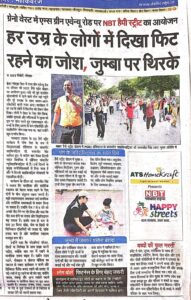
Mental and physical well-being go hand in hand, and this important message was highlighted during the recent NBT Happy Streets event organized by Navbharat Times at Green Avenue Road, Greater Noida West.
The event witnessed enthusiastic participation from residents of all age groups, who came together to celebrate fitness, healthy living, and community engagement. Adding immense value to the program was the presence of Dr. Paramjeet Singh, Senior Consultant Neuropsychiatrist and Director of Delhi Mind Clinic, who attended the event as the Chief Guest.
Promoting the Connection Between Mental and Physical Health
During his address, Dr. Paramjeet Singh emphasized that mental health and physical health are deeply interconnected. Maintaining a healthy lifestyle can significantly reduce the risk of both psychological and physical illnesses.
He highlighted the importance of:
Regular physical activity
Adequate sleep
Stress management
Healthy daily routines
Mindfulness and yoga practices
According to Dr. Singh, adopting positive lifestyle habits can help individuals maintain emotional balance, improve resilience, and enhance overall quality of life.
The Importance of Sleep for Mental Well-being
One of the key messages shared by Dr. Singh was the role of sleep in maintaining mental health.
He explained that adults should aim for approximately 7–8 hours of quality sleep every night. Lack of sleep can increase stress levels, affect mood regulation, impair concentration, and contribute to anxiety and depression.
Good sleep hygiene remains one of the simplest yet most effective strategies for protecting mental wellness.
Yoga and Exercise: Natural Tools for Mental Health
The Happy Streets program began with a yoga session that encouraged participants to start their day with positivity and movement.
Dr. Singh encouraged attendees to dedicate at least 30 minutes daily to physical exercise, yoga, walking, cycling, or other fitness activities. Regular exercise not only strengthens the body but also supports:
Better mood
Reduced stress
Improved cognitive function
Enhanced emotional stability
Greater self-confidence
Managing Stress in the Digital Age
Addressing modern lifestyle challenges, Dr. Singh spoke about the increasing impact of excessive screen time and digital dependence.
He advised participants to:
Limit unnecessary mobile and social media usage
Take regular breaks from screens
Spend quality time with family and friends
Engage in outdoor and recreational activities
Develop meaningful social connections
Such habits help reduce stress and support long-term mental wellness.
Community Events That Encourage Healthy Living
The NBT Happy Streets initiative brought together residents, families, children, and fitness enthusiasts in a vibrant atmosphere filled with activities including yoga, cycling, fitness exercises, and recreational programs.
Events like these serve as powerful reminders that health is not limited to medical treatment—it is a daily commitment to physical activity, emotional well-being, and community participation.
Delhi Mind Clinic’s Commitment to Holistic Mental Healthcare
At Delhi Mind Clinic, we believe that mental wellness extends beyond the consultation room. Awareness programs, community engagement, lifestyle education, and preventive mental healthcare are essential components of long-term psychological well-being.
We are proud of Dr. Paramjeet Singh’s contribution to promoting mental health awareness at NBT Happy Streets and remain committed to helping individuals and families achieve healthier, happier lives.
Looking for Expert Mental Health Support?
Delhi Mind Clinic provides comprehensive care for:
Depression
Anxiety Disorders
Stress Management
OCD
Bipolar Disorder
Schizophrenia
Sleep Disorders
Child & Adolescent Mental Health
Addiction and De-addiction Services
Book an appointment today and take the first step toward better mental health.




 The event witnessed enthusiastic participation from residents of all age groups, who came together to celebrate fitness, healthy living, and community engagement. Adding immense value to the program was the presence of Dr. Paramjeet Singh, Senior Consultant Neuropsychiatrist and Director of Delhi Mind Clinic, who attended the event as the Chief Guest.