For general questions, please send us a message and we’ll get right back to you. You can also call us directly to speak with a member of our service team or insurance expert.
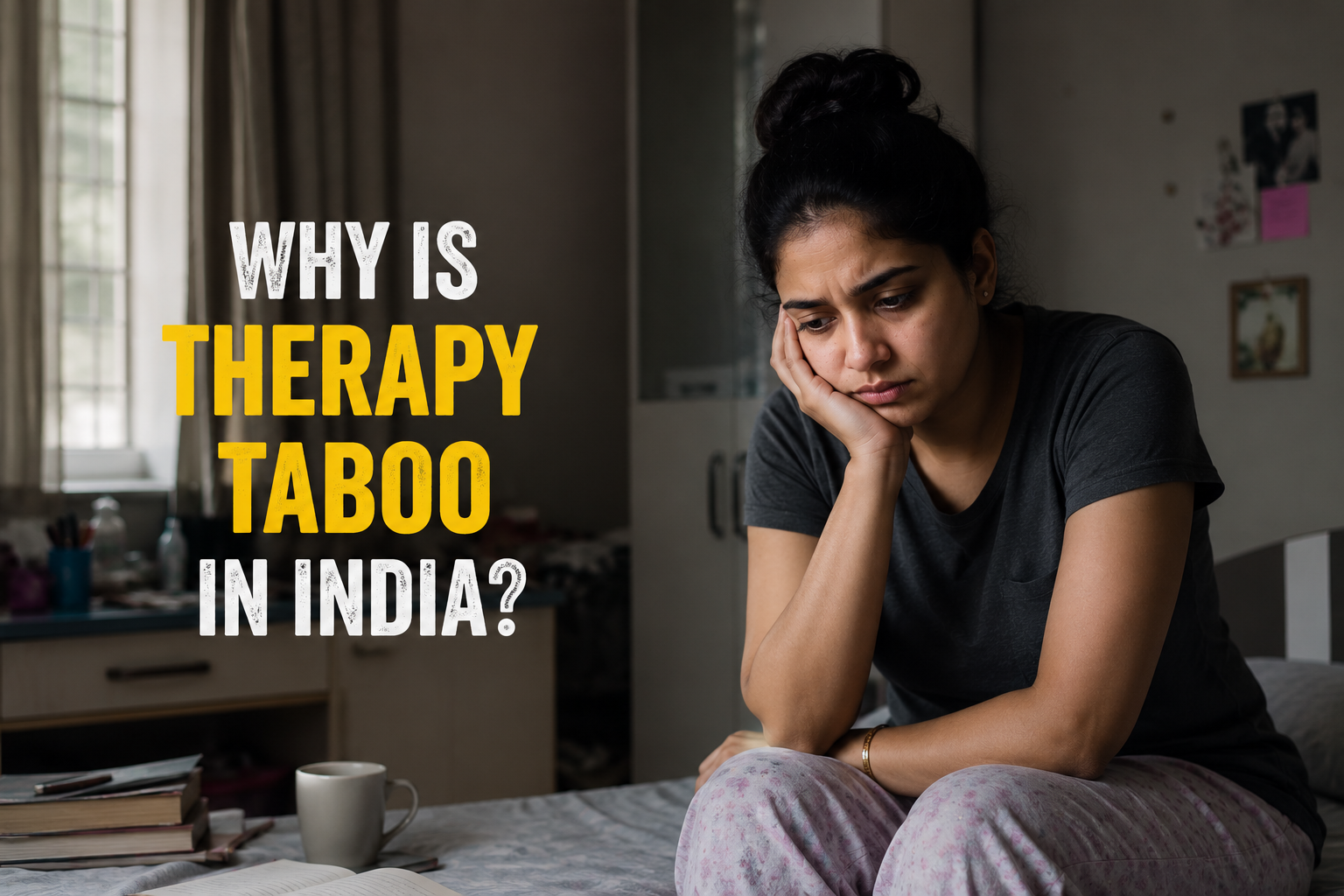
Why is therapy taboo in India? It’s a question more people are typing into search bars than ever before, yet one that still doesn’t get talked about openly at home. Walk into most Indian households and bring up the topic of seeing a therapist, and you’ll likely notice a shift in the room — a pause, a change of subject, maybe even a nervous laugh. Despite growing awareness about mental health globally, therapy still carries a quiet stigma in India.
At Delhi Mind Clinic, we speak with people every day who tell us the hardest part of getting help wasn’t the therapy itself — it was working up the courage to seek it. Understanding why therapy is taboo in India is the first step toward changing that narrative, both for individuals and for society as a whole.
Why Is Therapy Taboo in India? Key Reasons Explained
1. Mental Health Is Still Misunderstood
For generations, mental health struggles have been misread as personal weakness, a “phase,” or something that will pass with time, willpower, or prayer. Unlike a broken bone or a fever, emotional pain isn’t visible — and what isn’t visible is often dismissed. This lack of understanding creates a barrier before a person even considers walking into a therapist’s office.
2. Family Reputation and “Log Kya Kahenge”
In many Indian families, personal struggles aren’t just personal — they’re seen as a reflection on the entire family. This is a big part of the answer to why is therapy taboo in India — the fear of judgment, often summarized in the phrase “log kya kahenge” (what will people say), keeps countless individuals from admitting they’re struggling, let alone seeking professional support. Therapy, in this context, can feel like an admission that something is “wrong” with the family, not just the individual.
3. Confusing Therapy With Being “Mad”
Part of why is therapy taboo in India comes down to persistent myths — like the belief that therapy is only for people who are “crazy” or “unstable.” This outdated association means that many people avoid therapy simply because they don’t want to be associated with a label they see as shameful — even though therapy is just as relevant for everyday stress, relationship issues, grief, or simply wanting to understand oneself better.
4. Cultural Emphasis on Resilience and Silence
Indian culture often celebrates emotional resilience — the ability to endure hardship quietly and keep moving forward. While resilience is valuable, this cultural conditioning can also discourage people from expressing vulnerability. Talking about emotional pain can be seen as “giving in” rather than as a sign of self-awareness and strength.
5. Lack of Mental Health Literacy
Many people simply don’t know what therapy actually involves. Without accurate information, misconceptions fill the gap — that therapy means lying on a couch talking about your childhood forever, that it’s only for “serious” cases, or that a good friend or family member can offer the same support. This lack of literacy makes people underestimate how effective and practical therapy can actually be.
6. The Role of Religion and Traditional Beliefs
In some communities, emotional distress is still explained through spiritual or religious lenses rather than psychological ones — another quiet answer to why is therapy taboo in India in more traditional households. While faith and spirituality can offer genuine comfort, relying on them exclusively — instead of alongside professional support — can delay someone from getting help that could meaningfully improve their quality of life.
7. Generational Gaps: Why Is Therapy Taboo in India Among the Youth?
Younger generations in India are increasingly open to therapy, often influenced by global conversations on social media and greater exposure to mental health education. However, this openness doesn’t always translate across generations, which is part of the answer to why is therapy taboo in India even for people who personally don’t see it that way. Many people still hesitate to discuss therapy with parents or elders, fearing disapproval or a dismissive response.
why is therapy taboo in india
What Mental Health Experts Have to Say
To understand why is therapy taboo in India from a clinical perspective, we reached out to our own clinicians at Delhi Mind Clinic.
Dr. Sugandha Gupta notes that much of the hesitation she sees in her practice isn’t about a lack of awareness, but about fear of exposure. “Many of my clients tell me they researched therapy for months before ever booking a session. The information was never the barrier — the fear of being seen walking into a clinic, or someone finding out, was. We need to normalize therapy the same way we’ve normalized going to a gym or seeing a dietician — as routine self-care, not as a last resort.”
Dr. Paramjeet Singh points out that the taboo often runs deepest within families rather than among individuals themselves. “I’ve had young adults come in fully convinced therapy will help them, but they’re more worried about explaining it to their parents than about the therapy itself. That tells us the stigma isn’t really about the person seeking help — it’s about outdated beliefs still held by the generation before them. Change happens when families start seeing therapy as an investment in a person’s future, not as a family failure.”
Their perspectives echo a common theme: the taboo around therapy in India isn’t rooted in the practice itself, but in the fear of judgment that surrounds it — a fear that only weakens as more people speak openly about their experiences.
Why Breaking This Taboo Matters
Untreated emotional struggles don’t just disappear — they often show up in relationships, work performance, physical health, and overall quality of life. Seeking therapy isn’t a sign of failure; it’s a proactive step toward understanding yourself, building healthier relationships, and navigating life’s challenges with better tools.
The stigma around therapy in India is slowly changing. More people are talking openly about their experiences, more workplaces are acknowledging mental well-being, and more young people are choosing to prioritize their emotional health without shame. Every open conversation chips away a little more at why is therapy taboo in India in the first place.
If you’ve been hesitant to seek therapy because of what others might think, know this: prioritizing your mental well-being is not selfish or shameful — it’s an act of self-respect. At Delhi Mind Clinic, we create a safe, non-judgmental space for individuals to explore their thoughts and emotions at their own pace, free from labels or assumptions.
So, why is therapy taboo in India? As we’ve seen, it isn’t about therapy itself — it’s about fear, misunderstanding, and inherited beliefs that are slowly losing their grip. Breaking this taboo doesn’t happen overnight, but it starts with conversations like this one — and with individuals brave enough to challenge outdated beliefs by choosing to prioritize their own mental health.
Ready to take that first step? Reach out to Delhi Mind Clinic to learn more about how therapy can support your emotional well-being in a space built on empathy, confidentiality, and understanding.