For general questions, please send us a message and we’ll get right back to you. You can also call us directly to speak with a member of our service team or insurance expert.
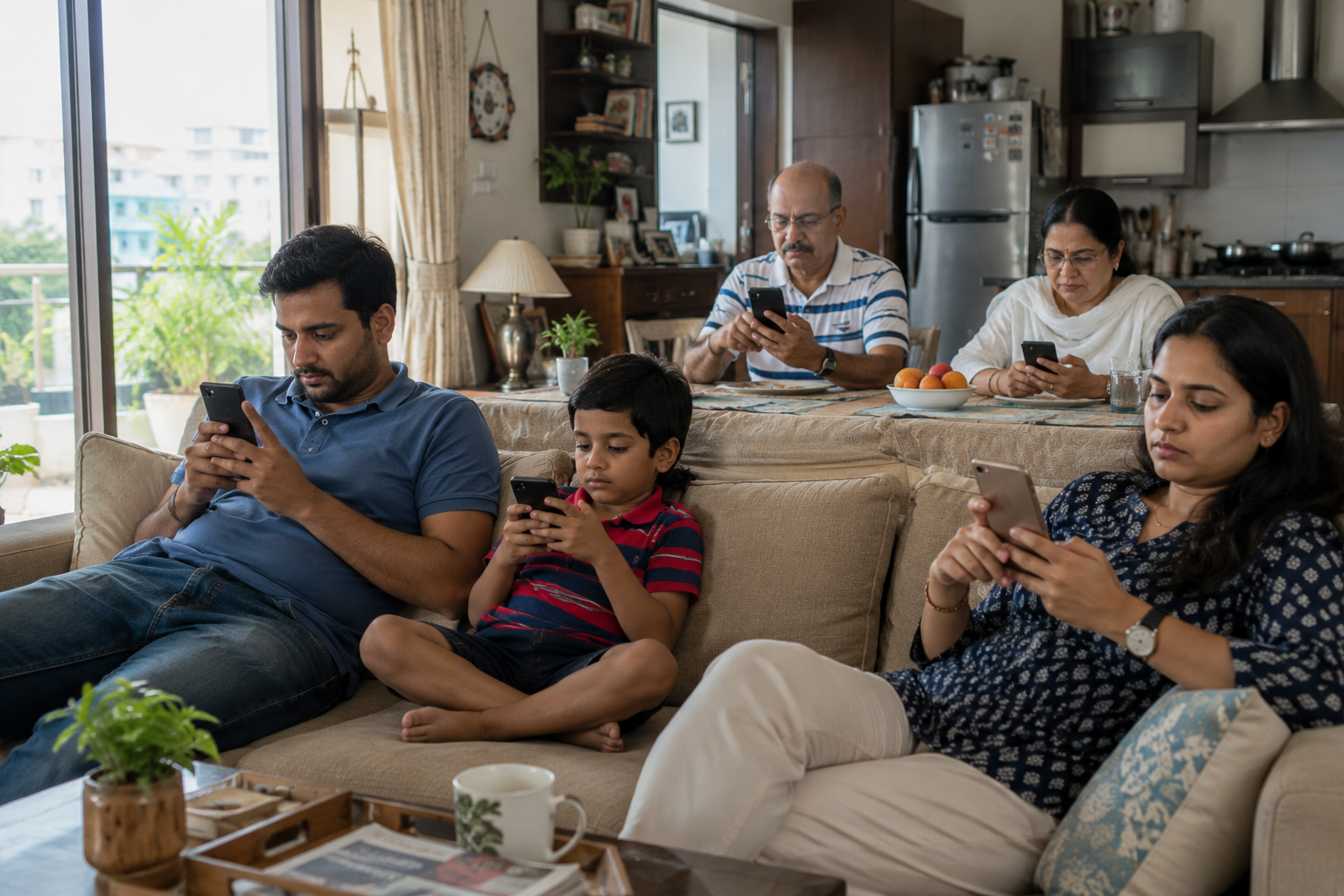
Pick up your phone right now — how many times have you already checked it today? For most people, the honest answer is somewhere between 60 and 100 times. Phones have quietly become the first thing we touch in the morning and the last thing we see at night. For many, this has crossed from convenience into excessive phone use — a pattern that affects sleep, focus, relationships, and mental well-being.
At Delhi Mind Clinic, we increasingly see patients — students, working professionals, and parents alike — who describe feeling “controlled” by their phones rather than in control of them. The good news: this is a well-understood pattern, and it is absolutely possible to change it.
What Counts as “Excessive” Phone Use?
There’s no single screen-time number that applies to everyone. What matters more is the impact your phone use is having on your daily life. Excessive phone use is generally characterised by:
Reaching for your phone automatically, without a clear reason
Feeling anxious, restless, or “incomplete” when it’s not nearby
Losing track of time while scrolling, often for far longer than intended
Using the phone late into the night, cutting into sleep
Neglecting work, studies, chores, or face-to-face conversations because of phone use
Feeling a small jolt of relief or distraction every time a notification appears
If several of these sound familiar, you’re not alone — and it’s worth understanding why this happens.
excessive-phone-use
Why Phones Are So Hard to Put Down
This isn’t simply a matter of “willpower.” Phones — and the apps on them — are deliberately designed to hold attention.
1. The dopamine loop Every like, message, or notification triggers a small release of dopamine, the brain’s “reward” chemical. Because these rewards arrive unpredictably, the brain stays hooked, checking again and again in anticipation of the next one — the same mechanism that makes slot machines addictive.
2. Fear of missing out (FOMO) Social feeds create a constant, low-level worry that something important is happening elsewhere, making it hard to disengage.
3. Escape from difficult emotions For many people, scrolling becomes an automatic way to avoid boredom, stress, loneliness, or uncomfortable feelings — offering short-term relief but reinforcing the habit over time.
4. Habit and environment cues A buzzing notification, a lull in conversation, even a quiet room can become an automatic trigger to check the phone, often before we’ve consciously decided to.
The Real-World Impact
Excessive phone use rarely stays contained to “just the phone.” Over time, it can quietly affect several areas of life:
Sleep — Late-night scrolling delays sleep onset and reduces sleep quality, leaving you tired and irritable the next day.
Focus and productivity — Frequent checking fragments attention, making deep, sustained concentration harder to sustain.
Mood — Constant comparison with curated, highlight-reel lives on social media can lower self-esteem and increase feelings of anxiety or low mood.
Relationships — “Phubbing” (phone snubbing) — glancing at your phone while someone is talking to you — can quietly erode connection with family, friends, and partners.
Posture and physical health — Prolonged phone use is linked to neck strain, eye fatigue, and reduced physical activity.
Recognising these effects is not about guilt — it’s the first, most useful step toward change.
Practical Steps to Reduce Excessive Phone Use
Small, consistent changes tend to work far better than dramatic, short-lived resolutions. Here are strategies our team often recommends:
1. Create Phone-Free Zones and Times
Keep the phone out of the bedroom and away from the dining table. Even simple boundaries — like no phones for the first hour after waking, or the last hour before sleep — can significantly reduce automatic checking.
2. Turn Off Non-Essential Notifications
Most notifications aren’t urgent. Turning off alerts for social media and games removes the constant “pull” and lets you check apps on your own schedule instead of the app’s.
3. Use Screen-Time Tools Intentionally
Built-in screen-time trackers and app limits can make invisible habits visible. Simply seeing your daily average often motivates a natural reduction.
4. Replace, Don’t Just Remove
Cutting phone use without filling that time with something else often backfires. Keep an easy, satisfying alternative on hand — a short walk, a book, a hobby, or a quick chat with someone nearby.
5. Practice the “Pause Before You Pick Up” Habit
Before reaching for your phone, pause for three seconds and ask: Am I checking this for a reason, or out of habit? This small pause interrupts the automatic loop.
6. Be Mindful of Emotional Triggers
Notice if you reach for your phone specifically when bored, anxious, or lonely. Naming the feeling — “I’m scrolling because I feel anxious” — helps you address the actual emotion instead of masking it.
7. Set Tech-Free Time With Loved Ones
Designate meals, family time, or outings as phone-free. This strengthens real-world connection and gives the brain a genuine break from constant stimulation.
When to Seek Professional Support
For most people, awareness and small habit changes are enough to bring phone use back into balance. However, it may be worth speaking with a mental health professional if:
Your phone use feels genuinely out of your control, despite repeated attempts to cut back
It’s significantly affecting your sleep, work, studies, or relationships
You notice it’s linked to underlying anxiety, low mood, or difficulty coping with stress
Attempts to reduce use lead to noticeable irritability, restlessness, or distress
Excessive phone use is often a symptom of something deeper — stress, anxiety, loneliness, or difficulty regulating emotions — rather than the root problem itself. A mental health professional can help identify and address these underlying factors in a supportive, non-judgmental way.
Your phone is a tool — a powerful one — but it works best when it serves you, not the other way around. Rebuilding a healthier relationship with your phone doesn’t require giving it up entirely; it requires awareness, small structural changes, and patience with yourself along the way.
If you feel like excessive phone use is affecting your mental well-being, the team at Delhi Mind Clinic is here to help. Reach out to speak with a mental health professional in a confidential, supportive space.